
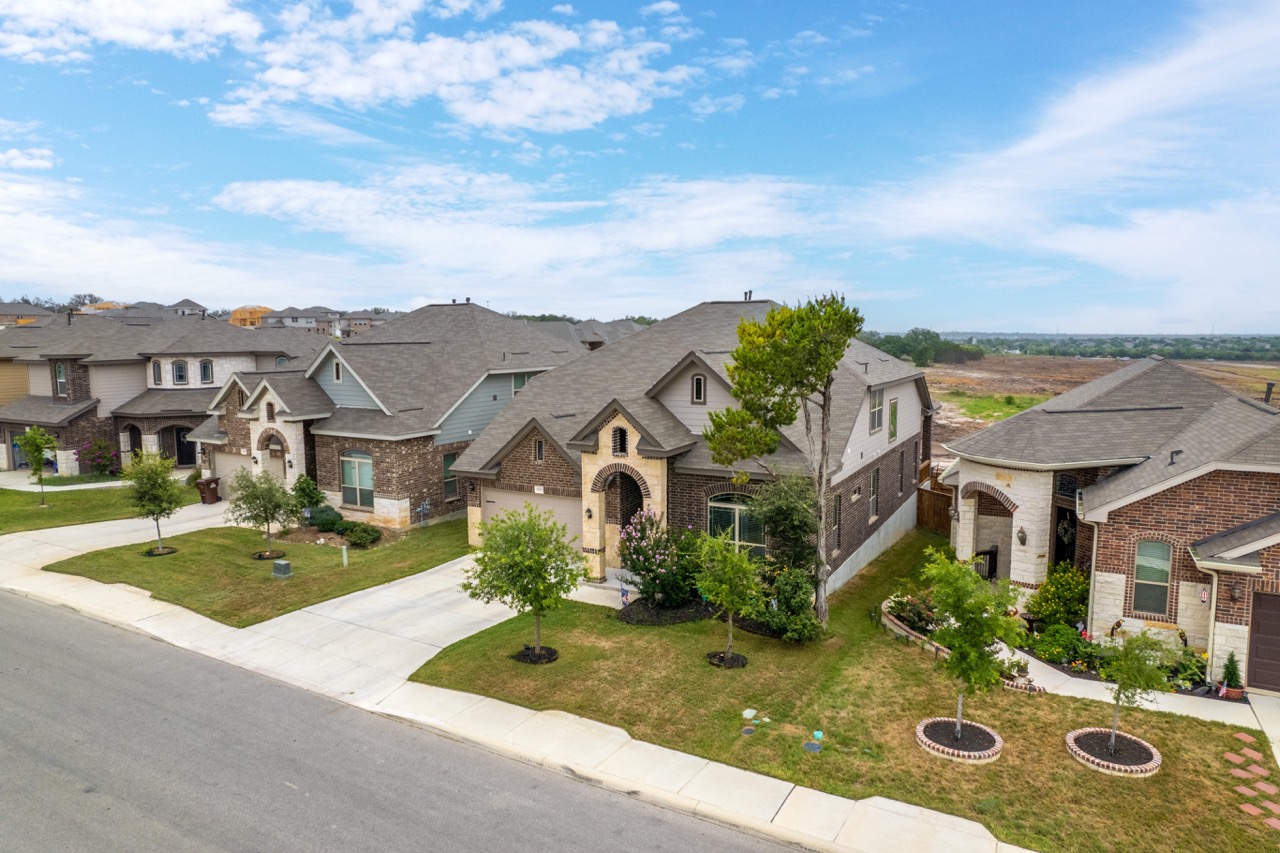
In recent years, apart from California and New York, which states have become the most desirable for Chinese families to live in? When considering relocating, buying a home, working, and educating their children, Chinese families have increasingly turned their attention to states that offer no income tax in the southern region and another state with a high-tech metropolitan city in the west.
According to statistics on Asian American and Pacific Islander (AAPI) populations, between 2010 and 2020, the overall Chinese population in the United States grew by about 37%, with Washington State experiencing a growth of approximately 73%, making it the fastest-growing state for the Chinese population. North Carolina also saw an increase of around 58%. While Utah, South Carolina, and Idaho also had significant growth rates, these states had smaller initial Chinese populations, so it is not accurate to assume that a large number of Chinese people have moved to these states.
On the other hand, Texas, although not having the highest growth rate of the Chinese population, has seen significant growth in the size of its Chinese community. According to Pew’s 2021-2023 American Community Survey (ACS) analysis, Texas has approximately 260,000 Chinese residents, making it the third-largest state for Chinese Americans after California and New York; Washington State has around 210,000. In other words, Texas has transitioned from being an emerging state for Chinese Americans to a large-scale Chinese community hub.
Pew estimates that there are approximately 5 million Chinese Americans in the United States, with about 35% residing in California. However, after the COVID-19 pandemic, a significant number of residents have left California. Analyzing population data from 2024, the top destination for Californians moving out was Texas, followed by Nevada, Arizona, and Washington. About 77,200 people moved from California to Texas and approximately 48,000 relocated to Washington. While these figures are not exclusive to Chinese individuals, they align with the expansion of Chinese communities in Texas and Washington.
In terms of states that Chinese people are increasingly interested in residing in, aside from California and New York, the top two choices are undoubtedly Texas and Washington. So what makes these two states so attractive to Chinese friends? And what are their different characteristics and advantages?
Texas and Washington represent two different types of appeal. In brief, Texas offers “restructuring of family assets”: larger houses, lower costs, and expanding job opportunities. Washington, on the other hand, offers “continuation of lifestyle”: opportunities in the tech industry, high Asian population density, Chinese community, and a West Coast lifestyle.
When discussing the recent trend of Chinese moving out of California, Texas seems to have a stronger appeal for increased settlement; meanwhile, Washington State offers a more mature Chinese living environment.
Comparing Texas and Washington State from the perspective of Chinese migration, there are seven major differences:
– Besides California and New York, which states are currently attracting a lot of attention from Chinese people for affordable housing, job opportunities, good school districts, high Chinese population density, tax savings, and safety? #USRealEstateHotspots 9/5/2026
Census QuickFacts indicate that the median housing value for owner-occupied homes from 2020 to 2024 was around $284,000 in Texas and approximately $565,000 in Washington State, nearly double the value.
Looking at the suburbs that Chinese families often choose, the disparity remains evident. In July 2026, the median residential transaction in Plano, Texas was about $540,000, in Frisco around $675,000, and in Austin approximately $562,000.
In contrast, Seattle is close to $900,000, and Bellevue even reaches around $1.55 million.
Suppose a family sells a home for around $1.5 million in the Bay Area. Moving to Washington State may simply mean “switching from one expensive tech city to another,” while moving to Texas could mean “buying a newer standalone home for $600,000 to $800,000 and freeing up hundreds of thousands of dollars in assets.”
Therefore, Texas attracts not only those seeking affordability but also a substantial portion of middle-class and above families with homes and children.
Moreover, Washington State’s greatest advantage lies in its Chinese population density. Currently, the Asian alone population in Washington accounts for about 11.8%, while in Texas, it’s around 6.7%.
Furthermore, it’s worth noting that the Chinese population in Seattle didn’t suddenly emerge. The 2020 Census revealed that Washington State had already become the fifth-largest state in terms of the “Chinese, except Taiwanese, alone or in combination” population, with Chinese Americans being the largest subgroup in King County.
The Census specifically pointed out that Washington State had become an increasingly important residential area for various Asian ethnic groups between 2010 and 2020, with the Chinese community showing signs of a mature ecosystem. From colleagues at tech companies to supplementary education, Chinese-language services, Asian supermarkets, restaurants, and social networks for cross-cultural families and first and second-generation Chinese, everything is relatively concentrated.
On the other hand, Texas seems more like a rapidly expanding Chinese community. Despite its large overall population, due to Texas’s vast expanse and substantial populations of other Asian ethnic groups like Indians and Vietnamese, a high Asian population does not necessarily equate to a dense Chinese living environment. Census data also indicates that Texas stands out for Indian and Vietnamese ethnic groups among Asians nationwide.
In essence, Texas’s Chinese community is more characterized by “expansion in scale,” while Washington State embodies a “high-density mature” model.
According to CBRE’s 2025 North American tech talent rankings, Seattle ranks second, Austin fifth, and Dallas-Fort Worth (DFW) eighth.
Seattle’s strengths extend beyond traditional software industries. In 2025, the Seattle area had around 33,000 AI professionals, ranking third nationwide in the field. Therefore, for Chinese engineers working in tech giants like Amazon and Microsoft and within the cloud, AI, and software ecosystems, Washington State still offers a robust “job-hopping safety net.”
However, a different model is emerging in Texas. Austin is known for software, semiconductors, and manufacturing, while DFW boasts information technology, telecommunications, finance, and corporate headquarters. Samsung’s semiconductor layout in Austin and Taylor is estimated to support about 28,700 job opportunities in related areas by 2025.
In summary, Seattle is more appealing for pure software and AI talents, while Texas is gaining traction in engineering, semiconductors, and corporate tech. This marks a significant change for Texas in recent years, transitioning from being known for affordable housing to attracting residents with job opportunities as well.
Washington State undoubtedly offers highly reputable public education districts, especially in the tech corridor on Seattle’s east side. However, the main issue is that the quality of school districts has driven home prices to unaffordable levels.
This is particularly evident in Seattle’s east side, where the Asian population in public schools often exceeds 30-40%, leading to strong cultural ties. This means that it’s not about finding a good school but possibly having to pay around $1 million or higher for a residential property in pursuit of quality education.
On the other hand, Texas provides a different combination: strong public schools, large new homes with four bedrooms, and prices that are still lower than those in Seattle’s east side. Therefore, for a Chinese family with two children and a budget of around $600,000 to $900,000, Texas typically offers a broader range of options.
Currently, Texas does not have a state income tax, and while Washington State also lacks a general income tax, it does impose a tax on high capital gains. Starting from the 2025 tax year, the first $1 million of taxable Washington capital gains is subject to a 7% tax, with the excess amount taxed at 9.9%.
Furthermore, Washington State has passed legislation, effective from 2028, whereby individuals or couples with adjusted gross incomes exceeding $1 million would face a 9.9% state income tax.
Therefore, for business owners, tech executives, IPO beneficiaries, and families holding substantial stock assets, Texas presents a significantly more attractive tax environment.
Nevertheless, Texas is not necessarily a “tax haven.” In terms of effective residential property tax rates in 2024, Texas levied about 1.40%, whereas Washington State’s rate was only 0.75%. Additionally, the cost of homeowners’ insurance in Texas is significantly higher. Based on Bankrate’s estimates for a $300,000 home structure insurance, the average annual premium in 2026 was around $3,899 in Texas and approximately $1,539 in Washington State.
This trend can be observed in the latest interstate population movements. In 2024, Texas was the top destination for individuals moving out of California, with about 77,200 people relocating there, while approximately 48,000 moved to Washington State.
Hence, there seem to be two distinct “California Chinese migration pathways” at present:
– California to Washington State: continuation of work and lifestyle circles, especially for tech professionals.
– California to Texas: restructuring of housing, family assets, and cost of living. The motivations behind these two routes are entirely different.
In summary, Texas may require more attention to “differences in areas prone to violent crime,” while Washington State may necessitate a focus on “property crime and urban public space issues.”
Washington State’s violent crime rate is approximately 16% lower than that of Texas, but its property crime rate is around 21% higher. Moreover, property crime issues in Washington State are relatively more pronounced nationwide. In 2024, the property crime rate in Washington was among the highest in the country, with approximately 2,467 incidents per 100,000 people.
However, areas highly favored by Chinese in Washington State, such as Bellevue and Redmond in the Eastside of Seattle, have seen a significant decline in overall crime rates. For instance, data from Bellevue’s police department in 2025 showed a 27% decrease in overall crimes and a 33% decrease in property crimes. This scenario may differ from downtown Seattle or the entire state of Washington.
Similar contradictions exist in Texas. In reality, there are numerous safe suburban options in Texas, such as Plano and Frisco in the north of DFW, or Sugar Land near Houston. Police data indicates that the most common crime in Frisco is car burglary, not violent crime.
Finally, it should be noted that the political environment in Texas has taken a clear stance on education and social issues in recent years, particularly in enacting property restriction regulations for foreign nationals without green cards, raising policy concerns for H-1B visa holders, such as Chinese individuals, looking to buy homes. In contrast, Washington State has a more diverse and inclusive social atmosphere, with higher levels of Asian political participation and public acceptance.
Having reviewed the above analysis, which side do you lean toward in terms of preference? Or have you already made the best choice with your actions? This decision is not about right or wrong but rather about suitability.