
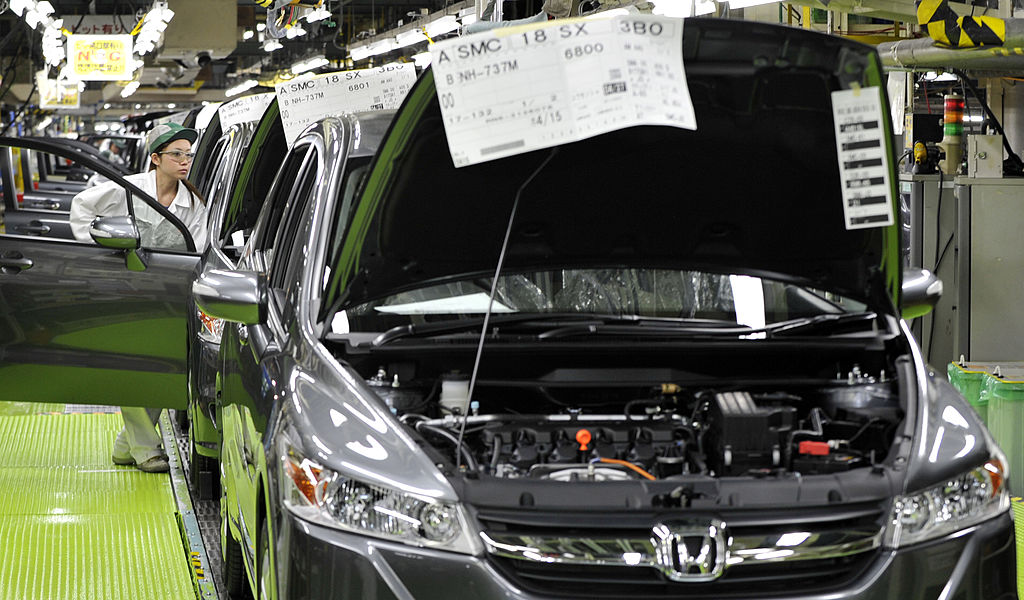
In response to the competition from Chinese car manufacturers, Honda has been reported to demand significant reduction in the cost of auto parts from its suppliers. According to Reuters on September 2, internal documents and sources revealed that Honda has set a target of reducing costs by 30% for three categories of auto parts, with plans to cut approximately 1.5 trillion yen in costs by 2030. However, these specific figures have not been officially confirmed by Honda.
Honda China responded to the report by “First Financial” on the same day, stating that “this is not content officially released by Honda.” The company emphasized that it has been collaborating with suppliers to continuously optimize costs in order to enhance competitiveness in global research and development, production, and procurement.
As reported by Reuters, in the spring of this year, Honda’s management held meetings with major suppliers in Utsunomiya, Japan to introduce cost reduction plans. Following the meeting, different suppliers received specific cost reduction targets tailored to their respective companies.
Documents seen by Reuters show that Honda has requested a 30% cost reduction for three types of auto parts, including stamped and forged parts, electrical components, and parts related to software defining automobiles.
Honda has also reportedly asked first-tier suppliers to re-examine materials procurement and to incorporate more standardized parts from second and third-tier suppliers. According to the documents, reducing the cost of these parts will help Japanese suppliers better compete with their Chinese counterparts.
A Honda spokesperson told Reuters that the company is cooperating with global suppliers to enhance competitiveness and reduce costs through the use of standardized parts, but declined to comment on specific cost reduction targets and discussions with suppliers on details.
Honda is currently working on reducing automotive business costs and improving competitiveness. Reuters reported that the company expects losses related to electric vehicles to exceed $12 billion and has shifted more focus towards hybrid electric vehicles.
In May of this year, Honda reported its first annual loss since going public. Apart from competition from Chinese car manufacturers, Honda is also facing pressures such as U.S. import tariffs, rising labor costs, and increased investment in automotive technology research and development.
Honda and Nissan announced this week that they will jointly develop standardized electronic control units for software-defined vehicles, with plans to introduce architectures based on these components starting from the 2029 fiscal year.
On the day of the announcement, Honda’s stock price fell by 2.5%, and several parts suppliers associated with Honda also experienced a decline in their stock prices.