
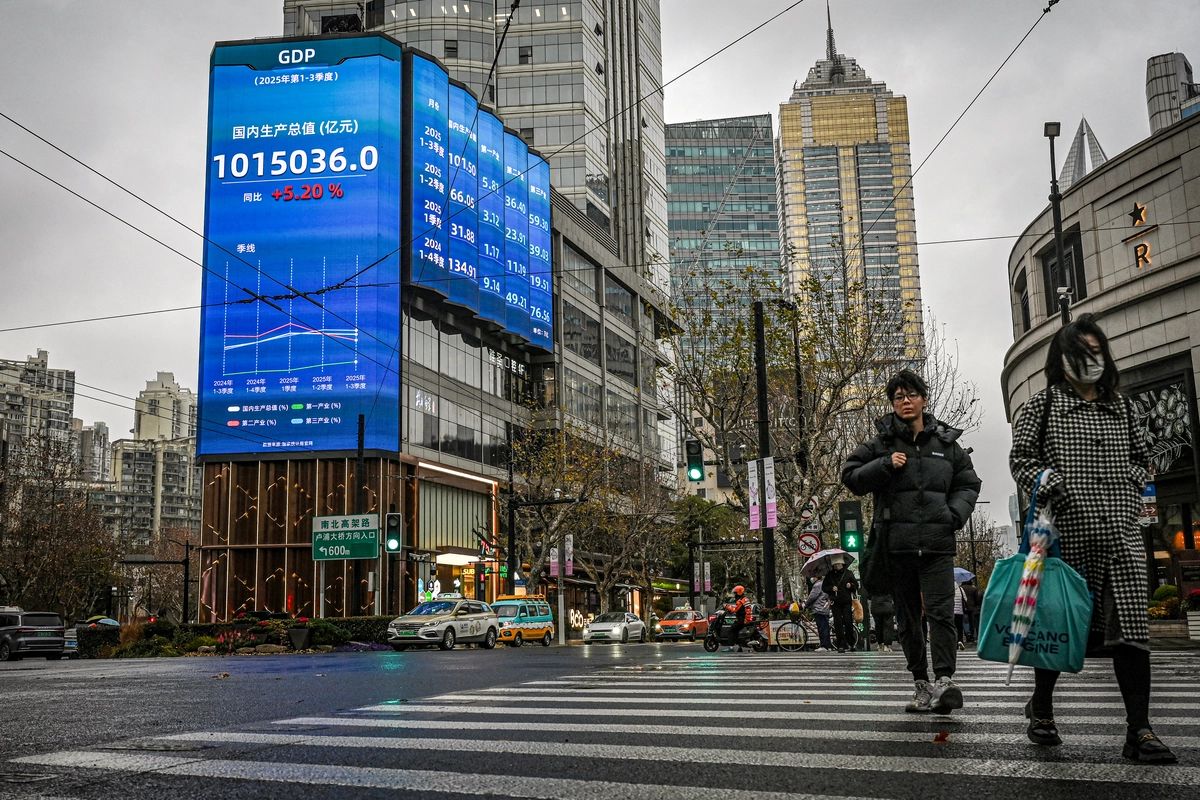
Recently, in the face of pressure on the Chinese consumer market, Shanghai, as a crucial business and consumption center, experienced a 6.7% year-on-year drop in social consumer goods retail sales in August, totaling 128.281 billion yuan. This marks the fifth consecutive month of decline and a further widening of the decline compared to the previous month. The news of this decline surged on Weibo’s trending topics on September 30.
According to data released by the Shanghai Municipal Bureau of Statistics on September 17, the year-on-year decreases in social consumer goods retail sales in Shanghai from April to July were 1.3%, 4.7%, 5.5%, and 6.3%, respectively. The decline in August was the largest monthly drop this year and the biggest year-on-year decrease since December 2024.
Breaking down by category, the retail sales of automobiles in August were 13.025 billion yuan, declining by 38.8% year-on-year. The category of clothing, shoes, hats, and textiles saw retail sales of 24.897 billion yuan, down by 1%. Restaurant revenue totaled 11.73 billion yuan, representing a 2.1% year-on-year decrease.
From January to August, Shanghai’s total social consumer goods retail sales amounted to 1.081 trillion yuan, down by 1% year-on-year. Within this period, automobile sales were 92.203 billion yuan, a decrease of 19.1%; communication equipment sales were 49.342 billion yuan, declining by 8.8%; household appliances and audio-visual equipment sales were 32.153 billion yuan, down by 7.7%; and restaurant revenue totaled 93.063 billion yuan, a decrease of 0.4%.
On September 30, the topic labeled “Shanghai’s social consumer goods retail sales have been declining for five consecutive months” trended on Weibo.
Netizens remarked, “July and August are supposed to be peak seasons for summer travel and family consumption. In previous years, social consumer goods retail sales would typically rise seasonally, but this year, there has been no rebound and the trend continues downward.”
“The 6.7% year-on-year decrease in Shanghai’s social consumer goods retail sales reflects the pressure faced by the current consumption market. There is no narrowing, no slowdown, and no bounce-back.”
“In August, Shanghai’s social consumer goods retail sales took a sharp plunge and have been in negative growth for five consecutive months, with the decline widening each month. The economy is unlikely to improve in the short term, traditional businesses may be facing tough times, and it might just be the beginning. As we have already passed the best healing stage, hesitation to apply strong medicine at this critical juncture is akin to taking cold medicine.”
“The contraction spiral of consumption has passed its turning point (with the widening decline each month = negative feedback in action). If the second stimulus is not forthcoming or not strong enough, the spiral will transmit from the consumption side to the production side (revenue reduction for enterprises → layoffs → decreased consumption), and at that time, Shanghai’s social consumer goods retail sales data will not be the only negative.”
According to the data on monetary credit for the first half of 2026 released by the Shanghai headquarters of the People’s Bank of China, Shanghai’s RMB loans increased by 465.8 billion yuan, a decrease of 97.2 billion yuan compared to the previous year. Household sector loans increased by 10.1 billion yuan, with short-term loans decreasing by 5.4 billion yuan and medium to long-term loans increasing by 15.5 billion yuan.
Investment content creator “江左子都” posted that in the first half of 2026, all the new loans in Shanghai’s household sector totaled only 10.1 billion yuan, a decrease of 97.2 billion yuan compared to the previous year, making it one of the cities with the lowest increase in household loans among first-tier cities nationwide. Short-term consumer loans decreased by 5.4 billion yuan, indicating that “Shanghai residents not only did not take out new credit card loans and consumer loans in the first half of this year, but also proactively paid off 5.4 billion yuan in previously owed consumer loans.”