
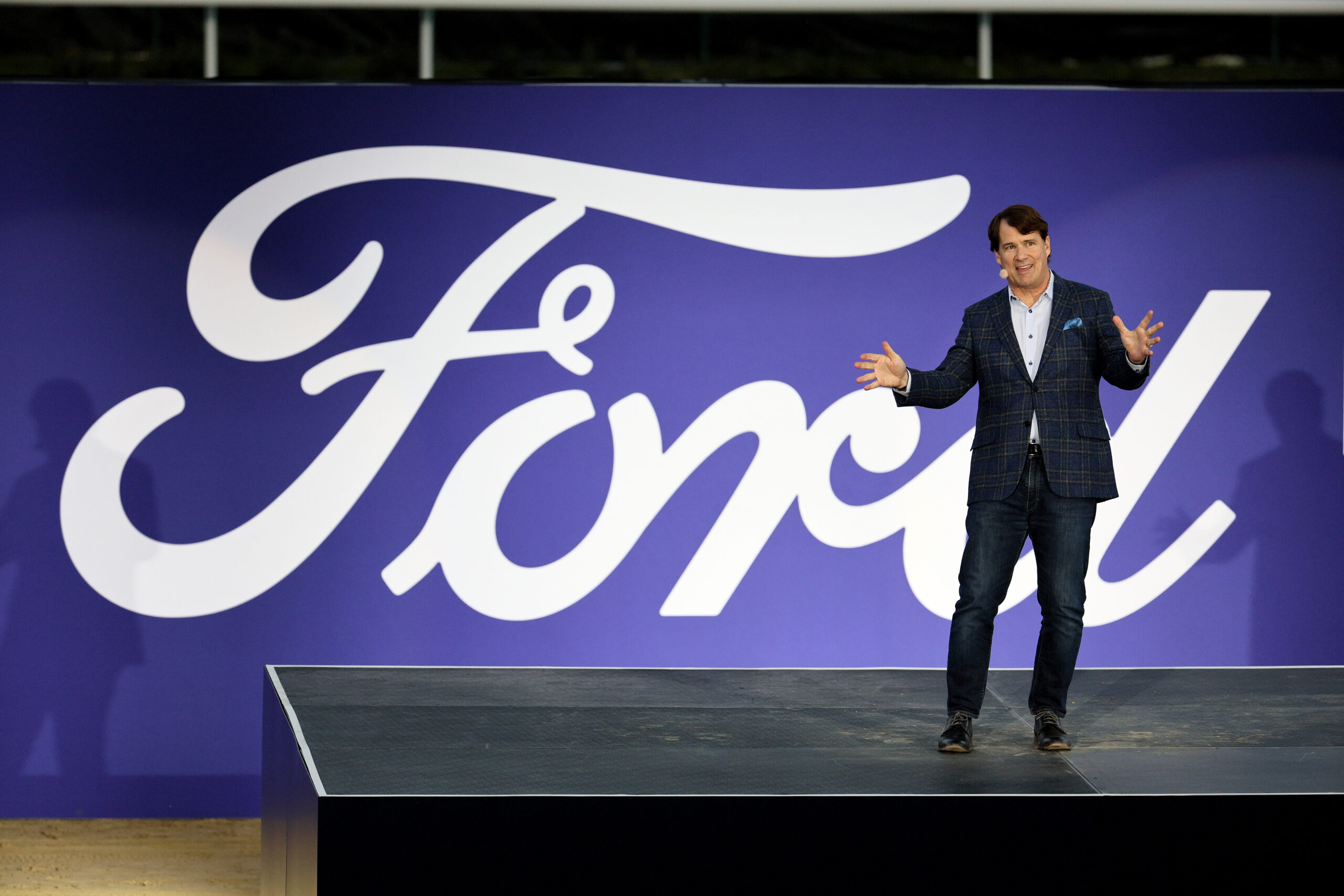
The US automotive industry is facing increasing competition pressure from Chinese automotive companies accelerating their overseas expansion. Ford CEO Jim Farley stated that the US should exercise caution when considering the entry of Chinese automotive companies into the US market, citing the changes in the European market as a reference point.
According to Reuters, Farley mentioned at a conference hosted by Automotive News on Tuesday (September 29) that the US needs to handle the entry of Chinese car manufacturers into the market “very cautiously.” He pointed out that the rapid expansion of Chinese car imports has already put pressure on the European automotive industry, which has been slow to respond to this change.
Farley also emphasized that Ford is not against collaborating with Chinese companies solely due to competitive reasons. The company would consider cooperation if it improves capital utilization efficiency or involves areas where Ford lacks expertise. For example, Ford currently collaborates with the Chinese battery manufacturer CATL to produce batteries with lower costs in Michigan. Farley highlighted that cooperation does not necessarily conflict with direct competition.
Collaboration between Ford and Chinese automotive companies did not start in recent years. Ford has long established joint ventures and business partnerships with Chinese companies such as Chang’an Automobile and Jiangling Motors, and has explored cooperation with Zotye Auto to develop small electric vehicles. In 2019, Ford introduced its “China 2.0” strategy, aiming to further leverage the research and development, production, and supply chain capabilities in the Chinese market.
In 2022, Ford established Jiangling Ford Automotive Technology (Shanghai) Co., Ltd. with Jiangling Motors to expand its passenger car business in China. In recent years, Ford has placed increasing emphasis on utilizing China’s supply chain and research capabilities to serve overseas markets.
In July this year, Ford announced a collaboration with Geely Auto to produce models for the European market at a factory in Valencia, Spain. According to Ford’s previous announcement, Geely plans to start producing two electric SUVs at the factory from 2028, and they will jointly develop a multi-energy crossover vehicle.
Ford’s business collaborations with several Chinese companies have drawn attention from the US government. US Transportation Secretary Sean Duffy criticized Ford this month for increasingly relying on Chinese technology and manufacturing capabilities. He specifically mentioned Ford’s use of CATL technology at the Marshall battery plant in Michigan and the joint venture with Geely Auto in Spain. The US government believes these arrangements heighten Ford’s dependency on Chinese technology and manufacturing, raising national security concerns.
Ford later released a statement refuting some claims made by the US government, denying the proposed Sino-US joint venture framework described in the letter. Regarding the cooperation with CATL, Ford clarified that it was a limited technology licensing and service agreement, not a joint venture; and that the Marshall battery plant is solely owned and operated by Ford.
However, Ford did not provide a specific response to the concerns raised by the US government regarding dependency on China and national security issues, mainly emphasizing the nature of the collaborations and ownership and control of its US operations.
In recent years, China’s automotive exports have seen rapid growth. Reuters cited data indicating that Chinese automobile exports may reach around 12 million vehicles this year, a significant increase from approximately 3 million vehicles in 2022, with export markets including Europe, Latin America, and other regions. The accelerated overseas expansion of Chinese automotive companies has sparked concerns in the automotive industries of countries such as Japan, Germany, and the US.
Currently, the US market still imposes high barriers on Chinese-manufactured vehicles, including restrictions on using certain car software made in China and imposing tariffs of over 100% on Chinese cars. Meanwhile, industry groups in the US automotive manufacturing, dealership, and auto parts supply sectors are advocating for Congress to implement more long-term restrictive measures.