
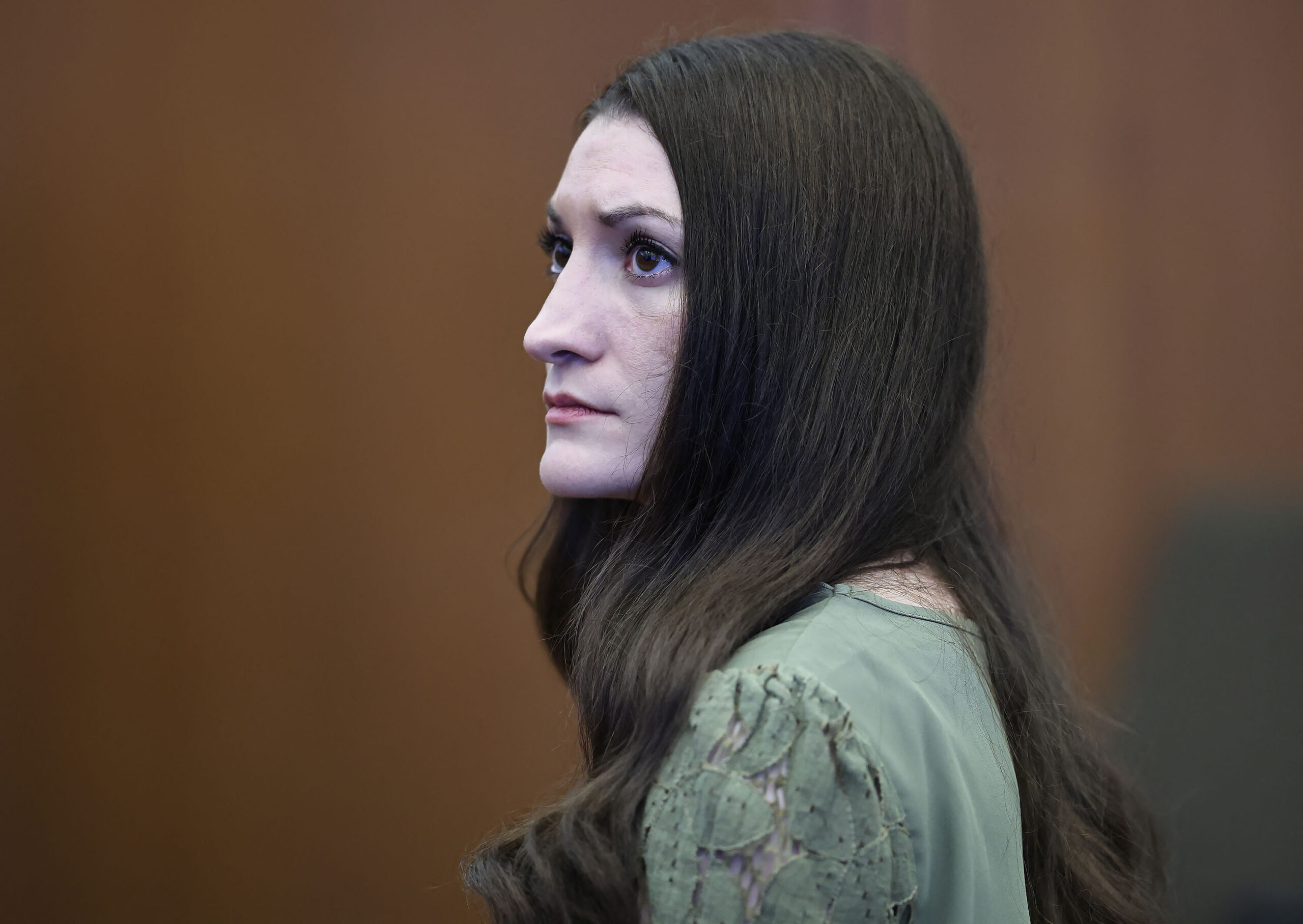
American mother Lindsay Clancy from Massachusetts, accused of killing her three children, faced a trial that ended with no verdict. Her defense lawyer argued on Tuesday (September 29) for her acquittal citing lack of evidence.
The 36-year-old Clancy faced three counts of murder. On Tuesday morning, she appeared at the Plymouth Superior Court in Massachusetts for a hearing, marking the first court session since the mistrial was declared on September 4 in this case. Defense attorney Kevin Reddington motioned to Judge William Sullivan to directly rule her innocent.
“Where is the evidence that she did this?” Reddington asked in court. He argued that the prosecution’s DNA and fingerprint evidence were severely lacking, the presented timeline of events was unreasonable, the police did not conduct a thorough investigation, and they immediately assumed Clancy was guilty.
Reddington also stated that there was no evidence showing Clancy admitted to the killings. He said that Clancy woke up in the hospital from a sedated state with no memory of the events, being informed by others about what happened.
Prosecutor Shanan Buckingham responded, saying that the defense is only now questioning if Clancy committed the murders. She pointed out that during the trial, when the prosecution presented the evidence of the crimes, Reddington objected on the grounds that Clancy had already confessed to the acts, and now he claims there is insufficient evidence, which she believed was an inconsistent argument. Buckingham also reminded the judge that the testimony from the trial showed Clancy’s DNA was found on both ends of the exercise resistance band involved in the case.
Sullivan indicated that a decision on the motion will be made at a later date.
During the approximately one-hour hearing, the prosecution did not announce whether there would be a retrial, stating they would first wait for the judge’s decision on the defense’s motion to dismiss the charges. Reddington mentioned that he would not be available to participate in a possible second trial before June of next year. Both sides asked the judge to postpone setting a trial date until discussing it again on November 2.
Throughout the trial, Reddington did not dispute whether Clancy committed the crimes but argued that she suffered from severe postpartum mental illness at the time of the incident, experiencing hallucinations commanding her to kill the children and herself, thus lacking criminal responsibility. According to the New York Post, Tuesday’s arguments seemed inconsistent with his trial strategy.
Reddington explained in court that Sullivan had previously rejected his request to bifurcate the trial, separating the issues of “guilt” and “criminal responsibility,” putting him in a difficult position: he had to first admit to the acts to raise the issue of criminal responsibility.
Two Massachusetts lawyers unrelated to the case, interviewed by the New York Post, stated that this argument may not necessarily contradict his trial strategy. Lawyer Brad Bailey believed that Reddington was asking the judge to reconsider if the prosecution had not established reasonable grounds for even filing charges. Lawyer Peter Elikann stated that this was a highly technical legal argument.
Both agreed that the chances of the judge approving this motion were slim. Elikann mentioned that many judges throughout their careers have never granted such motions.
Clancy was accused of killing her 5-year-old daughter Cora, 3-year-old son Dawson, and 8-month-old son Callan at her home in Duxbury in January 2023. She pleaded not guilty to the charges.
During the trial, the prosecution argued that Clancy premeditated the crimes. Clancy’s then-husband Patrick Clancy testified that she sent him out for errands for about an hour, and when he returned home, he found the three children lying in the basement with exercise resistance bands around their necks and unresponsive; Clancy was found in the backyard with injuries to her neck and wrists, having jumped from a second-floor bedroom window.
According to trial testimony, Clancy had been struggling with mental health issues for four months prior to the incident, regularly seeing a psychiatrist and voluntarily staying in a psychiatric hospital for nearly five days. During this time, five medical professionals prescribed her 13 different medications. Reddington argued that these medications worsened her mental condition.
The six-week trial ended in a mistrial on September 4 as the jury could not reach a unanimous verdict.