
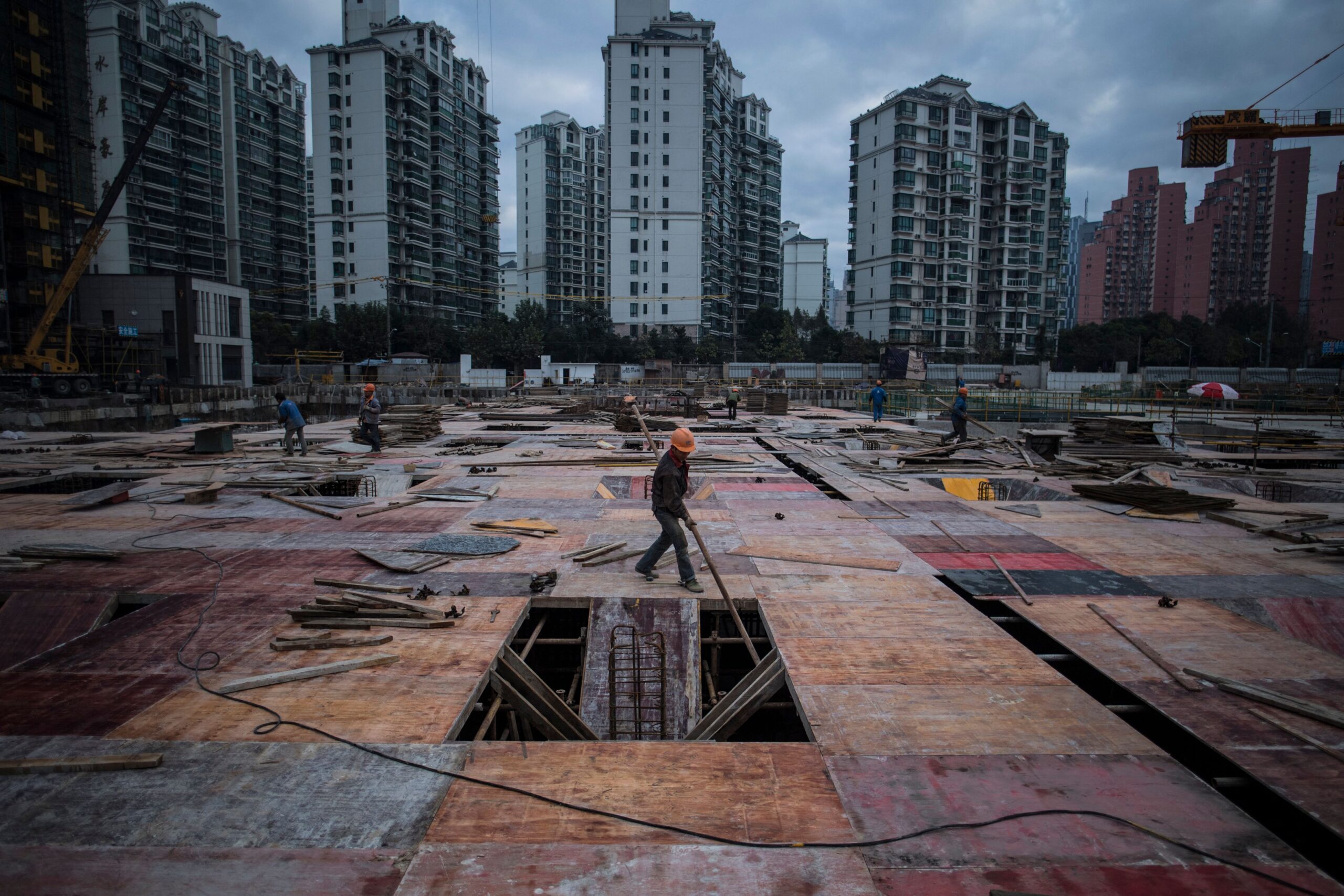
On August 28, the Chinese Communist Party launched a new round of real estate system adjustments, including promoting the sale of existing houses, extending the maximum term of personal housing loans from 30 years to 40 years, and establishing a system for lead banks for real estate development loans. Official media widely regard this as a significant transformation of the real estate development model, believing that selling existing houses can help reduce delivery risks, while a 40-year mortgage can alleviate the monthly payment pressure for homebuyers. The related policies have raised the presale threshold and begun to restrict buyers from becoming the main source of financing for real estate developers.
American economist Huang Dawei pointed out in an interview with the media that this reform mainly addresses the financing and sales systems of real estate projects and does not touch upon the deeper financial, housing security, and governance structures behind the crisis. The key issue lies in whether the operational risks of developers can be systematically isolated from the funds of homebuyers even if a project eventually fails to complete.
The core advantage of selling existing houses is the principle of “what you see is what you get,” which can lower the delivery risk for homebuyers. This policy requires newly allocated land for commercial residential projects to encourage the implementation of “existing house sales” to reduce the risk of project failures that buyers may face under the presale model.
Huang Dawei believes that the problem is not that the safety of existing houses was previously unknown, but rather that the presale system was once an important source of funding for China’s rapid real estate expansion. In the initial stage of housing reform, real estate developers had limited capital, local governments needed land revenue and real estate investment, and banks participated through development loans and personal housing loans. The funds paid by buyers in advance became a crucial funding source for developers to quickly acquire land, start construction, and expand.
Under this model, he explained, developers could accelerate their fund cycle through “land acquisition, presale, payment return, and land acquisition again.” However, buyers lacked rights such as project review, collateral, and fund supervision. If a project fails, they may bear the risk of undelivered houses.
Therefore, Huang Dawei believes that this policy shift is not so much a sudden realization that selling existing houses is more reasonable than the presale model, but rather a decline in the returns of the presale model, exposing issues like project failures, corporate debts, and associated social costs. Additionally, the new policy does not completely abolish presale but raises the presale threshold and requires personal housing loans for presale projects to be disbursed after project completion filing. The policy is weakening the financing function of presale but not fully eliminating it.
Another significant change in this reform is the establishment of a lead bank system for real estate development loans. According to the new regulations, each real estate project corresponds to a lead bank, and development loans cover the entire process from construction commencement to project completion filing; presale project loans have a maximum term of 5 years, while existing house sales projects have a maximum term of 7 years, with presale funds subject to stricter supervision.
These arrangements aim to re-isolate the funds between developers, banks, and homebuyers. However, Huang Dawei pointed out that the new policy adopts a “distinction between old and new projects.” The funding gaps of existing projects, land mortgages, project debts, and corporate group debts will not automatically disappear due to updated regulations.
He believes that addressing historical project failures still requires determining the amount of remaining funds needed, who bears the losses, and how the rights of homebuyers are prioritized among banks, bond investors, and other creditors. Without item-by-item auditing, asset takeovers, special financing, and a clear loss distribution mechanism, the new financing rules can only prevent some new risks without providing a resolution for past debts and project failures.
This also means, he said, that what truly needs to be established is not a system where “projects must never fail to deliver” but where even if a developer collapses and a project fails, buyers do not have to shoulder the primary burden of the developer’s failure.
Huang Dawei believes that a root cause of the real estate crisis in China is that the entire chain of land and real estate has taken on excessive fiscal functions.
Official data shows that in the first half of 2026, local government revenue from self-managed funds decreased by 25.6% year-on-year, with the revenue from state-owned land use rights transfer decreasing by 31.5% to only 977.8 billion yuan; in 2025, the full-year revenue from state-owned land use rights transfer was 4.15 trillion yuan, a 14.7% decrease from the previous year.
Huang Dawei believes that selling existing houses will increase the capital costs for developers and reduce the prices they can pay for land. In regions where the land market is weak, if local governments do not accept further declines in land revenue, they may face pressure to maintain real estate investments and land market operations.
He pointed out that the presale system is merely an accelerator of the old real estate model, and while selling existing houses can increase buyer security, it will also change the survival mode of developers. Developers can no longer primarily rely on funds rolled over from buyers’ advanced payments for expansion; they will need to depend more on paid-up capital, development loans, and project cash flows to complete construction.
Huang Dawei expects that this will accelerate the exit of small and medium-sized developers, not necessarily resulting in sudden large-scale bankruptcies but more likely leading to long-term mergers, project transfers, and asset consolidations.
He noted that large state-owned enterprises are more likely to obtain low-cost financing and bank support, while small and medium-sized private developers, even with profitable projects, may be at a disadvantage due to a lack of collateral and financing channels.
“What may eventually emerge is not a more competitive market but a real estate oligopoly dominated by a few large state-owned enterprises, local platforms, and state-owned banks,” Huang Dawei said.
He believes that this reform is still necessary as it begins to change the funding model where developers pass on development risks to buyers in advance. Delaying personal housing loans until after project completion filing, project fund closure management, and the lead bank system all have the potential to reduce new fund misappropriation and delivery risks.
However, these measures mainly stay at the level of financing and transactions of real estate projects. He said that the reliance of local governments on land and real estate revenue, the dependence of housing security on buyer financing, and whether regulatory agencies can form truly independent checks and balances have not disappeared due to the shift to selling existing houses.
Huang Dawei described this change as “a wall against delivery risks” rather than “rebuilding the foundation of the entire real estate system.”