
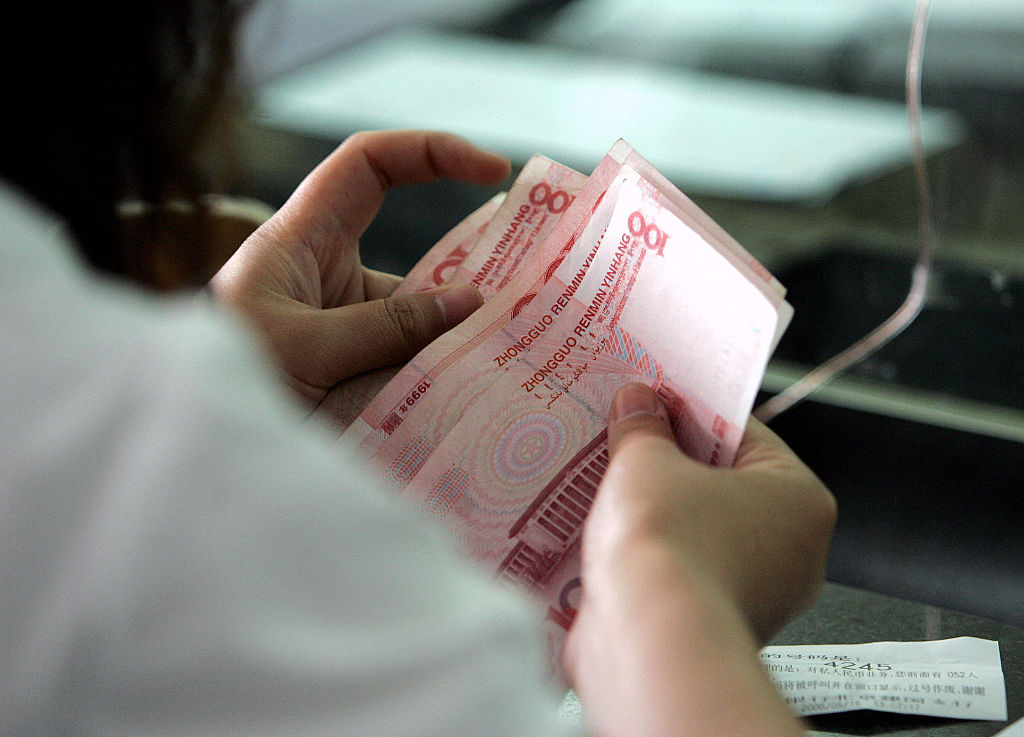
Recently, the discussion on how difficult it is for ordinary families in mainland China to save 300,000 yuan has sparked attention. A survey revealed that half of the families have savings of less than 90,000 yuan.
Over the past few decades, with rapid economic development, China has become the world’s second-largest economy. One might assume that with such progress, the majority of families would have savings of at least 300,000 yuan. However, the reality is quite different. For most ordinary families, reaching this savings goal is not easy, and those who achieve it are considered to be among the elite.
As of the end of July this year, the total household savings in mainland China were about 172.84 trillion yuan. When calculated per capita, it averages around 123,000 yuan. The average savings for a family of three would seem to be over 360,000 yuan. However, this average figure can be skewed by a few wealthy families and doesn’t accurately represent the actual savings of ordinary households.
According to a report from the China Household Finance Survey and Research Center at Southwestern University of Finance and Economics, the median household savings in the country in 2026 were only 87,000 yuan. This means that half of the families in the country couldn’t even scrape together 90,000 yuan if they combined all the money from their bank accounts, WeChat, and Alipay.
Furthermore, Wang Yong, the Deputy Dean of the Institute of New Structural Economics at Peking University, previously wrote in the “New Beijing News” that half of the households in China have savings of less than 90,000 yuan, with around 70% of total household savings held by the top 10% of residents.
Wang pointed out that the weak domestic demand in China has not been fundamentally alleviated, and the main issues still lie in household income and wealth. Increasing the income and wealth of these households remains the main way to boost consumption.
Data released by the National Bureau of Statistics of China showed that in the first half of this year, the median per capita disposable income of residents in mainland China was 19,036 yuan, lower than the average of 22,981 yuan.
Using an example, “Hong Kong Economic Journal” illustrated that even for a couple with a combined monthly income of about 10,000 yuan, saving 2,000 yuan per month after deducting expenses like mortgage, children’s education, and daily living costs is not easy.
Financial commentator Zhang Ping calculated that without factoring in interest, saving up 300,000 yuan would take around 12 and a half years with a monthly savings of 2,000 yuan. During this period, unexpected events like unemployment or illness could deplete these savings.
Zhang also mentioned that some families hold stocks, funds, and financial products that are not reflected entirely in their bank deposits.
Wang further highlighted the significant employment pressure faced by young people in China. The class of 2026 saw 12.7 million college graduates, an increase of 480,000 from the previous year. When considering previous unemployed youth and overseas students, the total number of young job seekers exceeds 15 million.
Delivery services, ride-hailing, community services, and self-media are increasingly becoming flexible employment options for young people and career changers. However, individuals in these sectors commonly experience issues such as unstable income and inadequate social security.
Meanwhile, industries like real estate, construction, traditional home furnishings, low-end manufacturing, basic administration, and customer service have an excess of personnel. The development of artificial intelligence technology is also replacing some entry-level positions.
These discussions have sparked debates among netizens. One blogger lamented that saving money for ordinary families is not easy, and savings are accumulated through hard work and frugal living. Another netizen questioned, in the face of job layoffs and income uncertainties, “If I don’t save, who will support me?”