
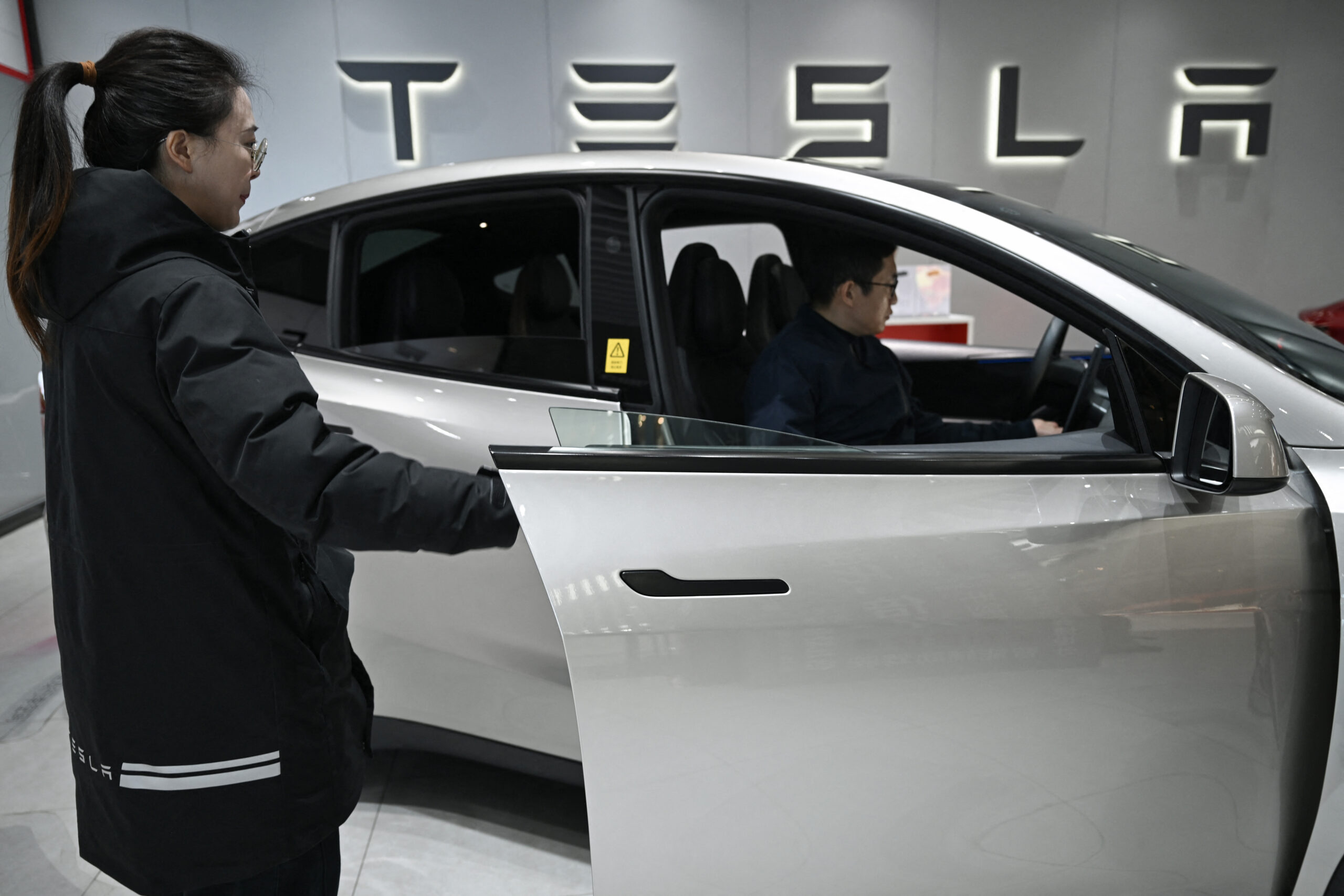
In September of this year, Tesla China has reduced prices twice within 20 days, which has caused dissatisfaction among car owners who had purchased their vehicles earlier and has also put pressure on their competitors in China.
According to reports from various media outlets including Sina Finance, on September 25th, Tesla China announced that for orders placed before October 31, 2026, the final payment for all Model 3 vehicles would be reduced by 5000 yuan (RMB, the same below), and some models of Model Y would have a time-limited discount of 7000 yuan on the final payment.
This was the second price reduction initiative by Tesla in September. On September 7th, Tesla China had stated that for orders placed and vehicles picked up before September 30, there would be a cash incentive of 5000 yuan for all Model 3 vehicles (including the high-performance version) and 10,000 yuan for all Model Y vehicles (including Model Y L).
Customer service from Tesla mentioned that this promotion is only applicable to orders during the promotional period, and vehicles already delivered cannot retroactively apply the new policy, hence the car owners who purchased earlier would not receive compensation.
The actions taken by Tesla have sparked discontent among the previous buyers, with many of them seeking compensation for the price difference but facing challenges in their efforts.
Regarding Tesla’s consecutive price reductions, Fu Yifu, a contracted researcher with Su Commercial Bank, commented to the “Next Generation Car Research Institute” that with two promotions by Tesla within a month, it is likely due to sales pressure rather than just proactive marketing. Continuous discounts indicate a soft demand in the domestic market, causing inventory and delivery pressure to increase.
Data from the China Association of Automobile Manufacturers (CAAM) also confirmed this trend. From June to August this year, Tesla’s retail sales in China saw a consecutive three-month year-on-year decline, with decreases of 13.9%, 32.9%, and 12.4% respectively. From January to August, Tesla’s retail sales in China amounted to 316,251 vehicles, a 12.4% decrease from the previous year.
While continuous price reduction by Tesla may boost sales, it also brings negative effects. Fu Yifu pointed out that firstly, it leads to a decline in profits. In the second quarter of this year, Tesla’s net profit attributable to common shareholders saw a 5% year-on-year decrease; operating profit dropped by 57%; and the gross profit margin of the automotive business decreased from 21.1% in the first quarter of this year to 16.9%. Secondly, it affects Tesla’s brand reputation. Frequent price adjustments trigger car owners to seek compensation, resulting in a structural negative impact on brand image and reputation. Unilateral price adjustments and the lack of a compensation mechanism can easily turn normal business decisions into trust crises.
Fu Yifu mentioned that using names like time-limited final payment discounts as a way to indirectly reduce prices can only weaken the official price reduction label, rather than changing the fact of price reductions. Therefore, challenges in consumer rights protection and negative evaluations may still be unavoidable.
However, not everyone in the industry agrees. According to a report by Phoenix Finance on September 28th, analysis from industry insiders indicated that Tesla’s business model differs from traditional car manufacturers. Traditional car companies focus on stable pricing to avoid impacting the brand and upsetting loyal customers. However, Musk’s approach is to prioritize filling production capacity, leveraging scale to spread out the cost per vehicle, and then earn money throughout the vehicle’s entire lifecycle through software, supercharging, and FSD subscriptions.
During Tesla’s previous financial conference call, senior company executives emphasized that short-term sacrifices in per-vehicle profit are acceptable to prioritize the long-term value of the vehicle, including autonomous driving services, network services revenue, rather than one-time vehicle price differentials.
Furthermore, Tesla’s price reduction this time imposed significant pressure on mainland Chinese car manufacturers as well. Phoenix Finance stated that if car manufacturers do not follow by lowering prices, sales volume will face pressure; if they match the price reduction, gross profit margins will be pressured as well, creating dilemmas on all sides. The second half of the automotive manufacturing game continues to be fraught with challenges.
Indeed, this has been reflected in reports from various Chinese media outlets on September 28th, which mentioned that BYD and Geely have initiated a new round of price wars in the pure electric passenger vehicle market at the 100,000 yuan level.