
【Epoch Times, September 29, 2026】
As the B-21 “Raider” stealth bomber gradually enters the operational deployment phase, people are filled with anticipation for its mysterious and groundbreaking key technologies, especially those new technologies and design concepts that are still largely unknown. The disruptive airstrike capability it represents may change the way future missions are conducted in highly contested airspace.
On September 9, 2026, the USAF 8th Air Force officially launched the first deployment squadron of the B-21 at Ellsworth Air Force Base in South Dakota, and held a ceremony for the transfer of command. Ellsworth will also become the first main operational base for the B-21.
The U.S. Air Force stated that the establishment of this deployment squadron aims to unify and coordinate the deployment and integration work of the B-21 at Ellsworth Air Force Base. The related work is being carried out concurrently, including infrastructure construction, communication system setup, crew training, and mission system integration, with the goal of shortening the transition time for the new bomber to enter the operational system and establish a complete combat system with sustained operational capability.
The U.S. Air Force emphasized that this work draws on past experiences of bomber transitions, requiring logistics, training processes, and maintenance infrastructure to complete all preparations before the arrival of the B-21.
Earlier, progress was made in the test flight evaluation of the B-21. On June 12, the U.S. Air Force announced that operational test pilots had flown the B-21 together with developmental test pilots for the first time. This flight was conducted by the “B-21 Raider Combined Test Force” at Edwards Air Force Base. The 412th Test Wing stated that involving operational test personnel in flight tests at this early stage in modern military aircraft testing history is rare.
Dale White, the program executive officer for the Air Force’s key large weapons systems, mentioned that the integration of “developmental testing” with “operational testing” in the B-21 represents a new procurement and testing approach being pushed by the Air Force. This approach is described as “smarter and faster,” aiming to accelerate the weapon system’s operational capability while establishing more agile procurement and testing processes. This testing model means that Air Force operational personnel are one step closer to achieving the “asymmetric striking power” represented by the B-21.
For some time, there have been speculations about the crew configuration of the B-21. On July 9, 2026, the U.S. Air Force officially announced that the B-21 Raider will have a crew of two pilots. Following the evaluation of the advanced capabilities and mission requirements of the B-21, the Air Force concluded that a dual-pilot configuration best suited the aircraft’s combat mission. Additionally, the Air Force will establish a specialized training program, selecting personnel from weapon systems officers (WSOs) and combat systems officers (CSOs) to undergo pilot training and transition to B-21 pilots upon completion.
This arrangement ensures that the tactical and battlefield experience accumulated by pilots on existing bombers can be transferred to the B-21 fleet. Moreover, it underscores the Air Force’s view of human pilots’ battlefield intuition as an irreplaceable asset, despite artificial intelligence advancing autonomous combat capability for future battlefields.
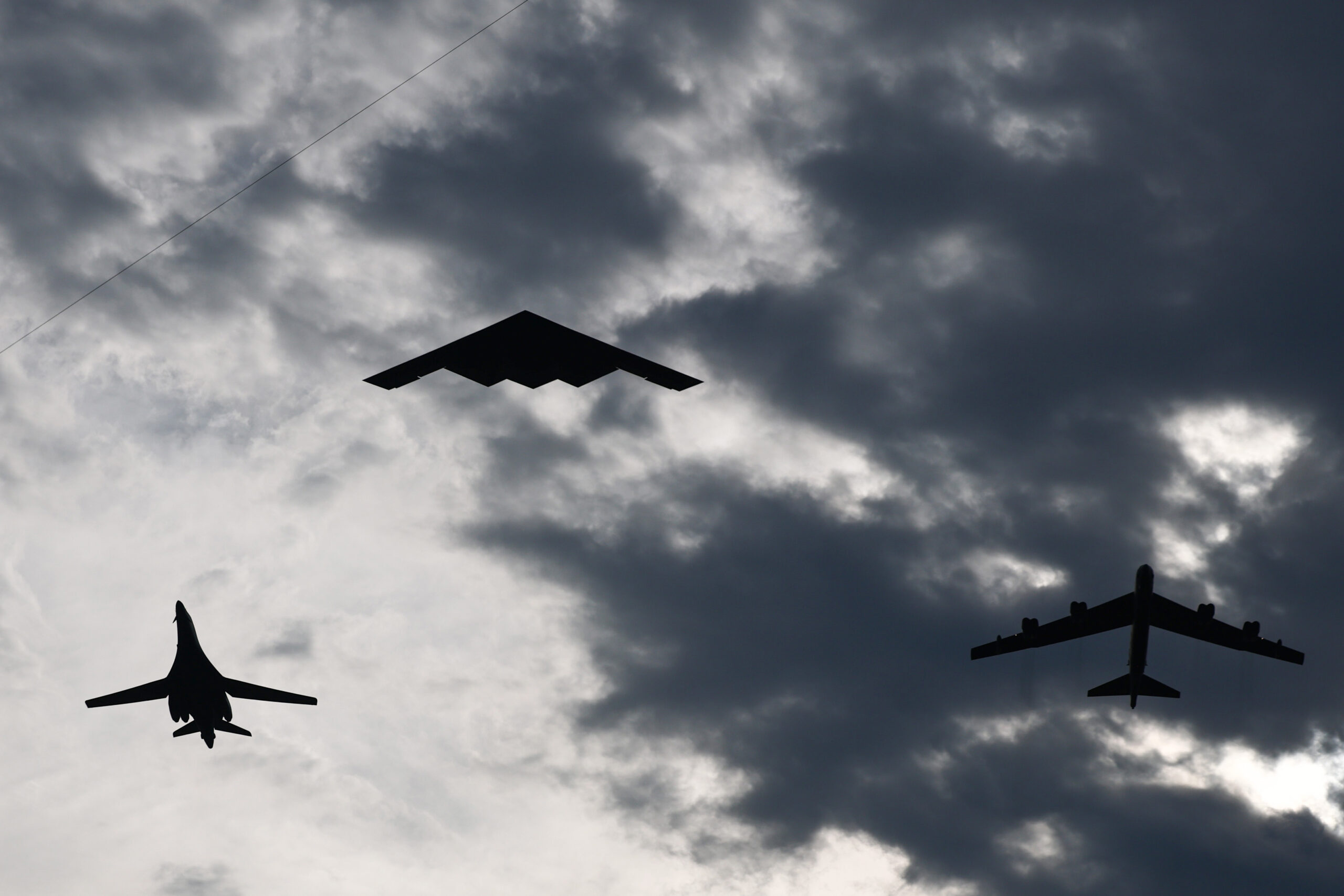
As early as March 7, 2023, General Thomas A. Bussiere, Commander of the U.S. Air Force Global Strike Command, had stated at the Air Force Association’s Warfare Symposium that the B-21 will be the “backbone of future bomber fleets.” On September 18, 2024, the Air Force reconfirmed that the B-21 will gradually replace the B-1B “Lancer” and B-2 “Spirit,” becoming the “backbone of U.S. Air Force’s global strike capability.”
The U.S. Air Force entrusts the B-21 with such a significant mission, closely related to its representing a new generation of low-observable and penetrating strike capabilities. Compared to the B-2 bomber, the B-21 shares a similar aerodynamic silhouette, but details reflect generational differences. The B-21’s fuselage is more streamlined, with higher wing-body integration. The size of the intake above the wing is significantly reduced, with a smoother transition to the back surface.
In addition, near-perfectly smooth designs on the fuselage surfaces eliminate sharp angles and seams that affect radar reflection, making it nearly invisible to enemy radar signals. While the specific radar cross-section (RCS) data of the B-21 remains classified, the Pentagon has clearly stated that the B-21 incorporates 50 years of advances in low-observable technology and is designed as a long-range penetrating strike force for high-threat environments.