
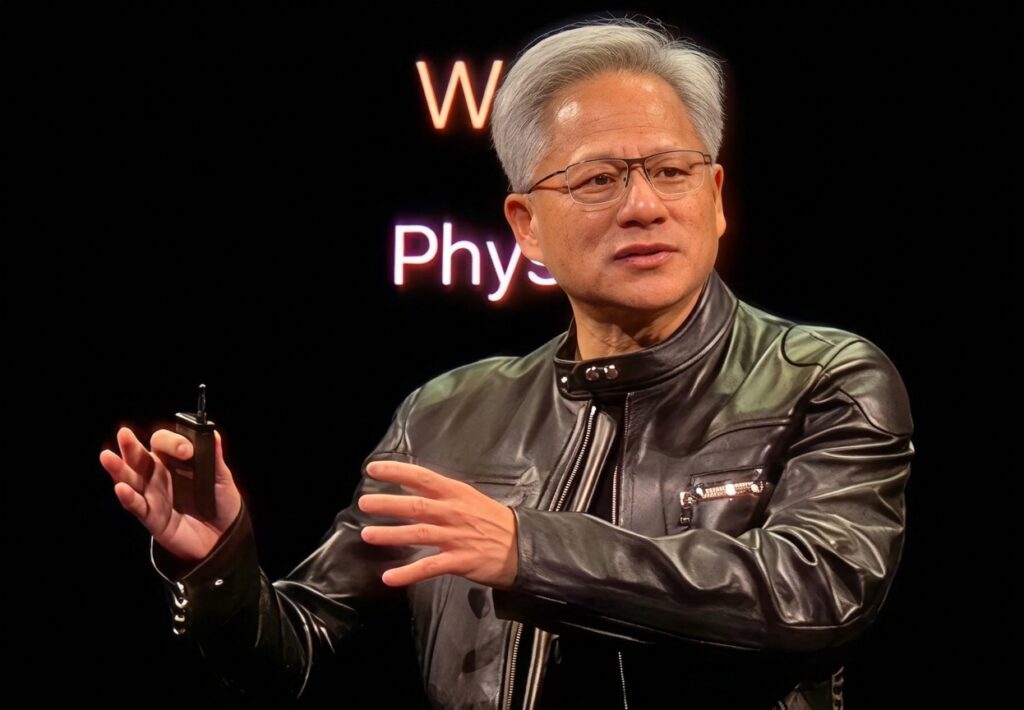
On November 12, the founder and CEO of NVIDIA, Jensen Huang, made a shocking announcement regarding his resignation amid a series of revelations about extramarital affairs. This news has sparked a significant degree of public concern and speculation about the future of artificial intelligence (AI) and its implications for Taiwan without Huang at the helm.
Chairman of Taiwan’s Caixin Media, Hsieh Chin-ho, has raised pertinent questions on social media, noting that the ramifications of Huang’s departure could extend much further than anticipated. Many are left wondering what the future of AI development in Taiwan will look like without Huang’s leadership, especially given his pivotal role in shaping the tech landscape over the past few years. Hsieh also speculated that there might be governmental inquiries related to this incident, hinting that the situation could create ripples that substantially affect Taiwan’s economy.
Reports have emerged detailing multiple infidelities involving Huang, most importantly, a revelation regarding his relationship with a Chinese national named Alice Huang, who has been speculated to operate as a spy for Beijing. Alice Huang has worked at Megaspeed, a data center company in Singapore that counts NVIDIA as a major client, having purchased over $4.8 billion worth of chips in the last two years alone. This connection has raised eyebrows and intensified scrutiny over Huang’s judgment.
Hsieh pointed out that he woke up at 4:30 AM to check NVIDIA’s stock prices, observing a significant drop to $148.8 during trading hours, down from a high of $243.37 in early September. This plunge has led to a staggering loss of approximately $2.279 trillion in market value, roughly equivalent to NT$74.75 trillion.
“The storm came swiftly and ferociously,” Hsieh remarked, indicating widespread concerns surrounding the impact of Huang’s absence on the future of AI technology and the overall repercussions for Taiwan’s economy. The past three years have seen a wave of economic success partly attributed to Huang’s innovative contributions. His departure marks a significant shift, removing a crucial figure from the public sphere who has often engaged with the community and showcased Taiwan’s potential at various events.
Hsieh shared how online discussions have also zeroed in on Huang’s apparent fixation on the Chinese market, which could lead NVIDIA into choppy waters. The ongoing scandal regarding Alice Huang seems to be the catalyst for much of the turmoil, with implications indicating a deeper nexus of espionage and corporate maneuvering.
From the onset of Huang’s interests in traditional Chinese attire, Hsieh noted his suspicions regarding Huang’s allegiances. While embracing local culture is generally seen as commendable, Huang’s subtle political maneuvers suggest an awareness of Beijing’s sensitivities. Notwithstanding the foundational role his AI supply chain plays in Taiwan’s tech ecosystem, the absence of photographic evidence of a closer collaboration with significant political figures such as former Presidents Tsai Ing-wen and Lai Ching-te raises eyebrows about his political sensitivities.
In recent years, Huang has made multiple visits to Taiwan, often dressed in his signature black leather jacket, building strong ties with local supply chain companies, including TSMC and Foxconn. He has openly endorsed Taiwan as a global AI hub, showcasing a strong belief in the region’s research capabilities.
Hsieh emphasized the ongoing geopolitical tensions between the U.S. and China and how figures such as Huang fit into this larger narrative. Huang, alongside Tesla’s Elon Musk, stood as notable voices in a era of AI as a national power metric, according to Hsieh’s insights. In the context of Huang’s recent remarks about potential Chinese breakthroughs in AI, he later altered his statements, raising questions about his positioning amid growing international scrutiny.
The timing of this scandal coincides with the aftermath of the November 3 midterm elections in the U.S., and Hsieh speculated that it could indicate a wider initiative to hold political figures accountable, possibly leading to congressional investigations that may affect Taiwan. He noted that the repercussions of this situation might extend to regions in Southeast Asia involved in semiconductor logistics, potentially closing off routes long exploited by the industry.
With Huang’s extramarital affair involving Alice Huang, a former managing director at Singapore’s Megaspeed, adding fuel to the fire, Hsieh indicated that the role of Singapore might change dramatically moving forward under Prime Minister Anwar Ibrahim’s administration in Malaysia. He observed that Malaysia has increasingly emerged as a new base for AI development, with significant implications for Chinese companies operating data centers in the region. He highlighted recent drops in Alibaba’s stock prices as a reflection of potential market volatility.
Looking ahead, Hsieh predicts that AI regulations in the United States will inevitably become stricter, which may expose various Taiwanese companies juggling relationships on both sides of the Pacific. Over the years, many industry leaders have maintained a “politics is politics, economics is economics” stance; however, Hsieh remarks that ultimately, political dynamics shape economic realities.
Reflecting on the monumental upheaval surrounding Huang and NVIDIA over the past couple of months, Hsieh likened the event to a powerful lesson, reminiscent of a line from a famous song: “The past is like a cloud of smoke.” He concludes with uncertainty about when Huang might reemerge on the global stage again, leaving many to ponder the future implications of his departure in the tech arena.