
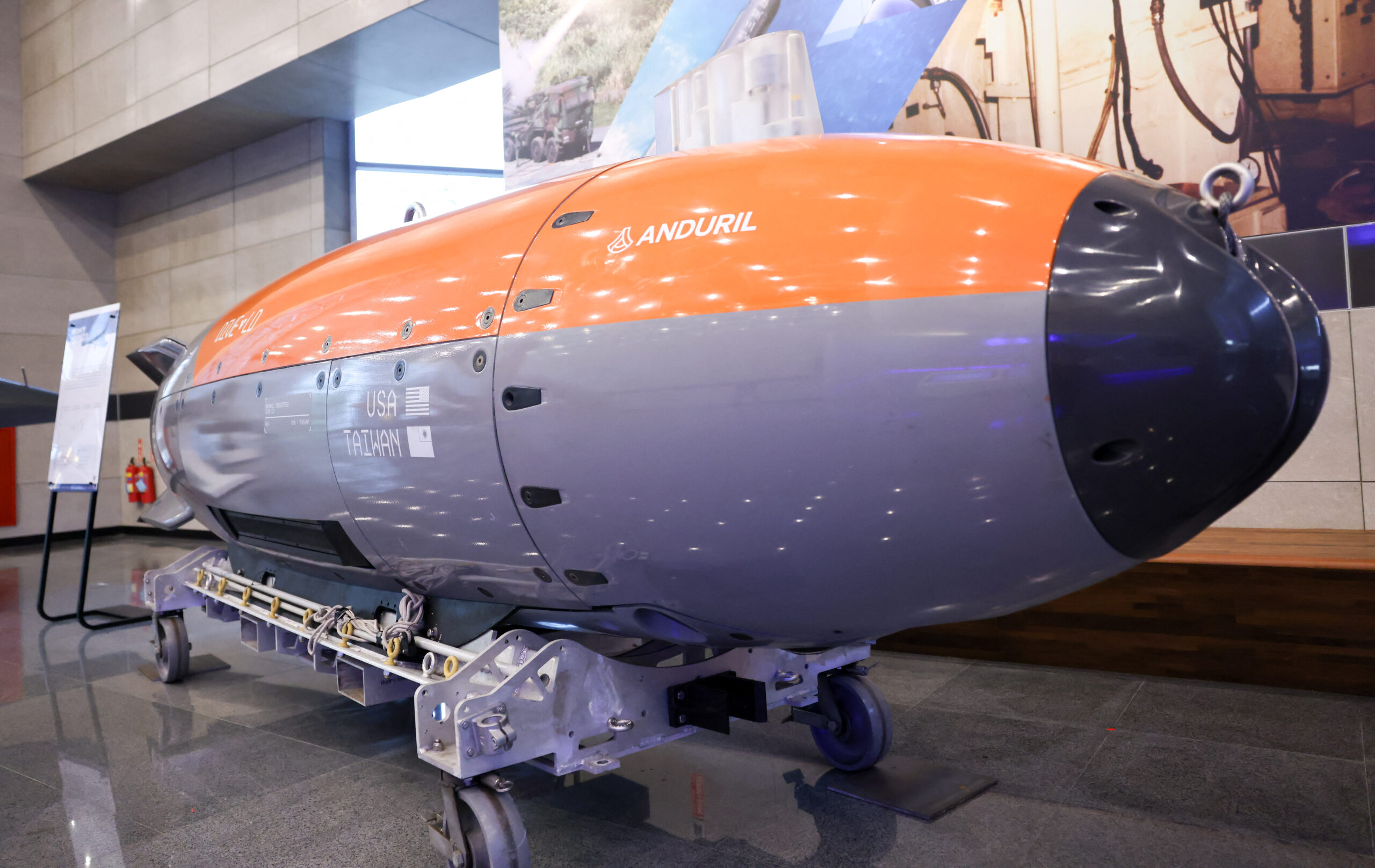
Iran’s Revolutionary Guard claimed on Tuesday (September 8) that they had captured a US underwater drone at the entrance of the Strait of Hormuz. The US confirmed that a drone had malfunctioned and may have drifted towards Iran, but emphasized that the model was outdated and did not gather sensitive data or carry classified sonar or radar equipment.
According to Iranian state media citing a statement from the Revolutionary Guard Navy, Iran conducted a “complex intelligence and combat operation” at the entrance of the Strait of Hormuz and captured a US unmanned submersible, claiming it to be an advanced equipment equipped with “the latest technology”.
The US Central Command (CENTCOM) stated that the underwater drone had malfunctioned more than a day earlier while surveying the area waters to support ongoing US operations. CENTCOM spokesperson Timothy Hawkins told Epoch Times, “This malfunctioning drone is an older model that neither collects sensitive data nor carries any classified sonar or radar equipment. US operations in the region’s waters continue.”
Hawkins mentioned that the drone drifted towards Iran after the malfunction, and it was possible for the Revolutionary Guard to capture it afterward. He said, “We are not concerned because the equipment on this malfunctioning drone uses a commercially available configuration.”
Iranian media identified the vehicle as the Dive-LD large autonomous underwater vehicle produced by the US defense technology company Anduril. Anduril later confirmed to Reuters that the company had indeed lost an unmanned vehicle but downplayed the significance of the incident.
A spokesperson for Anduril stated, “Dive-LD is a consumable autonomous system, meaning it was designed to operate in hazardous environments from the outset, where the loss of the vehicle is an expected possibility.”
According to Anduril’s official website, the Dive-LD is approximately 5.8 meters long, capable of conducting anti-mine operations, seabed mapping, intelligence gathering, and inspecting underwater infrastructure such as cables and pipelines. It can operate continuously for about 10 days and dive to a maximum depth of 6,000 meters.
The US military news website DefenseScoop reported in 2024 that each Dive-LD costs around $2.5 million.
In recent years, the US military has been investing in unmanned surface and underwater vehicles, hoping to monitor large sea areas, collect intelligence, track enemy ships and submarines at a lower cost, and reduce the risks faced by personnel during high-risk missions.
This incident may not be an isolated case of recent confrontations involving US-Iran maritime unmanned systems.
Just the day before, Iran claimed to have attacked another US-operated unmanned surface vehicle attempting to enter the Strait of Hormuz, but CENTCOM denied the claim.