
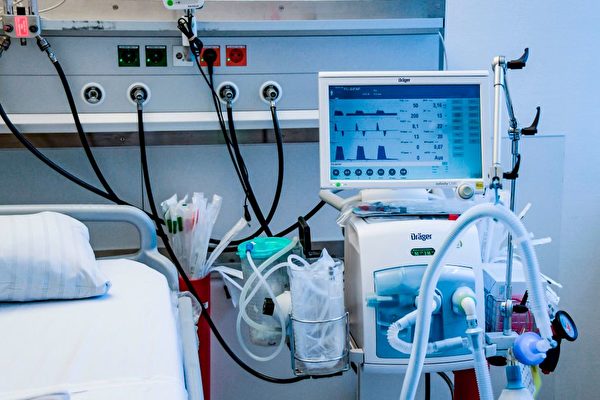
The Chinese regime has started implementing a policy of government procurement of domestic products this year, accused of restricting the entry of European and American medical equipment into public hospitals. An informant from a hospital in Beijing stated that the authorities are now directing relevant orders to domestic manufacturers, aiming to reduce expenses and sustain businesses that rely on government procurement.
The policy of government procurement of domestic products issued by the Chinese State Council Office came into effect on January 1 this year. The policy stipulates that domestic products must be produced within China. The Chinese Ministry of Finance will establish the proportion of domestic production components by product category within 5 years, and specify key components and key process requirements for certain products.
Before the implementation of relevant standards, products meeting the conditions for domestic production can be regarded as domestic products. Imported products produced overseas are not considered domestic products and are not eligible for a 20% price preference.
An informant from a university-affiliated hospital in Beijing told Epoch Times that public hospitals in Beijing have received notifications this year to prioritize selecting domestic manufacturers within the government-designated range when procuring medical equipment.
He said, “Now that the medical insurance fund is tight, many medical equipment companies have faced financial difficulties in recent years, and some have even closed down. The issuance of documents this year aims to support these businesses. Although foreign medical equipment is of better quality and offers more variety, it is now difficult for public hospitals to procure them. Following the pandemic, some foreign companies have gradually scaled back their operations in China, with some even exiting the Chinese public hospital market.”
A French medical equipment agent in the eastern region of China, Mr. Xue, stated that public hospitals with better operational conditions in the past would usually choose medical products with better performance. However, with the deteriorating economic environment in recent years, the authorities have begun to restrict hospitals’ procurement expenditures.
He mentioned, “I have heard that public hospitals need to apply when purchasing foreign products. For the same product, even if American or French brands are produced in China, the prices are different from imported products. Imported products are mainly used in the high-ranking wards of Beijing’s 301 Hospital, whereas regular public hospitals can only purchase domestic products. Currently, many foreign brands are unable to enter hospitals, leading them to resort to domestic products.”
Mr. Xue pointed out that the quality of domestic medical equipment has impacted the surgical procedures in some hospitals: “Some domestically-produced surgical knives lose their sharpness quickly. They may be suitable for the first cut but become dull by the third or fourth cut. I heard about a surgery in which several domestically-produced surgical knives were used, and the surgeon had to switch to his personally-prepared Medtronic surgical knife. Meanwhile, the high-ranking wards use Medtronic or German brand products.”
The Chinese government’s procurement covers computer tomography scanning equipment, magnetic resonance imaging equipment, ultrasound equipment, monitoring equipment, surgical instruments, and implant consumables. American companies such as GE Healthcare, Medtronic, and Johnson & Johnson have been selling related products in China for a long time.
The Chinese Ministry of Finance claims that state-owned, private, and foreign companies enjoy equal treatment, with no restrictions based on equity structure or investor nationality. Products produced by American companies in Chinese factories can be declared as domestic products, whereas imported equipment from overseas cannot receive the same treatment.
A staff member in the equipment department of a public hospital in Hubei province named Mr. Liu revealed that the hospital had long received internal notices to verify product parameters, registration certificates, origins, budgets, and to prioritize domestic equipment as “preferred consideration” when procuring medical equipment.
He mentioned that there are discrepancies between the bidding documents of public hospitals and their actual implementation: “The bidding documents may seem fair, treating foreign and domestic enterprises equally. However, during the actual evaluation, the product origin and price are crucial factors. Foreign companies also understand the mechanisms involved, leading many of them to withdraw.”
When domestic and imported products appear simultaneously in government procurement, the quoted price of domestic products can participate in the evaluation after a 20% deduction. For American equipment manufacturers to enjoy this treatment, they must transfer their production processes to China and meet the requirements for origin, components, and key processes.
GE Healthcare from the United States has established multiple production bases in China, manufacturing products like computer tomography scanning equipment and magnetic resonance imaging equipment. Whether these products can be recognized as domestic products depends on the production location and the subsequent publication of component and process standards.
A lady, Ms. Liu, who represents American medical equipment in Guangdong, informed reporters that their company’s business in China had significantly shrunk in recent years. She said, “After 2010, our company had branch offices in Shanghai, Wuhan, and Guangzhou, with over 150 employees. However, two years ago, the number dropped to 30, and now there are only 3 people left. The office has been vacated, and everyone is working from home. It has become increasingly challenging to operate in the Chinese public hospital market for the foreign medical equipment we represent.”
Public data shows that in the first 11 months of 2024, China’s medical equipment imports decreased by 0.33% year-on-year, with the United States accounting for 22.84% of the import sources, remaining a major supplier of medical equipment to China. After the Chinese regime implemented the policy of domestic products this year, American imported equipment faced a 20% price evaluation gap in government procurement. The drastic reduction of staff from over 150 to 3 in Ms. Liu’s company reflects the struggle faced by foreign medical equipment agents in securing orders from public hospitals.