
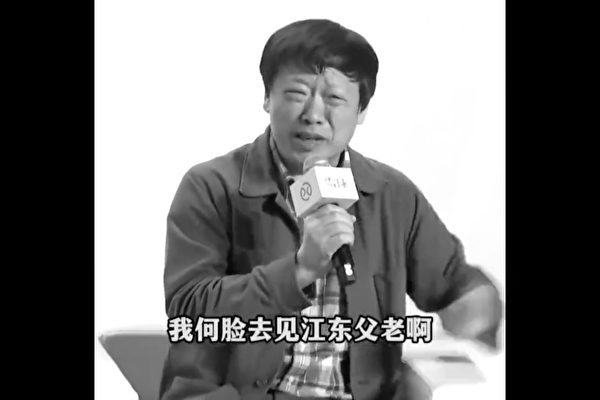
Recently, mainland China’s online space has been stirred up by a public debate mockingly dubbed the “Spicy Hotpot War” by netizens. It involves a fierce confrontation between Hu Xijin, former editor-in-chief of the Global Times, and Tang Jiafeng, a mathematics Ph.D. from Nanjing University and a mathematics tutor for graduate entrance examination, on whether elementary and middle schools should lower or eliminate the status of English as a core subject. This debate quickly trended on various social media platforms.
On September 4th, renowned math tutor for graduate entrance examination Tang Jiafeng posted multiple blog posts publicly advocating for “removing the status of English as a core curriculum,” stating, “No country in the world places English in such a supreme position as we do.” The catalyst for this proposition was his dissatisfaction with some regions excluding history from the scoring of the secondary entrance examination.
Tang Jiafeng openly called for the removal of English as a core curriculum, stating, “From primary school to middle school, high school, and university, how much resources and time do our children, parents, and schools put into courses that have little relevance to the vast majority of people.”
The Dahe Daily reported that numerous National People’s Congress deputies and members of the Chinese People’s Political Consultative Conference have made suggestions regarding the learning of foreign language subjects. In 2021, CPPCC member Xu Jin proposed reforming the compulsory status of English education in the stage of compulsory education; in 2023, CPPCC member Chen Weizhi suggested eliminating the primary position of English as a core subject in junior and senior high schools, fully abolishing English courses in the first and second grades of primary schools, reducing the weight of English courses in teaching in junior and senior high schools; in 2026, CPPCC member Hong Mingji proposed lowering the English score for the college entrance examination from 150 to 100, implementing two exams a year, taking the highest score, de-emphasizing difficult grammar, and focusing on practical listening and speaking abilities.
Many education professionals have also put forward different opinions. CPPCC member Dong Hongchuan suggested that proposals regarding reducing the importance of English education should be treated carefully, and China should continue to strengthen foreign language education, focusing on cultivating foreign-related talents to serve high-level external openings and construct a new development pattern.
Following this, Tang Jiafeng publicly invited Hu Xijin to a video debate, posting multiple follow-up questions for several days and pointing out that Hu Xijin “constantly flip-flops” and “is too distant from the common people.”
In response to Tang Jiafeng’s views, on September 5th, Hu Xijin wrote a lengthy article strongly refuting them. While not directly naming Tang Jiafeng, he criticized the other party as a “fool” and a “fraud” for their extremist and narrow-minded views.
In response to Hu Xijin’s characterizations as a “fool,” Tang Jiafeng later released a video challenging him to a face-to-face live debate.
The public opinions on this controversy are divided among netizens. Some netizens believe that Hu Xijin is afraid to debate Tang Jiafeng live.
In fact, in recent years, debates on the English curriculum in mainland China have occasionally emerged.
An opinion article in the Sing Tao Daily stated that as a widely used international language, there is nothing inappropriate about English being a key subject in basic education, and it cannot be regarded as “blindly worshiping the West.” The key issue lies in the method of teaching and learning English.
The article mentioned that English teaching in China focuses heavily on exams, with a large amount of time spent on grammar and reading comprehension, while listening and speaking practice are generally lacking. Many students rely on rote memorization to accumulate vocabulary, enabling them to tackle high-difficulty exam papers but struggling in actual conversations, leading to situations where they cannot understand or speak, resulting in a significant waste of time and energy. Therefore, rather than discussing whether to remove English as a core subject, how to reform and optimize the English teaching methodology is a more constructive topic.