
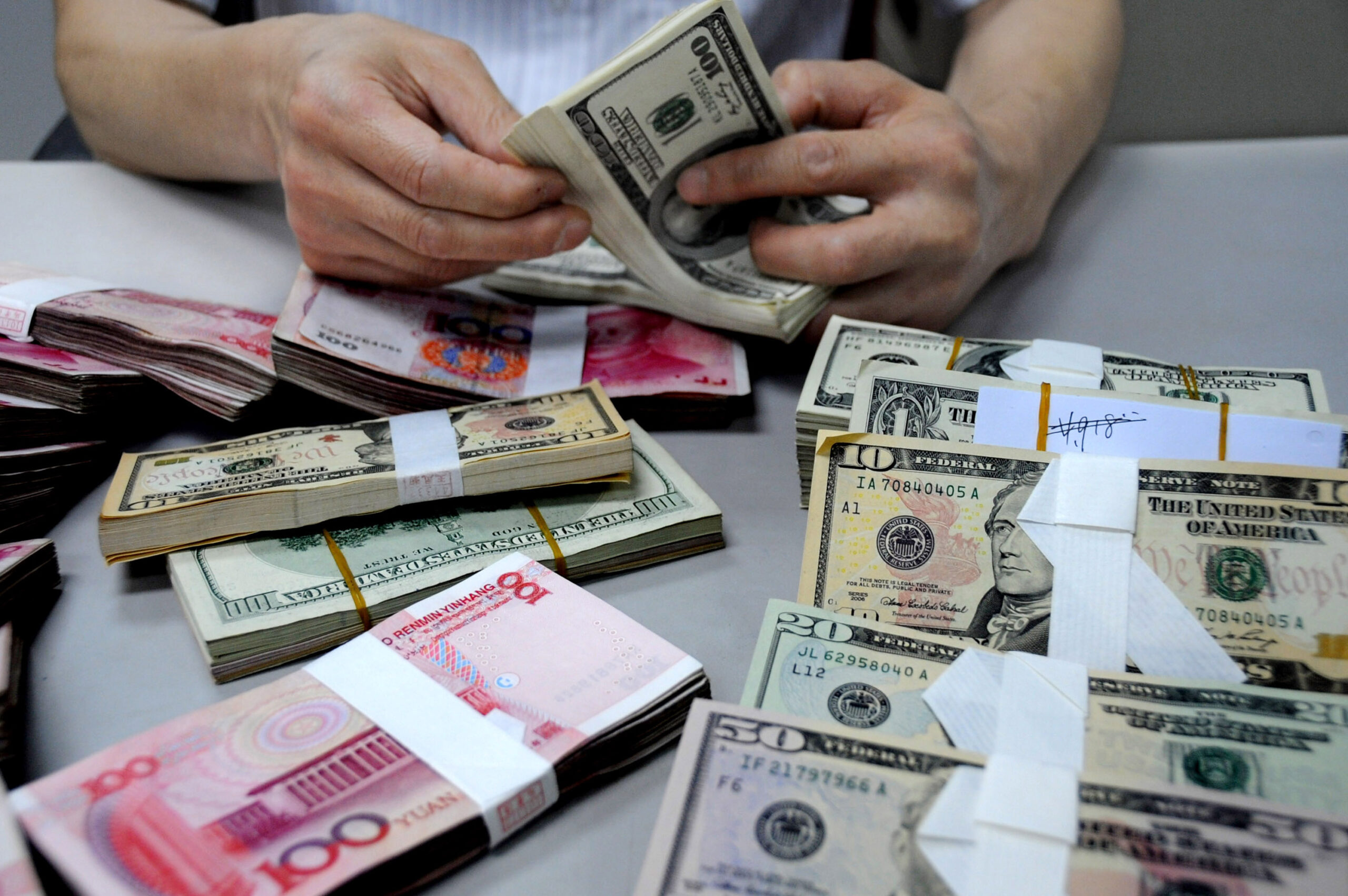
The exchange rate of the Chinese Yuan against the US dollar has reached a three-and-a-half-year high, but the appreciation of the Renminbi has had adverse effects on foreign trade exports. The People’s Bank of China has taken various measures to restrain the currency’s appreciation, including lowering the Renminbi’s reference rate and increasing holdings of US Treasury bonds.
On September 6, onshore and offshore Renminbi trading within China was suspended due to the weekend. The offshore Renminbi to US dollar exchange rate, which reflects international market expectations, remained around 6.71 after reaching a three-and-a-half-year high. The market considers 6.72 a key psychological threshold.
Over the past twenty months, the Renminbi has appreciated by nearly 9% against the US dollar. The continuous rise in the Renminbi exchange rate has put multiple pressures on Chinese export-oriented enterprises. It is widely believed in the industry that Renminbi appreciation will force the foreign currency pricing of Chinese goods in the international market to increase, directly weakening the competitiveness of products’ overseas prices. Export enterprises are facing risks of losing foreign trade orders or being replaced by products from low-cost regions like Southeast Asia. Additionally, when export enterprises receive payments in US dollars or other foreign currencies and convert them into Renminbi, the amount of Renminbi received is significantly reduced, leading to a serious erosion of export net profits along with exchange losses.
According to a report by Reuters on September 4, a banking industry insider revealed that since June this year, depositors with account balances exceeding $50,000 at China’s five largest state-owned banks have been able to negotiate interest rates of more than 3%, compared to the previous limit of 2.8%. Some smaller banks or foreign lending institutions have been able to negotiate rates close to 4% since August.
It is reported that after offering deposit rates of 3% to 4%, banks can generate profits by purchasing US Treasury bonds. The US benchmark 10-year Treasury bond yield has risen to 4.80%, the highest since January 2025. For many Chinese banks, the yield on Chinese government bonds issued by the Communist Party is extremely low, making US Treasury bonds another highly attractive investment option.
A banking industry source stated, “Domestic interest rates are too low, so banks need to attract US dollar deposits to buy US Treasury bonds.”
Insiders mentioned that higher US dollar deposit rates help absorb some US dollar liquidity and restrain the trend of converting dollars into Renminbi, thereby alleviating the pressure on Renminbi appreciation.
Industry sources indicated that there are signs showing that the People’s Bank of China is taking various measures to curb Renminbi appreciation, including reduced trading activities, a decrease in dollar selling by foreign trade exporters, and the daily setting of the People’s Bank of China’s reference rate.
From September 1 to 4, the daily Renminbi reference rate set by the People’s Bank of China was 700 basis points weaker than market expectations, marking the largest deviation in half a year.
The Renminbi reference rate serves as a “barometer” for the foreign exchange market. It is announced by the People’s Bank of China before the daily market opening as the benchmark price for interbank foreign exchange market transactions of the day, with strict restrictions on fluctuations within 2%.
Since November 2025, the People’s Bank of China has consistently set the reference rate at levels weaker than market expectations. State-owned banks have also intervened multiple times to purchase foreign exchange to control the pace of Renminbi appreciation.