
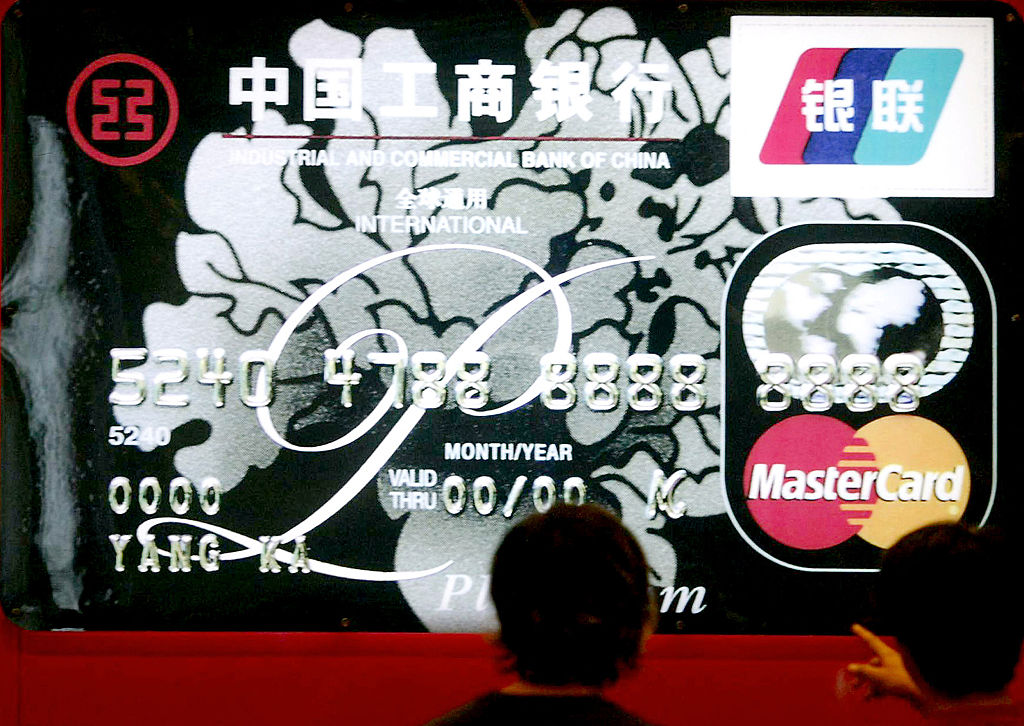
The credit card market in mainland China is shrinking at an accelerating pace, with nearly 20 million credit cards and unified credit and lending cards being net reduced in the first half of this year, averaging over 100,000 cards diminishing per day. The credit card loan balances of the six major state-owned banks have all declined, and the delinquency rates of many banks have increased.
According to data released by the People’s Bank of China on September 2nd, by the end of the second quarter of this year, there were a total of 677 million credit cards and unified credit and lending cards in mainland China, a decrease of about 10 million cards from the end of the first quarter and nearly 20 million cards from the beginning of the year.
Compared to the peak of around 807 million cards in the third quarter of 2022, the total number of credit cards and unified credit and lending cards has decreased by about 130 million, returning to levels seen around 2018.
Reports from “Yicai” indicate that the decrease in card volume is related to banks clearing long-unused “dormant cards,” shrinking credit lines for high-risk customers, and is also influenced by residents’ increasingly cautious consumption habits and voluntarily canceling cards.
Half-year reports from listed banks show that Industrial and Commercial Bank of China and China Construction Bank each reduced around 2 million credit cards in the first half of the year, while Ping An Bank saw a reduction of around 840,000 cardholders. Banks like Industrial Bank, Everbright Bank, and Huaxia Bank have also been clearing dormant and inefficient cards.
As the number of credit cards decreases, the borrowing size of cardholders is also contracting. As of the end of June, the credit card loan balances of the six major state-owned banks have decreased compared to the beginning of the year.
Among them, Industrial and Commercial Bank of China decreased by 14.39%, Postal Savings Bank of China by 9.56%, and Bank of Communications and China Construction Bank by 8.66% and 7.66%, respectively.
The pressure of bad debt on some banks’ credit cards is also increasing. Industrial and Commercial Bank of China’s credit card delinquency rate rose from 4.61% at the end of 2025 to 5.37%, Bank of Communications increased from 2.68% to 3.8%; Minsheng Bank and Everbright Bank both increased to 4.22% and 3.79% respectively.
The credit card delinquency rate refers to the proportion of credit card loans classified as bad debts by banks to the related loan balance. An increase in the ratio indicates a growing pressure of overdue or unrecoverable loans.
According to the research report from Western Securities, some borrowers’ incomes are recovering slowly, and credit risks are difficult to resolve in the short term. The potential increase in bad debt pressure on consumer credit loans in the second half of the year may continue, requiring banks to allocate more funds to reserve for potential bad debts, putting pressure on profits.
Additionally, the contraction of the credit card market is also related to residents’ increasingly cautious consumption habits, the diversion of internet credit products, and the shrinking of credit card benefits.
In recent years, many banks have cut down on benefits like point redemptions, airport VIP lounges, airline miles, and co-branded offers, leading some consumers to turn to internet credit products tied to e-commerce platforms and social media.
Wang Pengbo, Chief Analyst at Bocom Consultancy, told “Yicai” that a few banks continue to increase the issuance of cards primarily to attract active customers and make up for the business gap caused by clearing “dormant cards.” Credit card operations are transitioning from pursuing scale to focusing on customer quality, asset risks, and profitability.
Some banks have also introduced the so-called “AI Power Card” this year, offering artificial intelligence service quotas to attract younger users. However, according to reports from Financial Union, bank credit card practitioners have indicated that while the promotion efforts are significant, the actual effects are not yet evident.