
Survivors of the Nepal flood have accused that before the Trishuli-3A hydroelectric project tunnel was inundated by floodwaters, workers had requested to evacuate, but the Chinese supervisor insisted they continue working and then left on his own accord. Subsequently, floodwaters and mud rushed in, sweeping away multiple workers.
Raj Chhetri, one of the survivors, recalled in an interview that they were working inside the tunnel when a storm suddenly struck, leading to a power outage.
“We told the Chinese supervisor, ‘There’s a problem, a storm is coming.’ We asked him to take us out, but he just said, ‘Work, work,'” Chhetri said.
He mentioned that the supervisor later said, “I’ll go check and come back,” and then left, “leaving us inside.”
Chhetri described how the floodwaters forcefully poured into the tunnel, “vehicles, supplies, people, all swept away,” and he along with other workers could only run for their lives. Because his work position was closer to the tunnel entrance, he eventually managed to escape.
Nepali workers accuse Chinese supervisor of not letting them escape but leaving first!
A survivor from the Trishuli hydroelectric project claimed that before the flood hit, workers noticed something was amiss, requested to evacuate the tunnel, but were stopped by the Chinese supervisor, who claimed, “I’ll go outside to check first.”
However, after the supervisor went out, he never returned.
Subsequently, a large number of workers were trapped inside the tunnel…
According to a report from “India Today”, Chhetri was working in tunnel number 3 at the time. He estimated that there were about 265 workers inside the tunnel when the flood struck. He said that he and three others managed to escape.
Chhetri also described the dire situation inside the tunnel. He mentioned that they could already see the bodies of deceased workers inside, but there were also people alive continuously calling for help.
“Many bodies of hydroelectric workers lay in the upper tunnel. Many people were still alive. We could hear cries for help,” he said, adding that he was faced with a desperate choice at the time: whether to try to save others or save his own life first.
Chhetri said that after fleeing the flood, he and other survivors spent the first few days in the forest, sleeping under a tree. With communication disrupted, the workers could not inform their families that they had survived. Chhetri mentioned that it wasn’t until communication was restored that he could contact his family.
According to “India Today”, the personnel from POWERCHINA were responsible for supervising the Trishuli-33A project.
Chhetri accused the Chinese side of failing to properly issue warnings to the workers, stating, “The actions of the Chinese (CCP) government are wrong, they knew about the flood and landslides.”
He expressed, “If we had received advance notice, many lives and properties could have been saved.”
Rescue operations have been hindered by damaged infrastructure, severe weather, and difficulty in accessing underground facilities. At Trishuli-33A, rescue personnel are using heavy equipment and specialized techniques to try to access the tunnel buried under mud and debris.
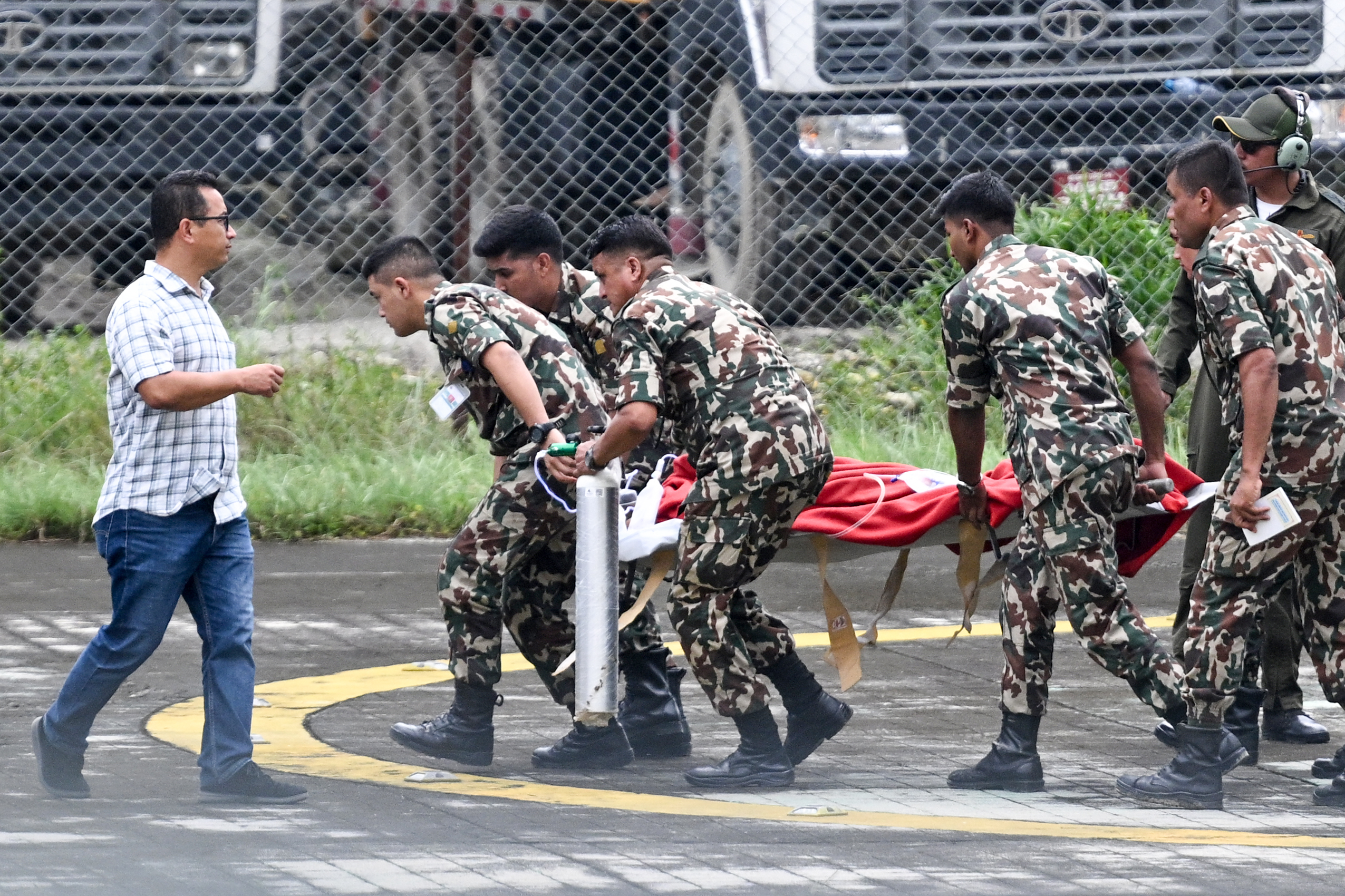
On Friday, September 4, a breakthrough was made in rescue operations. According to the Associated Press, nine days after the flood, rescue workers finally managed to save two workers from inside the tunnel at Trishuli-33A construction site. The two individuals rescued were a mechanical foreman and a mechanical supervisor, with one in critical condition. Both were subsequently airlifted to a hospital in Kathmandu.
One of the rescued workers informed rescue workers that there were still people alive inside the tunnel. Rescue workers heard voices coming from inside the tunnel in the morning and once confirming survivors, they pinpointed the locations of the two individuals.
The Independent Power Producers Association of Nepal cited by the Associated Press stated that at least 557 workers are missing at the Trishuli-3A hydroelectric project, with around 115 believed to be trapped inside the tunnel. In total, 900 workers are missing across 12 flood-affected hydroelectric projects in Nepal, with approximately 500 potentially trapped underground.
According to the latest statistics from Nepal’s Disaster Management Department, the flood on August 26 has resulted in at least 1,259 deaths locally, with over 5,000 people reported missing.