
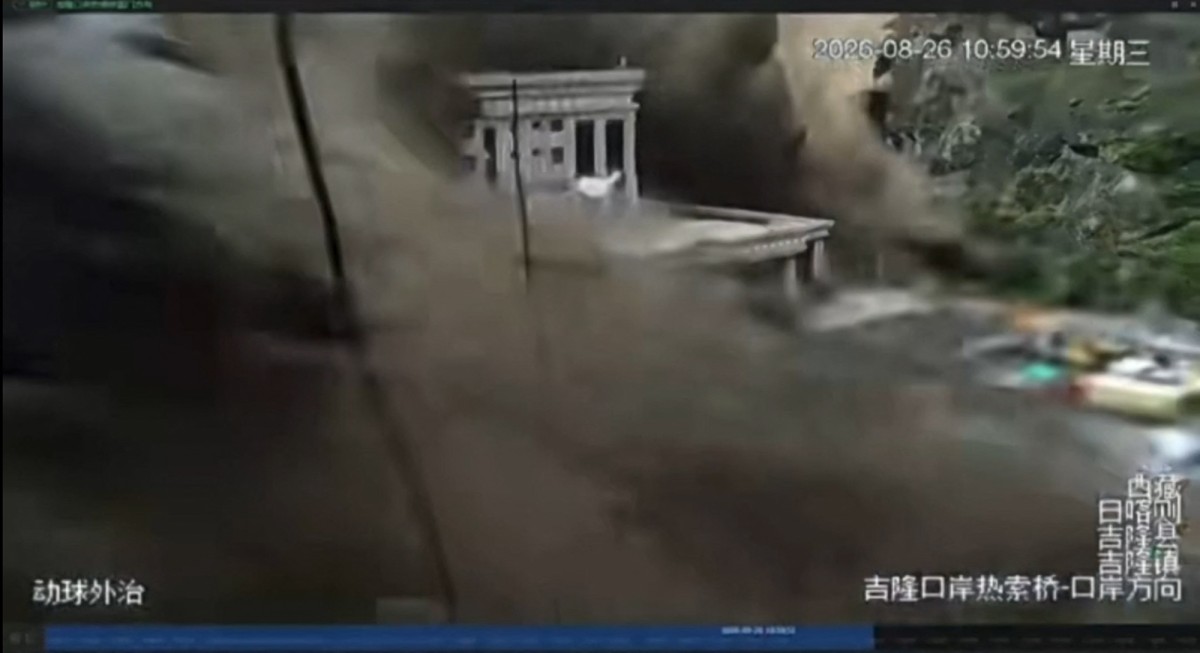
After a severe mudslide disaster along the border of Nepal and Tibet, rescue operations are still ongoing. However, there is a stark contrast between the way Nepal and the Chinese Communist Party (CCP) handle the reporting of the disaster. Nepal has been transparent in reporting the situation, providing real-time updates on casualties and allowing foreign journalists to interview victims and report on the disaster at any time and place.
On the contrary, the CCP has been controlling the narrative through censorship, restricting independent reporting by foreign journalists, and emphasizing so-called “positive energy” to divert attention from the true death toll. They manipulate the reporting rhythm, the scope of information, and the narrative direction, shifting the public focus from issues of accountability, regulatory errors, and the reality of casualties to topics like “leadership attention, rapid rescue efforts, social unity, and heroism.”
Following the disaster, instead of immediately focusing on relief efforts, the CCP was busy deleting videos. According to a BBC report, critical videos of the August 26 mudslide at the Jilong Port quickly disappeared from Chinese networks, making it difficult to find complete on-site footage on platforms like Weibo and Douyin. First-hand images and voices of survivors and missing persons’ families were also severely limited.
Although on August 28, CCTV aired a brief public video of the moment the disaster struck, they used this clip to highlight an image of a commander on the scene directing evacuations.
Simultaneously, the CCP strictly restricts foreign media access to the site for reporting, and a large amount of disaster-related information is primarily disseminated through official channels. According to a recent report by Reuters, the CCP restricts foreign reporters from entering citing safety and transportation conditions, limiting independent coverage.
According to a recent report from the independent news analysis media “Dialogue,” Australian Broadcasting Corporation journalist Allyson Horn has repeatedly tried to enter Tibet but has been consistently denied by the Chinese authorities. Other foreign journalists have faced similar situations.
The article quoted a report from The Guardian, stating that so far, Chinese state media has only been praising the CCP leader and Premier Li Keqiang’s inspection of the disaster area and rescue efforts, hardly reporting on the impact of the disaster on local residents and communities.
The article noted that during the 2008 Sichuan Wenchuan earthquake, initially, the CCP allowed media coverage of the disaster and updates on the death toll, allowing media to question the quality of local school buildings. However, the CCP quickly realized things were getting out of control and started suppressing coverage.
Citing research findings, after the 2011 Wenzhou high-speed train accident, the CCP learned from the experience of the Wenchuan earthquake and began strict control over media coverage from the beginning. At the same time, they demanded extensive promotion of “positive energy” activities like blood donations in the aftermath, exploiting people’s post-disaster love and sympathy.
In subsequent events like the 2021 Zhengzhou “7.20” torrential rain, the 2023 Hebei Zhuozhou flood, and the 2022 China Eastern Airlines Flight MU5735 crash, the CCP’s adept use of these three methods became increasingly effective.
The article mentioned that after Xi Jinping came to power in 2012, not only did media and social media controls tighten further, but the CCP also took advantage of the information gap caused by Western media’s difficulty in independently verifying facts, and strongly criticized Western media for biased and inaccurate reporting.