
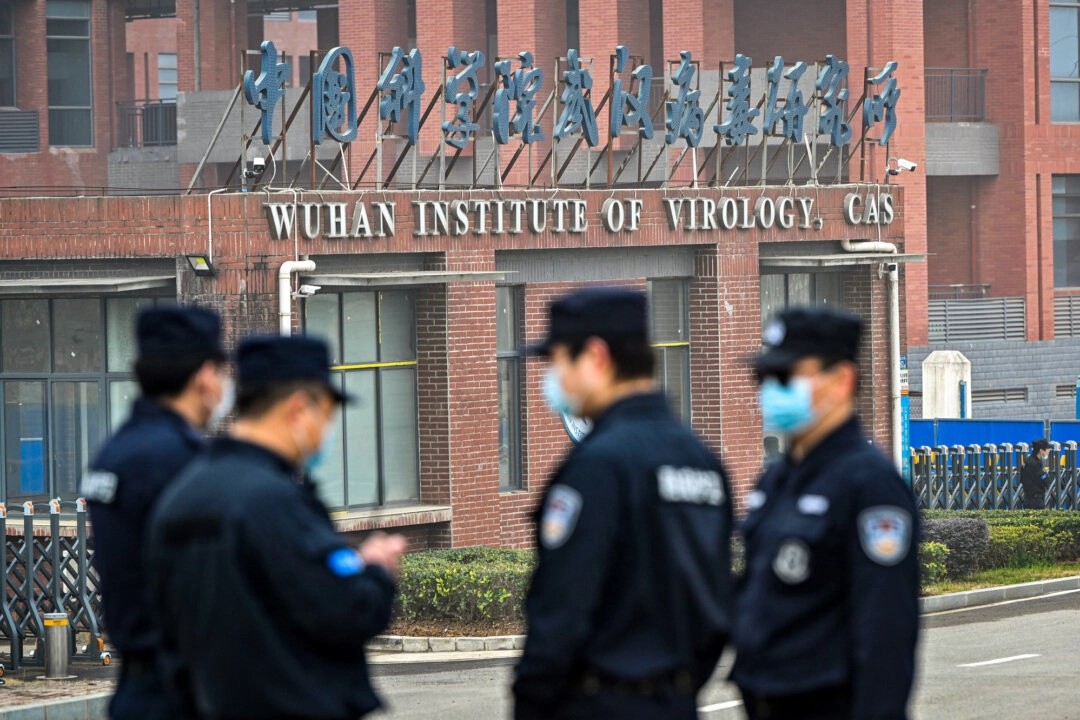
Missouri’s COVID-19 compensation case against Chinese defendants has entered the execution phase after a default judgment, with the Chinese institutions that previously refused to respond now seeking to overturn the ruling and filing a countersuit in domestic courts. Experts analyze that the reason for the Chinese Communist Party’s (CCP) change in strategy is that the U.S. judgment execution process has begun to touch on assets, underlying a strategy of “delay, entangle, and counter-attack.”
This week on Monday, the Hubei Provincial Government and the Chinese Academy of Sciences have engaged the U.S.-based global law firm White&Case to attempt to overturn the $24.5 billion compensation judgment obtained by Missouri accusing the CCP government of hoarding personal protective equipment during the early days of the COVID-19 pandemic.
In April 2020, Missouri sued the CCP Central Government, the Hubei Provincial Government, among others, alleging that China concealed and mishandled the virus in the early stages of the outbreak, causing shortages of supplies in the United States. In 2021, the federal district court dismissed the lawsuit based on the Foreign Sovereign Immunities Act. Missouri then adjusted its legal grounds, accusing the CCP leadership of knowing about the virus and its human transmission as early as September 2019.
In 2024, the federal appeals court reinstated parts of the claims. As the Chinese defendants did not appear in court, in March 2025, Judge Stephen Limbaugh Jr. issued a default judgment.
Initially, the court awarded around $8 billion, which later increased to approximately $24.5 billion based on relevant laws. Missouri subsequently stated that it would execute the judgment by seizing Chinese assets in the U.S. (including farmland).
In their submissions this Monday, the Hubei Provincial Government and the Chinese Academy of Sciences questioned the jurisdiction of the U.S. court and alleged that the default judgment improperly interfered with diplomatic affairs. However, these claims have currently only been unilaterally raised by the defendants and have not been confirmed through court review.
A spokesperson for the Missouri Attorney General’s Office stated on Monday that China’s challenge to the judgment at this stage is “too late,” and reiterated their commitment to pursuing compensation for the losses and responsibilities caused to Missouri during the pandemic.
The transition of the ruling from paper to execution has ushered this long-delayed legal battle into a new phase – according to experts interviewed, the real variables lie beyond this step.
Dr. Lin Xiaoxu, a virology expert, former U.S. Army officer, and Executive Director of Shence Think Tank, mentioned in an interview with Dajiyuan that this change does not imply that the CCP suddenly accepts or recognizes the U.S. judicial system, but is more likely due to the judgment entering the asset execution phase.
Dr. Lin commented, “The default judgment itself is just a number on paper. What truly concerns the CCP is the ‘asset touch’ that begins after the judgment.”
Throughout the previous litigation process in Missouri, the Chinese side consistently refused to acknowledge the jurisdiction of the U.S. courts in the case and did not appoint American attorneys to physically defend against the claims.
Dr. Lin noted that the CCP’s fundamental position in the past was to characterize the case as “baseless” and explicitly state the non-recognition and non-acceptance of U.S. court jurisdiction.
“The response the Chinese side took was to not appear at any stage, not appoint American attorneys, or raise jurisdiction objections or substantive defenses,” he said.
However, the situation changed after the default judgment was issued.
Dr. Lin analyzed that the direct reason for the current actions is practical and not a sudden conversion to trust in the U.S. judiciary.
He believed that the critical factor was Missouri starting to push for judgment execution and following the Foreign Sovereign Immunities Act-related procedures for diplomatic service while discussing potential enforcement targets, including Chinese-owned farmland assets.
“What truly concerns the Chinese side is the ‘asset touch’ after the judgment, begins. Once the service is completed, the court certification process is completed, the plaintiff can apply for enforcement. If no action is taken at this point, it will be left with post-hoc defenses against the enforcement targets, with even narrower space,” he stated.
In a nutshell, while in the past, the CCP could ignore U.S. court judgments, once the ruling starts to transform from a monetary compensation amount on paper to the legal process of identifying and executing assets, the nature of the challenge shifts.
It is worth noting that the entities currently responding to the lawsuit are not the Chinese Foreign Ministry or State Council but lower-level official institutions, which in itself is intriguing.
Dr. Lin suggested that this arrangement holds a strategic significance. By allowing local and institutional bodies to appear while keeping the central government at a distance, the CCP can engage in the legal process through U.S. attorneys while minimizing the direct acknowledgment of jurisdiction by the central government in U.S. courts.
The demands put forth by the Hubei Provincial Government and the Chinese Academy of Sciences mainly focus on court jurisdiction, service procedures, the appropriateness of the default judgment, whether the case interferes with diplomatic relations, and whether antitrust claims have been duly served.
Dr. Lin indicated that this approach is a technical legal attack simultaneously avoiding direct acknowledgment of jurisdiction by the central government in U.S. courts, which is part of the CCP’s legal strategy.
He stated that the actual risk lies in the potential scenario of Chinese government bodies fully engaging in U.S. civil litigation procedures, leading to broader disclosure of evidence.
“For the CCP, if early pandemic decisions, material allocation, and laboratory-related facts enter the U.S. civil evidence process, the risk is far greater than losing a propaganda battle,” Dr. Lin said.
Concurrently with the U.S. court’s enforcement actions, another lawsuit has quietly emerged in China’s domestic sphere.
Almost in sync with the U.S. enforcement actions, the Hubei Provincial Government and the Chinese Academy Sciences have filed a lawsuit in the Wuhan court against Missouri, accusing them of fabricating false information, smearing China, seeking approximately 356.4 billion yuan (about $50.5 billion) in damages, and demanding a public apology.
Dr. Lin believed that the purpose of this lawsuit extends beyond the claims. “Bringing the battle back to a controllable field. The procedures, evidentiary rules, and public opinion environment in the Wuhan court are entirely under their control.”
While the U.S. court case might revolve around the Foreign Sovereign Immunities Act, commercial activity exceptions, antitrust claims, and PPE procurement and supply during the pandemic, the case in the Wuhan court is refashioned into disputes around “slander,” “damage to reputation,” and “political manipulation tracing back” components.
Dr. Lin remarked, “Regardless of whether the judgment can be enforced across borders, it can serve domestic narratives: ‘This is a counter to defamation and political manipulation tracing back,’ instead of debating whether the ‘commercial activity exception’ stands in front of U.S. judges.”
In his view, these actions effectively shift the controversy surrounding pandemic responsibilities, information disclosure, and preventive measures from the U.S. legal system to a level of reputation and narrative power.
The simultaneous progression of these two lawsuits indicates the operation of the same set of responses by the Chinese side.
Dr. Lin summarized the present Chinese approach as “reciprocal retaliation and delay of execution.”
“The countersuit and Missouri’s execution initiation almost coincide, functionally creating a standoff of ‘you accuse me, I accuse you,’ increasing diplomatic and political costs.”
He believed that as long as both litigations advance simultaneously, the case might transform from a straightforward U.S. judgment into a long-term legal and diplomatic game. Moreover, the CCP could use this as an opportunity to present an alternate narrative, asserting that the U.S. execution of the judgments itself encroaches on Chinese sovereignty and judicial dignity.
“As long as the judgment cannot be executed, tracing back cannot focus, and the liability cannot turn into enforceable consequences, they can continue to resist public transparency,” he remarked.
He considered this as the core of the entire strategy – not necessarily winning the final victory in a U.S. court but rather prolonging the case through extensive procedural disputes.
Dr. Lin categorized the CCP’s response into four steps: initially refusing to enter U.S. courts, avoiding leaving traces of jurisdiction acknowledgment; after the judgment is finalized and starts executing, having Hubei and the Chinese Academy apply to revoke the default judgment; subsequently counter-suing Missouri in the Wuhan court focusing on reputation and slander as a primary dispute; and finally, delaying the U.S. judgment further through ongoing procedural disputes.
“The core of these tactics is delay, entangle, counter-attack, and consume through procedures.”
The effectiveness of this entanglement will largely depend on the outcome of a crucial legal procedure.
At present, a critical legal point in the case is the Hubei Provincial Government and the Chinese Academy’s application to withdraw the default judgment under Rule 60(b) of the U.S. Federal Rules of Civil Procedure.
Dr. Lin noted that the defendants had raised several defenses, arguing that the district court lacked subject-matter jurisdiction over them, the default judgment improperly interfered with diplomatic relations, some PPE-related claims were later modified into antitrust claims without proper service, etc.
Moreover, the defendants questioned Missouri’s ability to prove violations of PPE transport contracts to the United States and whether triple compensation for foreign sovereign defendants was in line with the FSIA.
“The court needs to weigh whether the default can be attributed, whether there are valid defenses, whether it is too late – Missouri emphasizes ‘several years too late’ – and whether the revocation conforms to ‘justice’ and international courtesy,” Dr. Lin explained.
He believed that this step holds decisive significance. “If the withdrawal is rejected, the judgment becomes harder to shake; if granted, the entire case may return to jurisdiction and substantive disputes, possibly being rejected again.”
However, Dr. Lin pointed out that Missouri still faces significant legal obstacles in securing the corresponding $24.5 billion assets.
Given the high execution difficulty, where does the value of this ruling lie?
Dr. Lin pointed out that the actual significance of Missouri’s $24.5 billion default judgment cannot simply be measured by whether they can actually acquire the money.
“The main function of this judgment would be political and symbolic, serving as a demonstration for other states or plaintiffs, as a negotiation or sanction card – not Missouri’s finances actually receiving $24.5 billion,” he said.
In his view, the case’s true sensitivity lies in transforming the pandemic responsibility disputes, initially a matter of politics and morality, into a monetary judgment within the U.S. judicial system.
Dr. Lin remarked, “The hit is not on the CCP’s adeptness in handling ‘public accusations,’ but rather on what they can’t tolerate: a legalized debt title and the potential asset execution procedures.”
He believed that for Beijing, political accusations could be handled through denial, rebuttal, or labeling them as “politicized tracing back,” but a formed U.S. court judgment, if proceeded to service, certification, and asset execution, could result in more concrete legal consequences.