
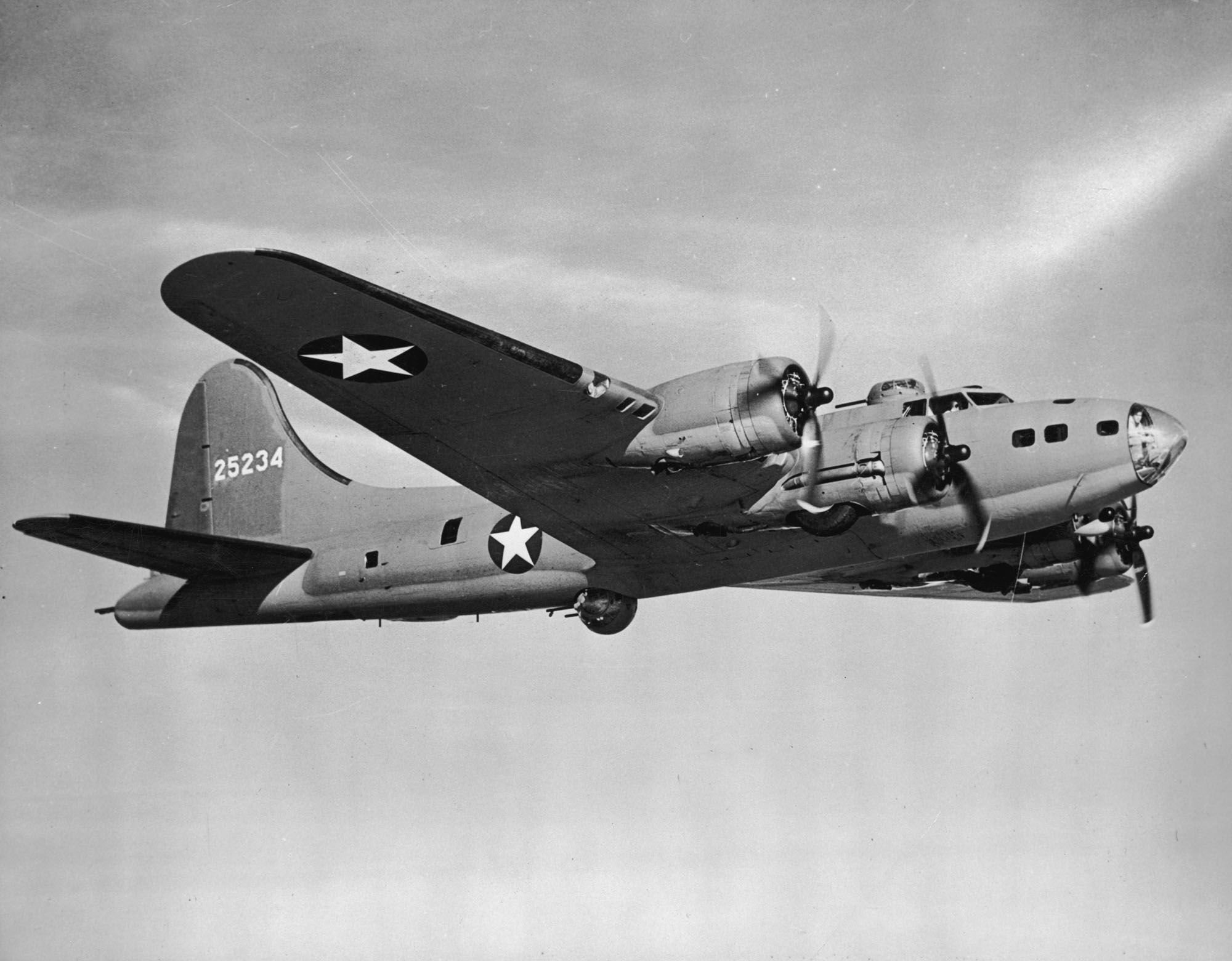
During World War II, various types of land-based and carrier-based fighter planes developed and produced by the United States dominated the skies, securing crucial air superiority in the European and Pacific theaters of war. The United States also developed and produced various types of attack and bomber aircraft that inflicted more devastating blows on enemy forces, playing a greater role in winning the war. The total production of heavy bombers B-17 and B-24 exceeded 30,000 units.
In comparison to attack aircraft, heavy bombers with higher payload capacity and longer range played a more significant role on the battlefield, and were one of the key capabilities developed by the United States Army Air Corps during World War II.
The United States participated in World War I and recognized the great potential of air raids. The MB-1 became the first large twin-engine dedicated bomber developed by the United States in 1918, with a total of 20 units produced. Originally a project for the U.S. Army Air Service, the U.S. Navy also purchased 10 units as torpedo bombers, designated as MBT.
The MB-1 was still an early biplane aircraft, featuring a double vertical tail design, fixed tailwheel landing gear, and four-wheel main landing gear. The open cockpit could accommodate three crew members and carry 471 kilograms of bombs. Despite its slow speed and poor maneuverability, the MB-1 had a large carrying capacity. After World War I, the first batch of aircraft was transferred to the United States Postal Service for mail transport. The U.S. Navy and Marine Corps continued to use them.
The United States also experimented with some seaplanes and airships, but they were not considered typical bombers.
In 1920, the Martin NBS-1 became the standard frontline bomber of the United States Army Air Service, with a total production of 130 units. The aircraft was equipped with five machine guns that could fire in the forward, rear, and downward directions. In July 1921, during a verification exercise, six NBS-1 bombers sank a captured German battleship using 907 kilograms bombs; in subsequent exercises, they also sank two retired U.S. battleships.
In the late 1920s, the Keyston…
(To be continued)