
Iran’s economy has plunged into a freefall under the pressures of warfare, international sanctions, and the U.S. naval blockade, with the Iranian currency, rial, hitting a historic new low.
On September 29, the Iranian currency plummeted to another historic low of 1 US dollar to 2.5 million rials, compared to 2.2 million on September 2, over 2 million on August 24, and around 1.9 million on May 2. There was a brief uptick in mid-June due to negotiations between the two sides.
After Iran blocked the Strait of Hormuz, the U.S. enforced a two-way blockade on ships entering and leaving Iran, known as the “steel wall blockade.”
As of September 25, the U.S. Navy had redirected 122 ships attempting to breach the blockade, immobilized 3 non-compliant vessels, boarded and inspected 2 others to ensure compliance with blockade regulations.
This situation follows the July 14th reopening of the blockade, excluding earlier blockade periods. During the initial blockade period from April 13 to June 18, the U.S. Navy redirected over 140 commercial ships, immobilizing 9 non-compliant vessels.
Due to the U.S. naval blockade, Iran can only use its crude oil for deliveries outside the blockade area.
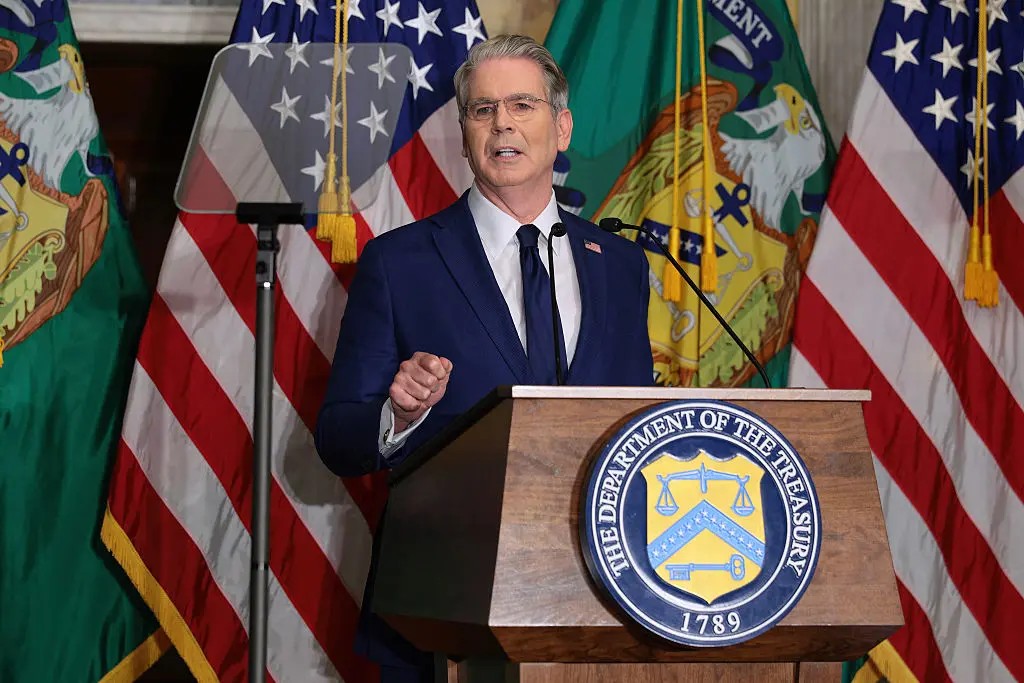
U.S. Treasury Secretary Scott Bessent stated in a Fox News interview on September 27 that Iran currently has only about 15 million barrels of oil at sea. He anticipated that within the next two weeks, Iran would complete its final deliveries to China, leaving them with nothing else to trade.
This means that the Iranian government and the Revolutionary Guard will lose their primary source of income.
On August 24, Bessent announced a large-scale “Operation Economic Outcast” targeting Iran, aiming to “cut off every economic lifeline that sustains this oppressive regime until Tehran is isolated and alone.”
Bessent declared that the operation focuses on five key areas: digital assets, technology, gold, aviation, and shipping, with third-party countries and entities engaged in transactions with the Iranian regime facing secondary sanction risks.
A crucial part of the “Operation Economic Outcast” is the comprehensive sanctions on Iran’s aviation industry. On September 8, the U.S. Treasury Department imposed new sanctions on 36 entities, including 27 Iranian civilian airlines, for supporting the Iranian regime.
In a CNBC interview on September 23, Bessent further explained that the sanctions target not only the airlines themselves but the entire service chain: airports cannot provide landing services, aviation fuel, ticket sales, or ground services, or risk being excluded from the U.S. dollar system.
Following Bessent’s announcement, the UAE suspended all round-trip flights of Iranian airlines starting on September 24. Oman, Turkey, Azerbaijan, Iraq, Kuwait, and others responded accordingly, resulting in a significant decrease in Iranian outbound flights.
Moreover, U.S. officials stated that the combined new round of sanctions restricting Iranian oil market entry, along with the U.S. naval blockade measures, are yielding the expected results.
U.S. Secretary of State Marco Rubio, in an interview with Fox News on September 28, also remarked that the Iranian economy was headed towards a “major disaster.”
Rubio stated, “When you prevent them from selling oil and implement sanctions to cut off their funding, not only do you punish them, but you also prevent them from accessing funds to try to kill Americans, people around the world, and their own people, or to manufacture weapons to threaten the world, and ultimately develop nuclear weapons.”