
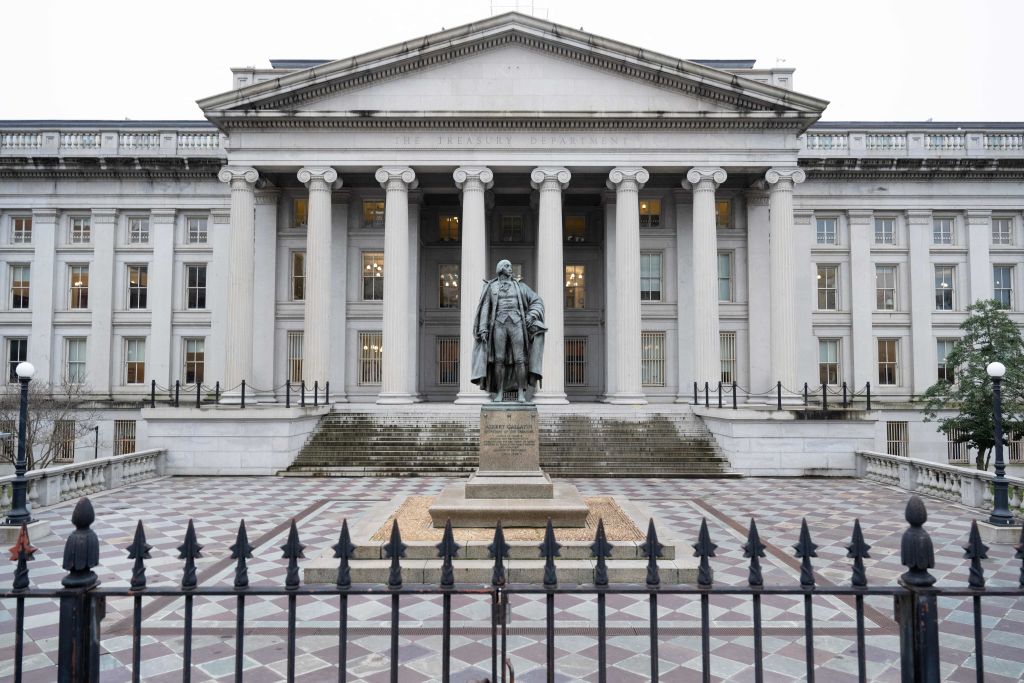
On Tuesday (September 29th), the U.S. government announced a new round of sanctions against Iran, targeting individuals and businesses in mainland China, Hong Kong, Pakistan, Russia, and other places. The U.S. claims that these entities assisted Iran’s Ministry of Defense and Armed Forces Logistics (MODAFL) in acquiring weapons, electronic components, and dual-use military-civilian equipment.
The U.S. Department of the Treasury’s Office of Foreign Assets Control (OFAC) announced that the sanctions target 10 individuals and entities spanning multiple jurisdictions, accusing them of facilitating weapons, electronic components, and dual-use military-civilian equipment procurement for MODAFL. MODAFL is responsible for Iran’s weapon research, production, procurement, and manages institutions related to ballistic missiles and drones.
One individual singled out by the U.S. is Seyyed Asghar Alizadeh Tabatabai, the representative of MODAFL in Beijing, China, alleged to have procured finished weapon systems and dual-use components on behalf of Iran in China.
Additionally, the U.S. sanctioned the Iranian company Kavoshcom Asia R and D Group and its affiliated individuals. The U.S. Treasury Department stated that this company had procured electronic components for the Iran Aircraft Manufacturing Company (HESA) and provided electronic equipment to Shahid Bakeri Industrial Group (SBIG). HESA primarily focuses on the research and development of drones and military aircraft, while SBIG is involved in solid-fuel ballistic missile research and production.
Furthermore, Hong Kong-based EC Mojo Technology Co Limited and its mainland China representative Li Fen have also been placed on the sanctions list. The U.S. alleges that EC Mojo Technology Co provided electronic components for Kavoshcom’s procurement activities, with Li Fen accused of assisting in evading sanctions and export controls.
Public records show that EC Mojo Technology Co Limited was established in Hong Kong in 2019, with trade records indicating involvement in cross-border trade of electronic products and components.
The U.S. also sanctioned Pakistani businessman Waseem Pasha Tajammal and his related enterprises. The U.S. accuses Tajammal and his Cavalier Group of acting as third-party intermediaries for MODAFL, aiding in the procurement and distribution of weapons. These enterprises are located in Pakistan, Saudi Arabia, and Turkey, with the U.S. Treasury Department noting that the sanctions on Saudi-related companies were coordinated with the Saudi government.
On the same day, the U.S. State Department also announced sanctions on three entities related to Iranian military activities, including Russia’s Joint Stock Company Experimental Design Bureau Named After A.S. Yakovlev, Russian shipping company MG-Flot, and Iran’s Saha Airlines. These entities are linked to military aviation equipment, weapon transportation, or aviation transport activities associated with the Iranian Air Force.
These sanctions are part of the U.S. Treasury Department’s “Operation Economic Outcast.” Treasury Secretary Scott Bessent launched this operation on August 24th, referring to it as the “Economic D-Day” targeting Iran.
The Treasury Department states that this operation aims to cut off Iran’s funds obtained through oil smuggling, sanctions evasion, and other channels, and combat overseas networks providing financial, technological, and material support to Iran.
The Treasury Department mentions that assets and property rights in the U.S. held by or controlled by sanctioned entities will be frozen, and transactions with these entities are generally prohibited for U.S. individuals. Foreign financial institutions engaging in significant transactions with sanctioned entities could also face U.S. secondary sanctions.
Amid these actions, military and diplomatic tensions between the U.S. and Iran continue to evolve. Qatar is currently engaged in shuttle diplomacy, relaying messages between the U.S. and Iran, seeking negotiation space. The U.S. is simultaneously applying pressure through sanctions while promoting diplomatic contacts through intermediaries.