
The number of Japanese companies in China continues to decrease, according to the Japan Imperial Data Bank (TDB). Between 2024 and 2026, there were 1,221 new Japanese enterprises entering China, but a record high of 4,137 companies have either withdrawn or their locations are unclear. TDB believes that Japanese businesses in China have shifted from expansion to integration and reorganization.
TDB’s research, released on September 28, showed that as of June 2026, there were a total of 10,118 Japanese companies in China with local entities and offices, a decrease of 2,916 companies or 22.4% compared to 2024. This is the lowest number since the data began to be compiled in 2010 and a significant decline from the peak of 14,394 companies in 2012, representing a drop of nearly 30%.
Among the regions, the changes in Shanghai are particularly notable. As of June 2026, there were 3,961 Japanese enterprises in Shanghai, still the largest concentration of Japanese companies in China. However, this number decreased by 1,085 companies from 2024, a 21.5% decline over two years and nearly 30% compared to 2022.
TDB data indicates that Shanghai used to be an important manufacturing, sales, and logistics hub for Japanese companies in the past, but in recent years, there has been a trend towards local entity consolidation, business restructuring, and regional management function streamlining and adjustment.
Jiangsu Province ranks second with 1,517 Japanese companies, mainly concentrated in manufacturing bases such as Suzhou, Wuxi, and Nanjing, showing a modest 7% decrease from 2024. Guangdong Province is home to 1,409 Japanese enterprises, mainly in electronics and automotive industries in cities like Shenzhen, Guangzhou, and Dongguan.
Currently, Liaoning Province has 859 companies, a decrease of over 30% from 2022, while Beijing has 555 companies, a 50% decrease from 2022.
TDB analysis attributes the increasing geopolitical and market risks faced by Japanese companies in China to factors such as deteriorating Sino-Japanese relations, a stagnant Chinese real estate market and economic slowdown, restrictions on rare earth exports, amended Anti-Spy Law, overcapacity, and competition from low-cost local Chinese enterprises.
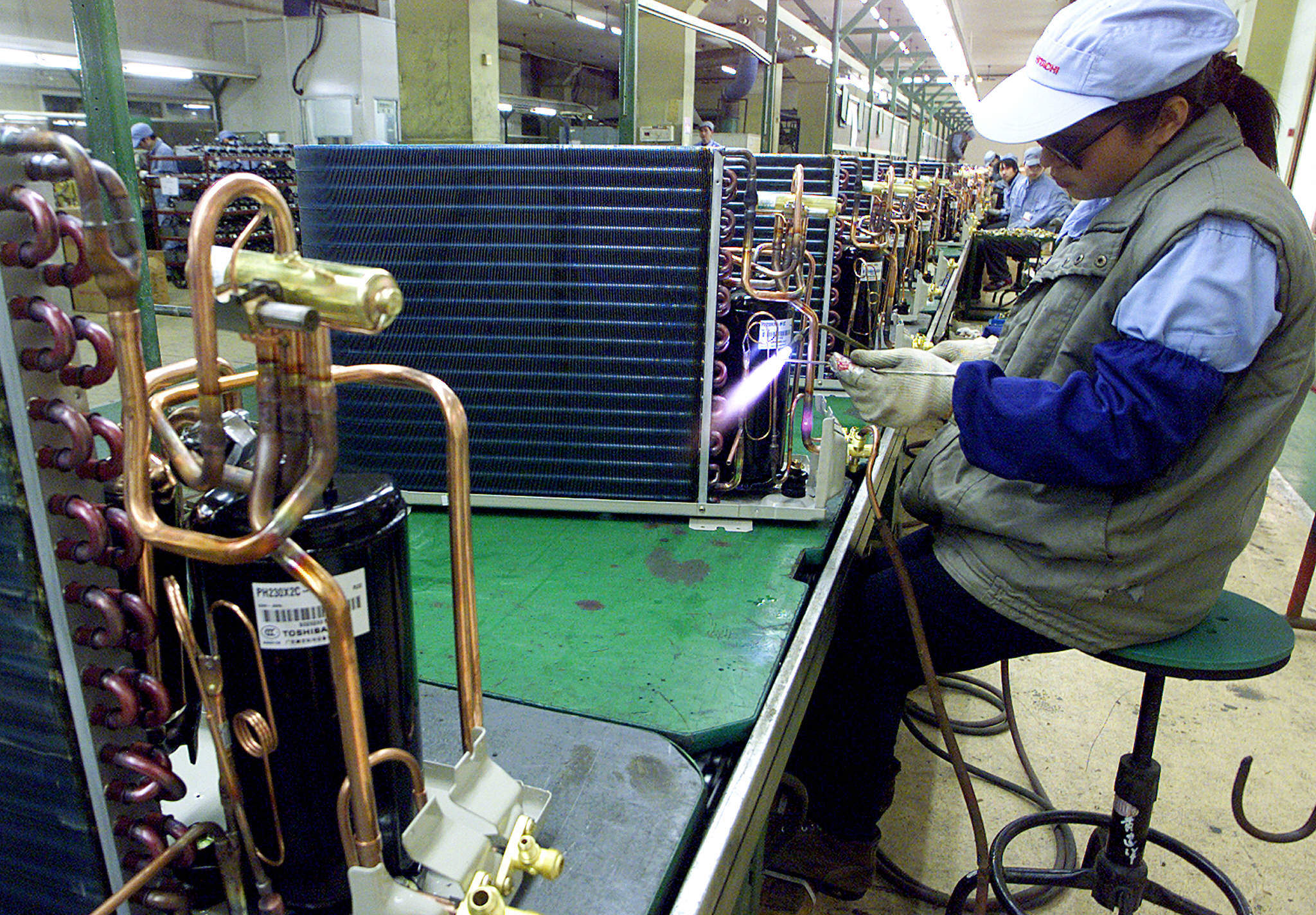
Given the higher uncertainty in conducting business in China, some Japanese companies are relocating or diversifying production bases to countries in Southeast Asia such as Vietnam and back to Japan. The reorganization of supply chains has reduced China’s significance as a low-cost production hub, particularly notable in the manufacturing sector where the number of Japanese manufacturing companies decreased to 4,206 in 2026, down by 933 from 2024. Wholesale and service industries also saw declines.
In manufacturing, industries with intensive labor such as textiles, printing, and furniture experienced more significant reductions. TDB believes this is related to the rising labor costs in China and the restructuring of supply chains.
Japan’s electronic component company ASTI announced in September 2025 to cease the electric vehicle harness business of its Chinese subsidiary, Zhejiang Yashidi Electronics Co., Ltd. ASTI cited intense competition in the Chinese electric vehicle market leading to price pressure, deteriorating profitability, difficulty in securing orders for new car models, and the entry of local Chinese competitors as reasons for discontinuing the business.
In August 2025, Japanese automotive manufacturer Toyota announced the dissolution of its Tianjin subsidiary. The company cited changes in the Chinese automotive industry environment and production reductions by Japanese automakers in China as reasons for the subsidiary’s inability to further expand its business, leading to the decision to cease production and undergo liquidation.
Regarding sales distribution, TDB’s survey revealed a decrease in China’s importance. In 2019, 47.7% of companies considered China as their most important sales point, which dropped to 31.3% in 2026. Meanwhile, the importance of Thailand increased from 4.8% to 9.7%, and India’s importance grew from 1.4% to 4.9% during the same period. The importance of production in Vietnam, Thailand, Indonesia, India, and other countries has gradually increased as well.
TDB suggests that Japanese companies may continue to maintain their businesses in China in the short term while considering the risks. However, in the medium to long term, they may reduce their reliance on the Chinese market by integrating local entities and closing offices. While China remains an important market and supply chain base, Japanese companies are shifting their focus from low-cost production to emphasizing market, logistics, high value-added manufacturing, and service functions.