
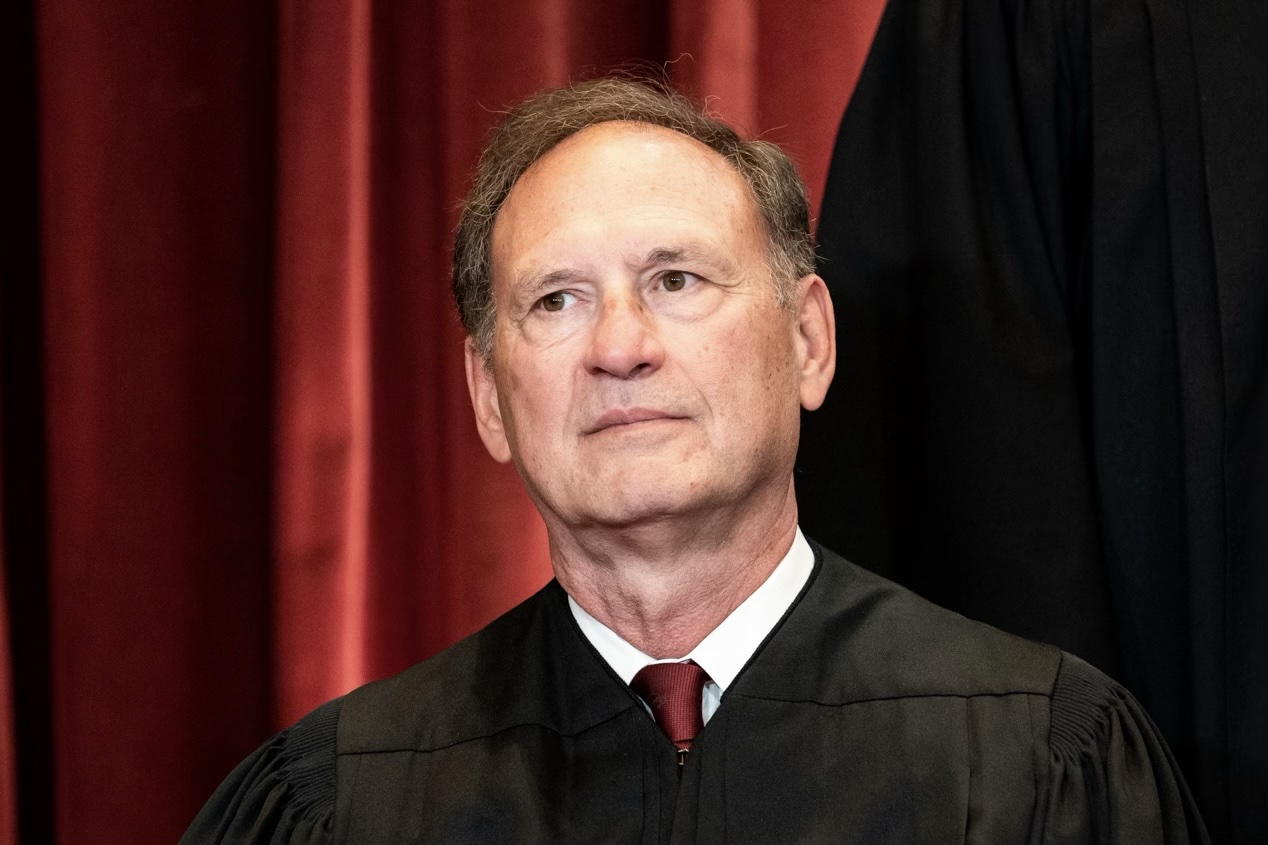
The United States Supreme Court’s case involving a major climate lawsuit against energy companies faces a potential deadlock after Justice Samuel Alito decided to recuse himself from the proceedings. With Alito stepping aside, the case, officially named “Suncor Energy U.S.A. Inc. v. County Commissioners of Boulder County, No. 25-170,” will now be heard by the remaining eight justices, potentially leading to a 4-4 tie vote. In the event of a tie, a nationally binding legal precedent is unlikely to be established, and Colorado’s Supreme Court ruling may stand.
Scheduled for oral arguments on October 5th, the Supreme Court Secretary Scott Harris informed the attorneys of both parties in a brief notice that Alito “has decided not to participate in this case.” However, the specific reasons behind Alito’s decision were not disclosed in the notice.
While the court did not elaborate on Alito’s withdrawal from the case, environmental and watchdog groups had previously called for his recusal due to his partial ownership of stocks in oil and gas companies. Alito’s latest financial disclosures show that he does not hold shares in the two companies involved in this case, Exxon Mobil and Suncor Energy, but does have investments in ConocoPhillips and Phillips 66, both of which are defendants in other climate-related lawsuits.
The lawsuit originated in 2018 when local governments in Boulder County, Colorado, accused Suncor Energy and Exxon Mobil of misleading the public by concealing fossil fuel and climate risks. The governments demanded billions of dollars in compensation for climate-related damages and public expenses.
Similar lawsuits have been filed by various states and local governments against fossil fuel companies, alleging “misrepresentations” regarding the potential climate risks of their products.
Oil companies argue that such lawsuits, involving interstate and global climate issues, should fall under federal law and the Clean Air Act’s jurisdiction, asserting that state laws should not interfere.
The US government, as a friend of the court, submitted a brief to the Supreme Court supporting Exxon Mobil and Suncor Energy, contending that federal law precludes Boulder’s claims under state law.
Previously, lower courts rejected the oil companies’ plea to dismiss the lawsuit, and the Colorado Supreme Court upheld a ruling allowing the case to proceed under state law in May 2025.
Boulder’s argument to the Supreme Court asserts that state courts can handle damages caused within their state, even if the actions partly occurred outside the state.
With Alito’s withdrawal from the case, the US Supreme Court may face a 4-4 deadlock, preventing the establishment of a legally binding precedent and maintaining the effect of Colorado’s Supreme Court ruling.