
In recent years, the Chinese Communist Party, Russia, and North Korea have been intensifying their long-range nuclear strike capability tests, threatening to use nuclear weapons, and continuously adjusting their nuclear force tactics. This has forced the United States to reexamine its deterrence framework, seek more options to address limited nuclear conflicts, and adapt to the power competition among the new stage of nuclear powers.
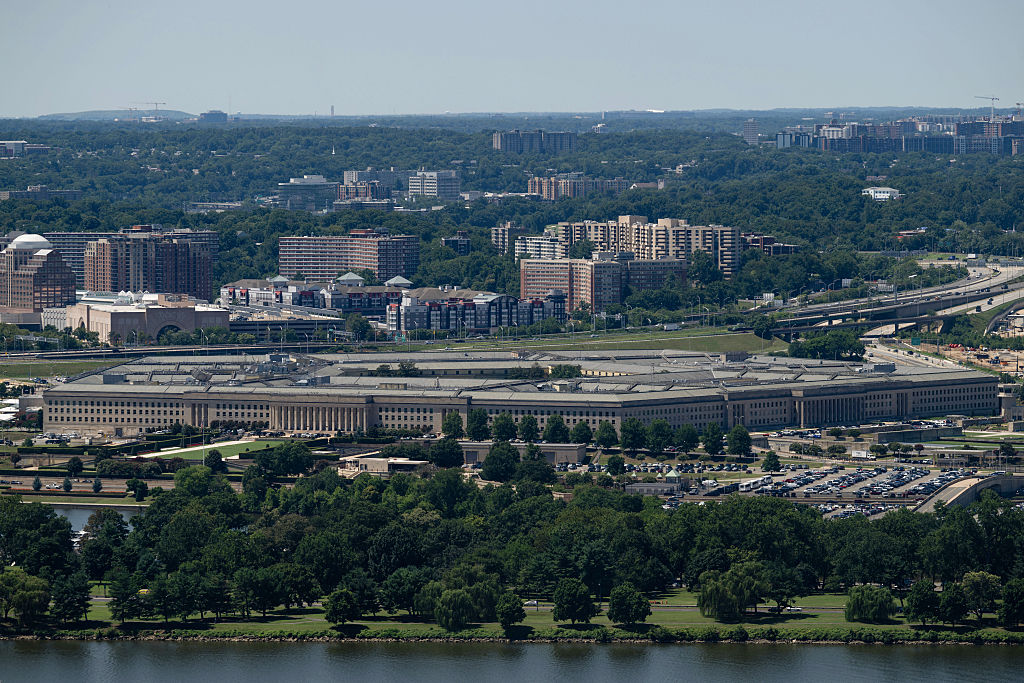
On August 5, 2026, Elbridge A. Colby, the Deputy Secretary of Defense for Policy, stated at the 2026 Deterrence Symposium held in Omaha, Nebraska, that the Pentagon has initiated a strategic review, revisiting nuclear weapons use guidance to expand the options available to the U.S. President in regional conflicts and various nuclear escalation scenarios.
Subsequently, Richard A. Correll, Commander of U.S. Strategic Command, mentioned that the Pentagon is studying the expansion of area nuclear capabilities to raise the threshold for Russia or China to use battlefield nuclear weapons, providing the U.S. President with more response options and greater decision-making space. This aims to maintain the credibility of strategic forces while deterring multiple nuclear competitors simultaneously.
One significant reason for the Pentagon to expedite the adjustment of nuclear options is Russia’s increasingly frequent release of nuclear threat signals. From May 19 to 21, 2026, Russia suddenly announced a large-scale strategic nuclear forces exercise to practice launching nuclear weapons in scenarios of simulated external attacks, including conventional assaults.
This move was seen as a direct response to a major setback Russia faced on May 17, 2026, when over 100 Ukrainian drones penetrated Moscow’s air defense system and carried out a massive airstrike on the Russian capital following the Victory Day parade in Red Square, putting immense domestic and international pressure on the Kremlin. In response, Russia swiftly conducted a nuclear exercise involving over 60,000 troops, more than 200 missile launchers, 140 aircraft, and strategic nuclear submarines. They also successfully test-fired one of the world’s most advanced intercontinental ballistic missiles, the RS-28 Sarmat missile.
This linking of conventional battlefield failures with nuclear threats showcases Russia’s attempt to lower the threshold for nuclear use.
For over a decade, U.S. intelligence agencies have been monitoring the progress of Russia and China in the low-yield tactical nuclear warhead arena. Assessments from the Defense Intelligence Agency (DIA) and the Department of Defense indicate that Russia has developed a mature low-yield, tactical nuclear weapons system, while China has been gradually shifting towards low-yield, precision strike, and multi-level nuclear systems, moving away from relying solely on high-yield strategic nuclear forces.
A report from the DIA in 2019 revealed that Russia is modernizing its non-strategic nuclear arsenal with high-precision, long-range, low-yield capabilities to meet battlefield demands. The DIA estimates that Russia possesses up to 2,000 non-strategic nuclear warheads covering land, sea, and air-launched systems, including short-range ballistic missiles, cruise missiles, torpedoes, and depth charges. Russia not only researches low-yield nuclear weapons but has also established tactical nuclear weapons systems that can be deployed on various conventional delivery platforms.
Another threat to the United States outside of Russia is China. The 2024 Department of Defense “China Military Power Report” suggests that China may be seeking lower-yield nuclear capabilities to offer so-called “proportional response options” that high-yield nuclear warheads cannot provide. According to the report, Chinese strategic researchers believe that low-yield nuclear weapons can enhance the deterrence value of their nuclear forces.
The U.S. Department of Defense believes that the Dongfeng-26 (DF-26) missile is China’s first intermediate-range ballistic missile capable of carrying nuclear warheads with precision strike capabilities, likely becoming a delivery platform for low-yield nuclear warheads. This signifies a structural shift in China’s nuclear capabilities, as nuclear weapons are evolving beyond being simply weapons of mass destruction or tools for retaliation to encompass a range of options such as theater, limited nuclear strikes, and “proportional responses.”
In essence, China is establishing a set of nuclear forces that can address conflicts of varying intensities, targets, and levels of nuclear escalation.
Estimates suggest that by mid-2024, China had over 600 operational nuclear warheads, with projections exceeding 1,000 by 2030.
In East Asia, North Korea’s development of nuclear weapons is also moving beyond traditional defensive lines to become a regional threat tool. As of July 2026, open-source intelligence estimates North Korea possesses between 60 and 100 nuclear warheads and continues to expand the production of weapon-grade nuclear materials. North Korea has formally enshrined its “nuclear-armed state status” in the national constitution, indicating that Pyongyang has closed the door to denuclearization negotiations at political and legal levels.
In a public statement in 2026, Kim Jong-un emphasized that North Korea’s status as a nuclear-armed state is permanent, requiring any bilateral dialogue with the U.S. to be based on Washington’s recognition of this constitutional status.
The Global Threat Assessment of the Office of the Director of National Intelligence (ODNI) in 2026, highlighted that North Korea is investing in missile systems with nuclear capabilities to deter the U.S., challenge regional missile defense, and place related targets at risk of strikes. The development of North Korea’s solid-fueled intercontinental ballistic missiles further enhances the survivability, responsiveness, and deterrence against the U.S. mainland.
The Declaration of the International Atomic Energy Agency (IAEA) Director General Rafael Mariano Grossi confirmed that the 5-megawatt reactor in Yongbyon, North Korea, is likely still operational, producing plutonium materials for nuclear warheads.
In contrast to North Korea’s nuclear arsenal expansion, the U.S. heavily relies on powerful strategic nuclear weapons. Policymakers in the U.S. are concerned that should an adversary initiate the use of low-yield tactical nuclear weapons in a regional conflict, the President’s nuclear options may be limited: either forego nuclear retaliation or launch strategic nuclear strikes capable of causing mass destruction.
To adapt to the evolving nuclear threat landscape, the U.S. government has begun modernizing its nuclear triad strike system, encompassing upgrades to the B61 series nuclear gravity bombs, W88 warheads used by Ohio-class ballistic missile submarines, and the W93 warheads for future Columbia-class submarines. In recent years, the U.S. has approved the Sea-Launched Cruise Missile-Nuclear (SLCM-N) program and the low-yield variant B61-13 nuclear bomb. The collective impact of these capabilities aims to provide the U.S. with diversified deterrence and response options across various conflict intensities.
A key challenge facing the U.S. currently is whether it can maintain “damage limitation” capabilities in the mid-2030s while addressing threats from major nuclear powers like Russia and China, along with regional nuclear states like North Korea. “Damage limitation” refers to minimizing the destruction caused to the country’s military forces, population, economy, and warfighting capability even if a nuclear conflict has erupted.
In a study published in July 2026 by researchers from the Carnegie Endowment for International Peace (CEIP), Stanton Fellow Ankit Panda and James M. Acton highlighted that with the rapid expansion of Chinese nuclear capabilities and the potential for closer strategic cooperation between Russia and China, the U.S. nuclear strategy is facing increasingly severe challenges in dealing with the dual nuclear power of “Double Nuclear Powers.” Washington must reassess whether its existing nuclear forces are still able to provide adequate deterrence and “damage limitation” capabilities when facing both Russia and China.
Currently, the U.S. government’s prioritization of enhancing regional nuclear capabilities suggests that Washington’s view on “damage limitation” capability is not optimistic in the short term. They are facing a difficult trade-off of how to allocate limited resources between increasing flexible options in limited nuclear conflicts and maintaining “damage limitation” abilities against both Russia and China, the two nuclear superpowers.
The nuclear expansions of Russia, China, and North Korea pose challenges to traditional U.S. nuclear deterrence and extended deterrence. In this multipolar nuclear deterrence environment, any regional crisis could rapidly escalate into a global nuclear standoff.
Commander Correll’s proposal for upgrading nuclear options calls for the U.S. military to deploy more diverse weapon launch platforms in potential theaters, deliberately blurring the line between conventional and nuclear strikes to raise the psychological threshold and decision-making complexity for potential adversaries considering the use of battlefield nuclear weapons. However, this strategy also brings about significant risks. When both sides attempt to force concessions by demonstrating a willingness to escalate, time pressure and high intelligence could make the deterrence balance exceptionally fragile.
The contradictions exposed at the 2026 Non-Proliferation Treaty (NPT) Review Conference further complicate matters, with non-nuclear states urging nuclear-armed states to fulfill their disarmament obligations under Article VI of the NPT, as well as earlier disarmament commitments made at the Review Conference. However, global nuclear arsenal modernization and weakened arms control mechanisms have exacerbated these contradictions.
Against this backdrop, the ongoing review of U.S. nuclear strategy and nuclear weapons policy will continue to drive an increase in tactical nuclear weapons strategies. This is an unavoidable and regrettable reality.