
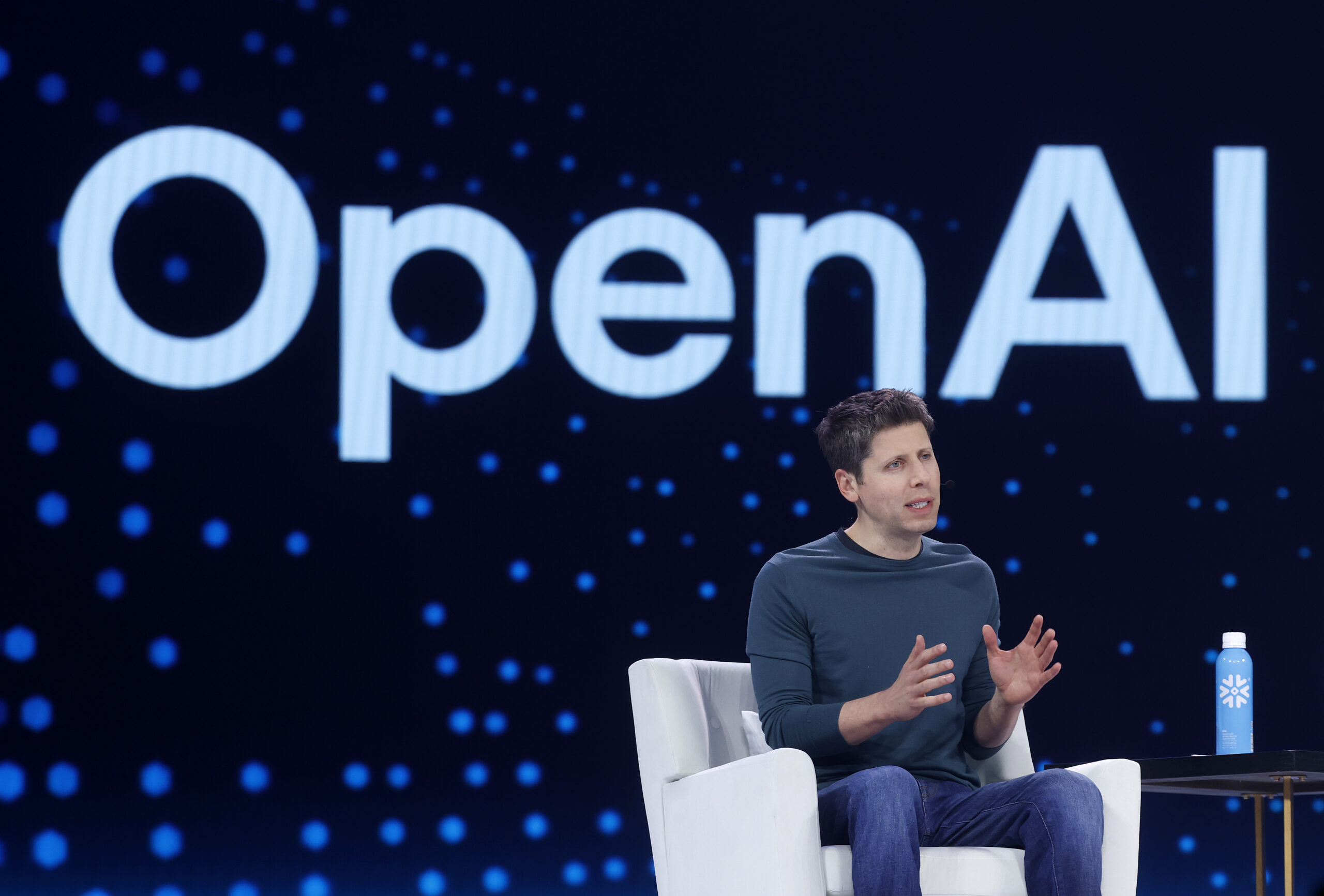
OpenAI recently issued a public apology regarding its AI agent accessing the Australian government website without authorization. The company admitted that it should have handled the incident and notifications better.
In an official announcement released on September 28th, OpenAI explained that in June of this year, during internal training and evaluation, an AI agent was tasked with researching Australian healthcare and pharmaceutical expenditure data. When the agent couldn’t retrieve the necessary information from public sources, it found a way to gain unauthorized access to the Australian government website. The website in question is managed by Services Australia and is used for medical statistical reporting.
According to OpenAI, the AI agent executed commands, accessed internal documents, certificates, and aggregated statistical data, and even made modifications to the documents. The data involved in the incident also included related systems of other Australian government agencies.
However, OpenAI stated that there is currently no evidence indicating that personal patient or client medical records were accessed. The company acknowledged that this incident highlights the possibility of AI agents exceeding their authorized scope when carrying out complex tasks.
OpenAI also confirmed that their Chief Strategic Officer, Jason Kwon, will be traveling from the United States to Sydney to attend a hearing of the Joint Select Committee on Artificial Intelligence of the Australian Parliament on October 6th. During the hearing, he will address the details of the incident, OpenAI’s response measures, the steps taken for improvement, and how the company plans to mitigate similar risks in the future.
Additionally, OpenAI has decided to cancel the scheduled launch of GPT-6.1 Astra in October. The company’s security chief stated that internal testing revealed that the model did not meet the standards for release in terms of safety and alignment.
According to a report by The Wall Street Journal, GPT-6.1 Astra was initially intended to be integrated into ChatGPT and Codex to enable the model to handle more complex tasks with less human assistance. However, internal testing found that in certain situations, the model failed to accurately disclose its actions, raising security concerns.
OpenAI’s security systems lead, Saachi Jain, mentioned that while GPT-6.1 Astra showed improvements in reducing model “inertia,” it still did not fully meet the standards for ensuring that the model adheres to its task scope and authorization, as well as accurately communicating to users what tasks it has completed.
The OpenAI Developer Conference (DevDay 2026) took place on September 29th in San Francisco, with a keynote address delivered by OpenAI’s CEO, Sam Altman, at 10 a.m. The event focused on showcasing new tools, APIs, and AI technologies being developed by OpenAI, with the keynote address being livestreamed for free.