
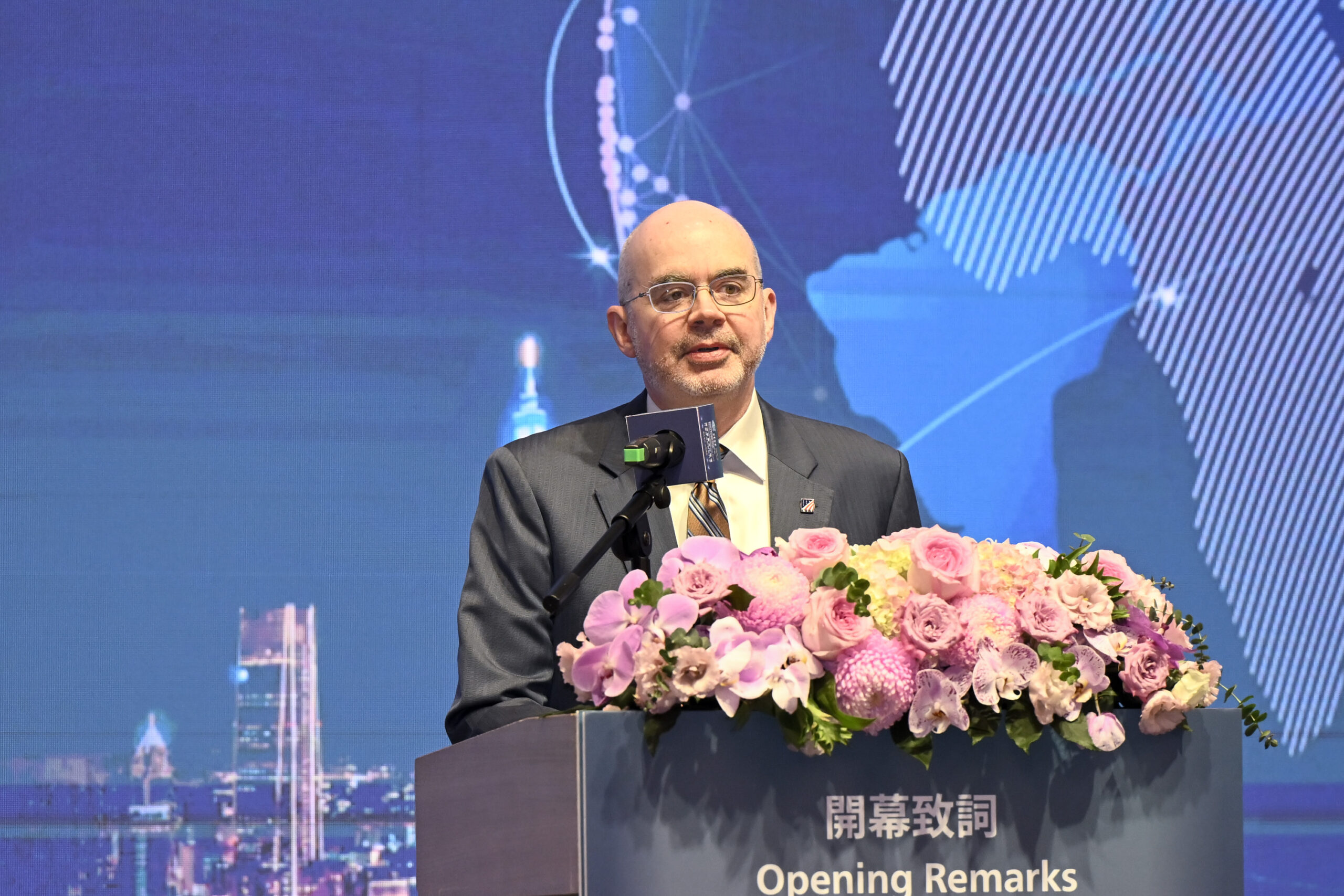
The relationship between the United States and Taiwan has reached unprecedented strength, according to Raymond Greene, the highest American diplomat in Taiwan and the director of the American Institute in Taiwan (AIT). Greene stated on Monday, August 31st, that the cooperation between the two sides in high technology and advanced manufacturing fields is deepening, with Taiwan’s technological investments also assisting in the United States’ push for reindustrialization. At the same time, the U.S. announced two new measures to further expand cooperation in semiconductor talent cultivation between Taiwan and the U.S.
During the “Freedom 250 Workforce First Summit” held in Taipei on Monday, Greene emphasized, “Our relationship with Taiwan has never been stronger, especially as our collaboration in high technology and advanced manufacturing fields continues to deepen.”
He also highlighted that Taiwan set a record in direct investments to the United States last year.
“Taiwan is helping the U.S. with reindustrialization, starting with investments in Arizona and Texas; U.S. companies are also expanding their technology partnerships by establishing operations in Hsinchu and Taipei,” Greene said.
Taiwanese companies continue to invest in the U.S., with TSMC making the largest investment. Currently, TSMC’s total investment in Arizona amounts to $26.5 billion.
Greene stated that the U.S. is laying the groundwork for ongoing cooperation between the two nations through trade, investment, economic, and educational measures.
In terms of semiconductor talent, Greene announced two new measures aimed at encouraging American students to study high technology in Taiwan. One is a recent $20 million private donation to the University of Arizona to support students studying abroad, which may include studying in Taiwan.
The other measure is the “Fulbright Semiconductor Scholarship” funded by the U.S. government. As per the current arrangement, two graduate students are set to study at National Yang Ming Chiao Tung University through this program in 2027.
Greene stated that these measures will serve as a “powerful catalyst” to encourage other institutions to establish their own institutional and financial incentives and academic pathways, enabling the growing talents of today to become the leaders of key institutions in the next generation.
He further emphasized that shaping the future is not about technology and investment but about talent; Taiwan and the U.S. should jointly expand educational opportunities and cultivate manpower that meets industry needs.
Taiwan’s Minister of Education, Zheng Ying-yao, expressed that American students in Taiwan can directly engage with Taiwan’s semiconductor ecosystem and learn from educators, researchers, engineers, and industry experts.
“However, this is not a one-way learning process,” Zheng Ying-yao stated, noting that American students can experience Taiwan’s semiconductor ecosystem firsthand, while Taiwanese students can broaden their international perspectives by learning alongside American peers.
During the summit, Greene and Zheng Ying-yao also witnessed the signing of a memorandum of understanding for talent development cooperation between Taiwan’s Higher Education Foundation for International Cooperation and the U.S.-based SEMI Foundation to promote closer collaboration between the two organizations.