
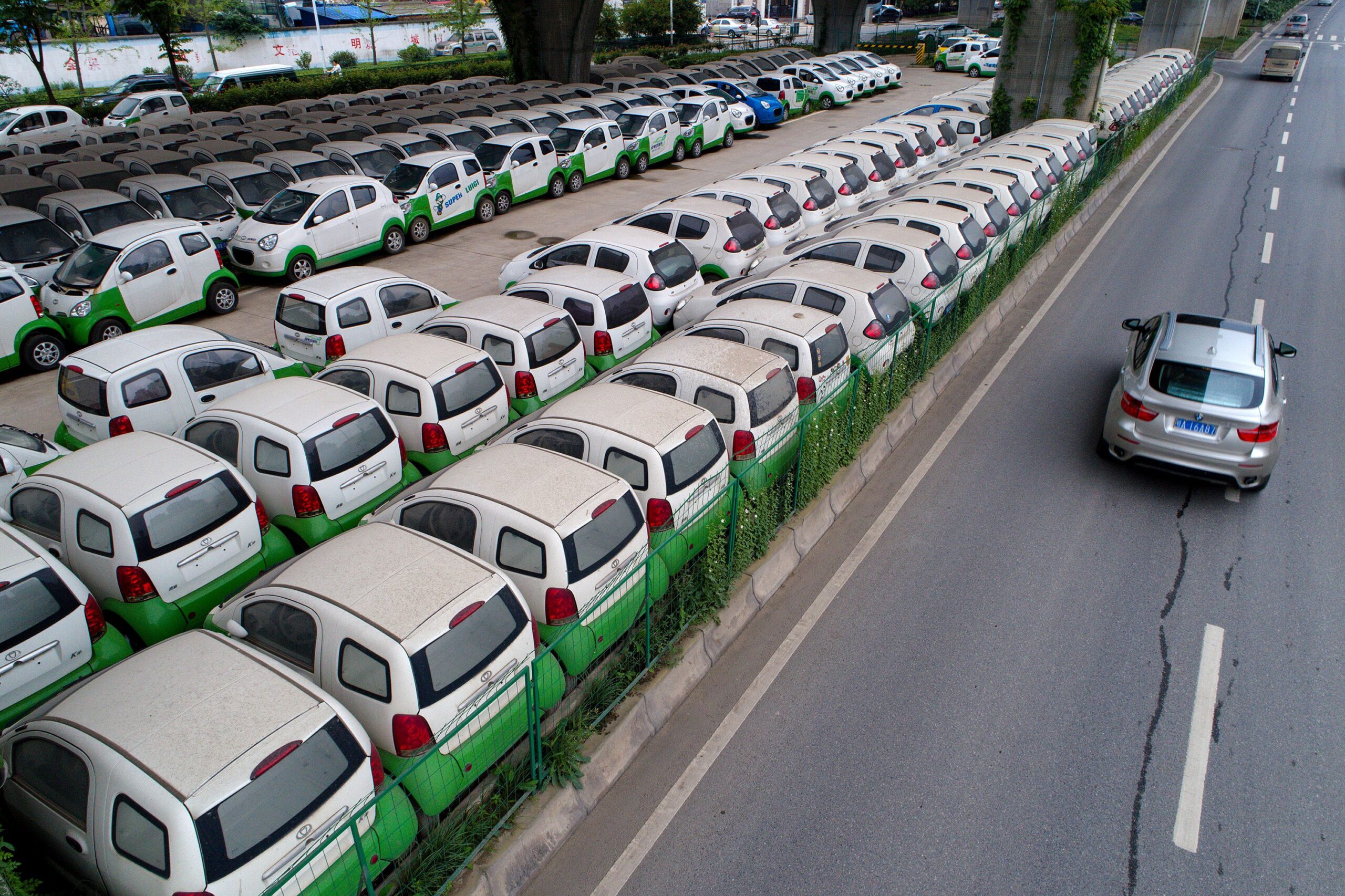
The China Association of Automobile Manufacturers (CAAM) released data on August 10th showing that in the first half of this year, sales of micro electric vehicles priced below 50,000 yuan (RMB) decreased by 55%. Meanwhile, apart from models priced above 400,000 yuan, vehicles in other price ranges all experienced varying degrees of decline.
According to a report by Jiemian News on August 10th, CAAM Secretary-General Cui Dongshu stated that in the first half of this year, aside from models with retail prices above 400,000 yuan, sales of vehicles in other price segments all saw declines. Models priced between 50,000 to 100,000 yuan dropped by 20%, those between 100,000 to 150,000 yuan by 27%, between 150,000 to 200,000 yuan by 18%, 200,000 to 300,000 yuan by 8%, and 300,000 to 400,000 yuan by 23%.
Furthermore, sales of vehicles priced below 50,000 yuan plummeted by 55%. Among them, the Wuling Hong Guang MINI EV sold nearly 100,000 units less in the first half of the year compared to the same period last year; Geely Panda saw a 78.2% year-on-year decline in sales; Wuling Binyue experienced a 79.3% drop in sales. The Wuling Hong Guang MINI EV, which was launched in 2020, had a peak annual sales volume of 554,000 units.
Reports suggest that the decline in sales of micro electric vehicles is due to increasing competition among participating manufacturers and the squeezing effect caused by the downward pricing trend of small cars starting in 2023, as stated by Yang Jing, a director at Fitch Ratings. Microcars have price-sensitive audiences with low brand loyalty, and fluctuating prices lead to changes in consumer preferences for vehicle models.
Moreover, the disappearance of policy incentives further impacted the market. In 2026, the electric vehicle purchase tax exemption was reduced to a 50% discount, causing the cost of purchasing low-priced vehicles between 30,000 to 50,000 yuan to increase by several thousand yuan. The subsidy for replacing old vehicles with new ones shifted from a unified fixed subsidy to a percentage-based subsidy according to the vehicle price, significantly reducing the subsidies received for lower-priced vehicles.
Looking at the overall car market in the first half of this year, CAAM data shows that retail sales of passenger vehicles in China dropped by 20.2% compared to the same period last year.
Regarding the outlook for the second half of the year, the CAAM branch forecast team revised their forecast for the annual retail sales growth rate in 2026 to -14% in mid-June, marking the most pessimistic June forecast in history.