
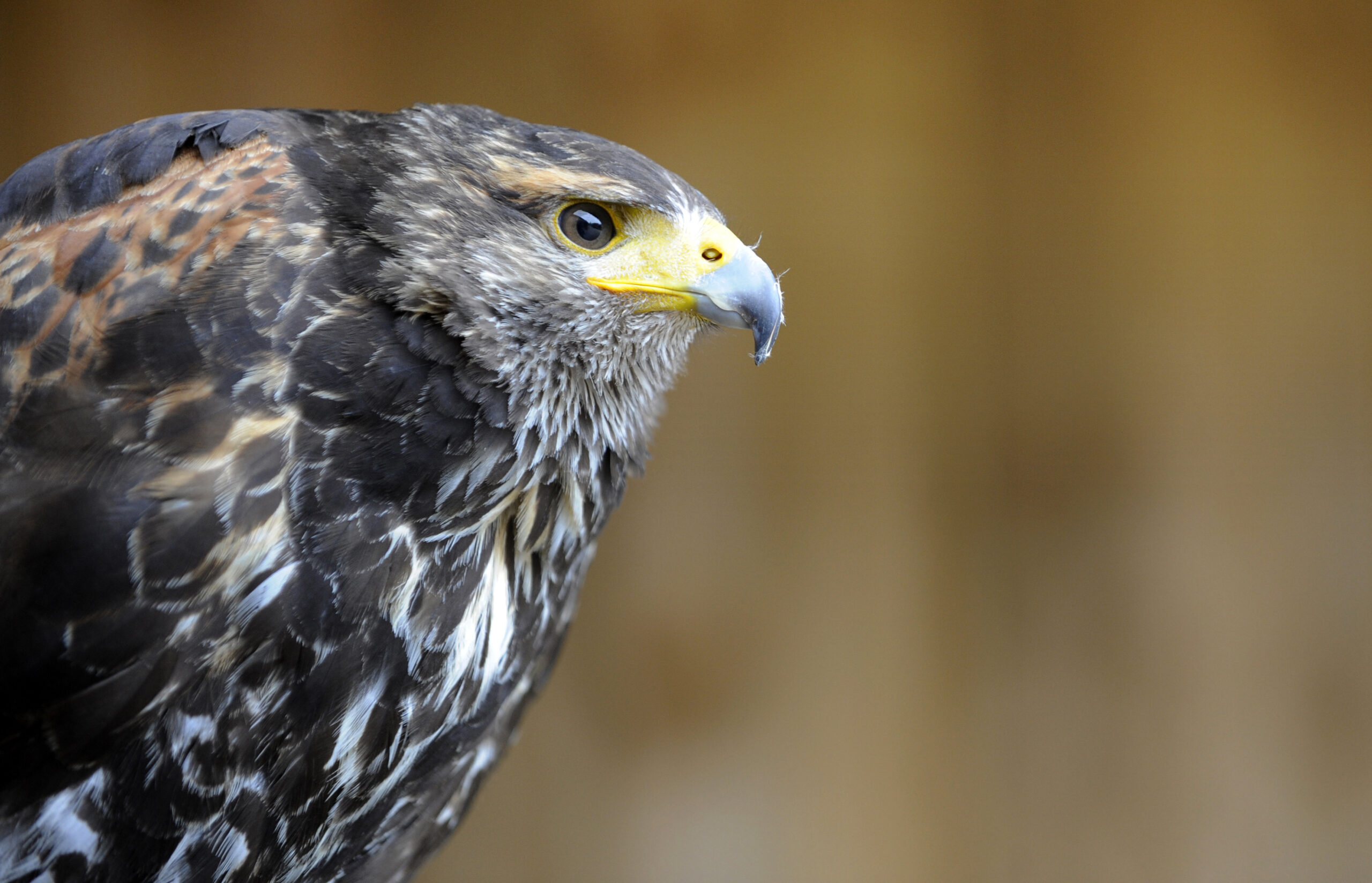
Ford’s assembly plant in Hermosillo, Mexico, not only houses 4,300 employees and has the capacity to produce over 300,000 pickup trucks and SUVs annually but also employs a Harris’s Hawk named “El Charro” for patrolling the factory floor. Many employees eagerly take photos with this hawk, as reported by The Wall Street Journal.
“El Charro,” standing at about 2 feet tall, has been patrolling the factory for over a year, flying over 300 times with a cumulative time of over 1,170 hours. Its presence has successfully reduced pigeon infestations within the factory premises by around 80%.
Jesus Teran, the central maintenance manager at the plant, expressed relief as the pigeons had been causing headaches for management for years. These birds would often disrupt production by nesting in lighting fixtures and factory equipment. Their droppings and the bacteria they carry posed threats to the workers’ health and safety, as well as damaging freshly painted vehicles, requiring extensive clean-up efforts.
In the past, attempts to deter the pigeons, such as broadcasting calls of large raptors and hanging fake “predator eyes” in areas frequented by pigeons, proved ineffective as the birds had become acclimated to the factory environment, even lurking at the entrance, waiting to infiltrate the facility.
Following the failure of these methods, the management resorted to ancient falconry techniques to combat the pigeon problem. Deploying a hawk or a group of hawks for extended patrols effectively drove the birds away, gradually making them disappear from the area.
Initially, a falconer brought in a hawk named “Chalino” to address the issue, but it eventually absconded with a wild counterpart during a patrol. Subsequently, in July 2025, “El Charro” was discovered and quelled the chaos, faithfully guarding the factory ever since.
According to Ford, “El Charro” aids employees by pointing out hidden pigeon nests for cleaning purposes, leading to an approximate 80% reduction in pigeon activities within the plant.
Jennifer Coulson, the Vice President of the Raptor Research Foundation and a certified falconer, highlighted the high level of difficulty involved in training and scheduling raptors for such tasks. The U.S. government imposes strict regulatory standards for granting licenses to use raptors for bird control.
Coulson noted that falconry has become a popular and humane method to address nuisance bird populations in recent years, offering a more compassionate alternative to poisoning or culling. Raptors have proven their effectiveness in various settings, from preventing bird strikes at airports and scavenging at landfills by seagulls to protecting vineyards from avian threats.
“Our goal is not to kill prey but to deter flocks, making them afraid to return, requiring continuous raptor patrols to be effective,” explained Coulson.
Teran revealed that aside from assisting in solving the pigeon problem at the factory, “El Charro” has been warmly welcomed by the employees. Many individuals eagerly seek photo opportunities with the hawk, appreciating the rare chance to interact closely with a trained bird of prey within the workshop.
Ford’s management stated that there are no plans to end “El Charro’s” patrols as it has become a pivotal force in driving away pigeons. The hawk will continue to soar the skies in this area, ensuring that the bird population remains at bay.