
North Korea continues to tighten control over population movement and border management with China, leading to a prolonged period of extremely low numbers of individuals fleeing North Korea and ultimately arriving in South Korea.
According to the latest data from the South Korean Ministry of Unification, only 63 North Koreans arrived in South Korea in the first half of 2026, a decrease of about 34% compared to the same period in 2025. Of the 63 defectors who arrived in South Korea in the first half of this year, 59 were female and 4 were male, bringing the total number of defectors in South Korea to approximately 34,600 as of the end of June 2026.
This decline in the number of defectors is significant following the pandemic. In 2009, a record high of 2,914 people entered South Korea, followed by 1,047 in 2019. The COVID-19 pandemic led to strict border closures by North Korea, resulting in a sharp decrease to 229 defectors in 2020. While there have been fluctuations since then, with 196 in 2023, 236 in 2024, and 224 in 2025, the numbers have remained significantly lower than before the pandemic.
Reports from Agence France-Presse on September 28 highlighted North Korea’s prolonged isolation from the outside world, especially the reinforced control over population movement along the China-North Korea border, making defection from North Korea even more challenging. Experts attribute this as one of the key factors contributing to the continuous low numbers of defectors in recent years.
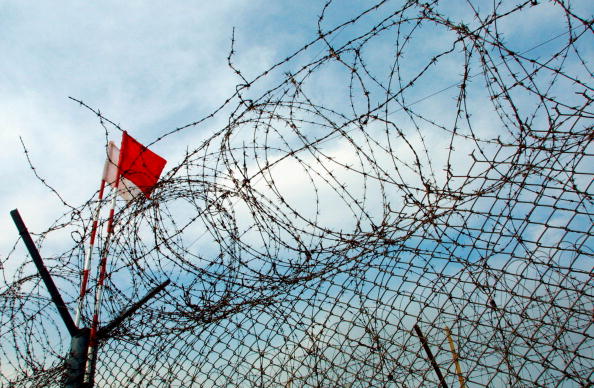
The China-North Korea border, stretching approximately 1,415 kilometers, has historically been a vital route for North Koreans seeking to escape. In comparison to the heavily militarized and fenced areas of the Korean Demilitarized Zone, crossing into China was relatively easier, making it the first stop for many defectors. However, this route has significantly tightened in recent years. North Korean authorities have constructed fences, installed surveillance cameras, and even set up sand strips in border areas to make footprints left by border crossers more visible.
Since Kim Jong-un came into power in 2011, there has been a gradual restriction on informal trade and population movement in the China-North Korea border regions. Additionally, the United Nations Special Rapporteur on human rights in North Korea highlighted in the 2026 report the strict control and monitoring of the population by North Korea, replacing some old surveillance equipment with facial recognition-enabled closed-circuit television systems, further restricting freedom of movement within the country.
At the same time, China has strengthened surveillance along the China-North Korea border, incorporating facial recognition cameras, border patrols, and repatriation facilities in provinces like Jilin and Liaoning, intensifying monitoring measures on North Korean nationals in China and making the route to South Korea via China even more perilous.
Experts from the South Korean Ministry of Unification acknowledge that the enhanced border control within North Korea and the rigorous monitoring and repatriation actions by China are significant factors contributing to the substantial decline in the number of North Korean defectors in recent years.
Outside of restricting population movement, North Korea has also intensified its censorship of external information. Post-2020, North Korea has further tightened control over foreign media content such as films and television shows, with severe penalties including forced labor for possessing foreign media, and even potential death penalties for large-scale dissemination of such materials.
The United Nations report in 2026 also pointed out North Korea’s continuous reinforcement of population monitoring, strict restrictions on both internal and external population movement, and harsh punishments for those who leave the country without permission, who may be regarded as traitors and face severe consequences, as well as their families being subject to increased surveillance or discriminatory treatment.
The restriction on external information has made it increasingly difficult for North Koreans to access information from the outside world. Defectors have mentioned that through means such as USBs, South Korean films and shows have been able to enter North Korea, providing residents with information different from official propaganda.
The ongoing decrease in the number of defectors not only signifies a decline in individuals fleeing North Korea but also further narrows the channel for the outside world to obtain firsthand information about North Korean society.
According to South Korean Koryo University lecturer Fyodor Tertitskiy, defectors serve as crucial sources of information to understand North Korea, with South Korean intelligence agencies and researchers relying on them to grasp the internal situation within North Korea.