
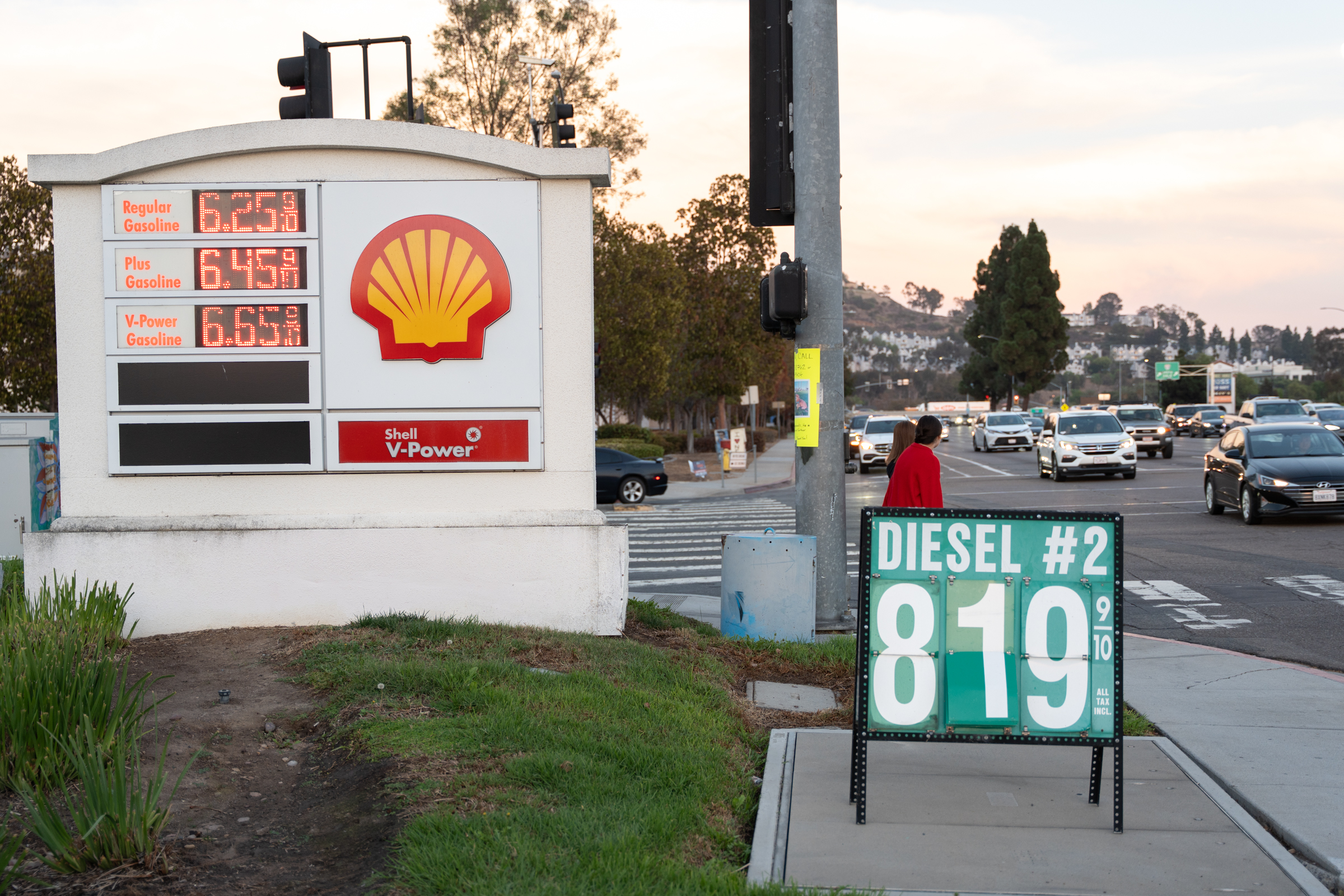
The diesel prices in the United States have reached historic highs, with some gas stations exceeding $9, which will drive up costs in logistics and industry. Economists believe that after the increase in diesel costs, businesses are more likely to pass on the additional costs to consumers.
According to data from the American Automobile Association (AAA), the average price of diesel in the United States this week has reached $6.52 per gallon, a 76% increase from a year ago. Moreover, in the San Francisco Bay Area in California, at least several gas stations have diesel prices exceeding $9 per gallon.
The diesel selling price at a Valero gas station in Fremont is $9.39 per gallon. In recent days, many other gas stations in the region have also maintained diesel prices at around $9 per gallon or higher.
GasBuddy analyst Patrick De Haan said that gasoline taxes on the West Coast states are usually higher. Additionally, the unique regulations and compliance requirements for “environmental projects” further drive up gas station prices.
De Haan told Epoch Times, “This is because the West Coast does not have enough refining capacity, and the closure of refineries we have seen in California in recent years has exacerbated the shortage.”
According to data from the American Automobile Association, several states in the United States have diesel prices higher than the national average, including Hawaii at $7.15 per gallon, Michigan at $6.89, Pennsylvania at $6.61, Indiana at $6.91, and Illinois at $6.83.
Currently, the national average diesel price in the United States has risen to a record level, breaking the $6 per gallon mark for the first time. The sharp increase in diesel prices not only directly squeezes profits for farmers and the transportation industry but also begins to weigh on concerns about logistics costs, inflation, and economic growth in the market.
Reports suggest that the utilization rate of U.S. refineries is currently close to 97%, but the addition of large-scale refining capacity is extremely limited.
Public information indicates that due to high refining investments and low returns, large oil companies in the United States and Europe have hardly built large refineries in the past 30 years and have instead closed more than ten refineries since 2015.
The sharp rise in oil prices during this sensitive period poses a threat to overall inflation. Torsten Slok, Chief Economist at Apollo Global Management, stated that diesel not only directly impacts energy prices but its costs may gradually be passed on to other goods and services through the transportation sector, thereby driving up the Consumer Price Index (CPI).
In an interview with Bloomberg on September 25th, Slok emphasized that the transmission of diesel and gasoline price increases differs. As diesel is widely used for transporting goods and infrastructure such as data centers, businesses are more likely to pass on the increased costs to consumers after diesel cost increases.
He stressed that the impact of rising diesel prices would actually enter other categories beyond the CPI energy sector, indicating that its inflationary effects will not simply remain in energy prices. After diesel costs increase, it may take some time to gradually reflect in core commodity and service prices, making it difficult to simply view as short-term energy price fluctuations.
The continuous rise in diesel prices also introduces more uncertainties for the Federal Reserve in handling energy supply shocks. Chicago Fed President Austan Goolsbee warned this week that if the inflation caused by supply shocks continues to persist, the basis for the Federal Reserve’s past policies would be weakened.
Traditionally, the Federal Reserve excludes food and energy from its core inflation index. Currently, the inflation rate in the United States remains higher than the Federal Reserve’s 2% target.