
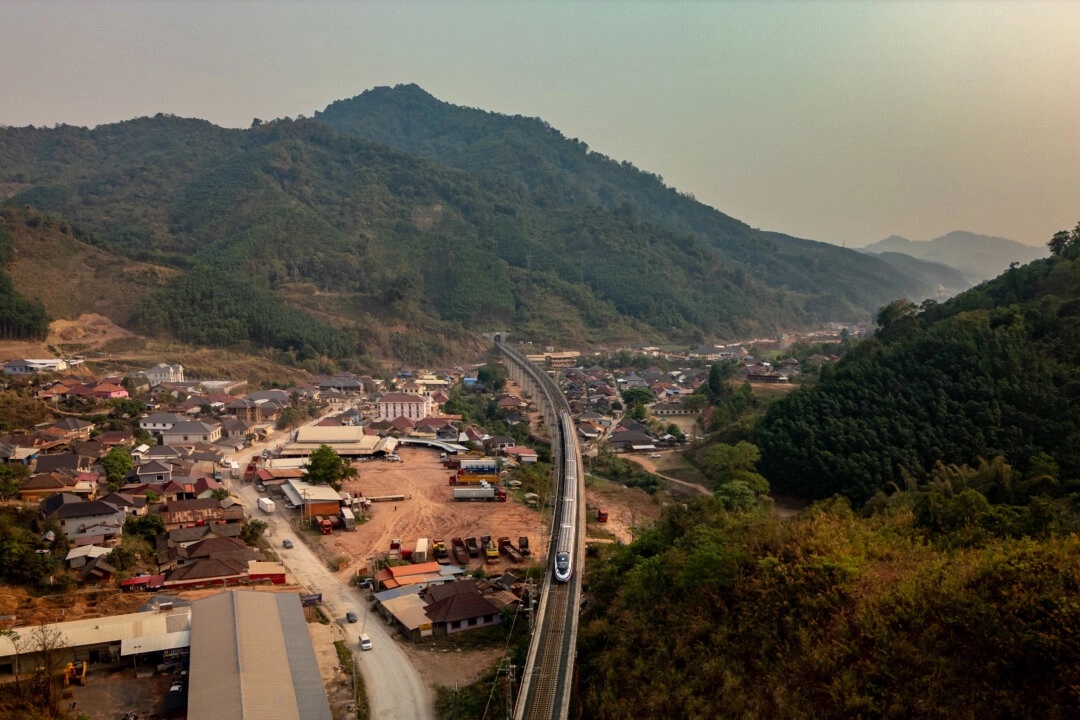
In the first 8 months of 2026, China’s non-financial direct investment in the Belt and Road Initiative decreased by 11.3%, with an overall overseas non-financial direct investment from China dropping by 14.4%. However, despite this decline, foreign contracted projects remained active, especially in large-scale energy, mining, manufacturing, and technology sectors.
Analysts believe that against the backdrop of economic pressure within China, increasing risks in overseas investments, and overcapacity in production, the Belt and Road Initiative is shifting from massive capital outflows to focusing more on commodity exports, project contracting, and overseas supply chain layout. This shift also brings about increased conflicts of interest with relevant countries.
According to data released by the Chinese Ministry of Commerce on September 24, 2026, Chinese enterprises invested approximately 167.24 billion RMB in non-financial sectors in the Belt and Road countries from January to August, representing an 11.3% decrease compared to the same period last year (or 24.36 billion USD, a 7.4% decrease in USD terms). Meanwhile, in the same period, new contracts for overseas projects amounted to 1.0486 trillion RMB, showing a slight 2.0% decline (equivalent to 152.92 billion USD, an increase of 2.4%), while completed operation revenue reached 682.35 billion RMB, growing by 7.7% (equivalent to 99.39 billion USD, an increase of 12.5%).
These figures indicate a differentiation in the Belt and Road projects during the first 8 months of 2026: a decrease in direct investment while the completed operation revenue for project contracting maintained growth, with a slight decrease in the volume of new contracts signed.
In essence, although Chinese companies are still engaged in numerous projects, the funding being invested overseas in the form of direct investments is decreasing.
It is worth noting that the year 2026 began with negative growth trends: a 9.3% decrease from January to May, an 11.1% decrease till June, narrowing to a 5.5% decline by July, only to expand again to an 11.3% decrease by August.
This contrast with the same period in 2025 becomes more apparent. In 2025, from January to August, direct non-financial investments in Belt and Road countries by Chinese enterprises increased by 27.9%. However, this trend drastically reversed in 2026, with an 11.3% decrease over the same period, representing nearly a 40 percentage point drop within a year.
In the full year of 2025, Chinese enterprises invested a total of 283.36 billion RMB in non-financial sectors in Belt and Road countries, marking an 18% growth (or 39.67 billion USD, a 17.6% increase in USD terms).
Another significant data point is that in the first 8 months of 2026, China’s overall non-financial foreign investment declined by 14.4%. Belt and Road Initiative accounts for just a portion of China’s overall overseas investments, and even in the first 8 months of 2026, the overall overseas non-financial investment from China has been decreasing.
According to the Ministry of Commerce data, from January to August of 2026, Chinese investors have channeled approximately 595.06 billion RMB into non-financial sectors in 148 countries and regions globally, representing a 14.4% decline (or 86.68 billion USD, a decrease of 10.6% in USD terms).
In terms of RMB calculations, the investment in the Belt and Road Initiative during the first 8 months of 2026 accounted for about 28% of China’s global non-financial direct investments.
Despite the decrease in non-financial direct investments in Belt and Road countries by Chinese enterprises in the first 8 months of 2026, there was an increase in project contracting activities.
From January to August 2026, the value of new project contracts signed within the Belt and Road Initiative was 1.0486 trillion RMB, showing a 2.0% decrease (or a 2.4% increase in USD terms). Completed operation revenue from these projects reached 682.35 billion RMB, indicating a growth of 7.7% (or 12.5% growth in USD terms). In total, the completed operation revenue for foreign contracted projects during this period was 793.71 billion RMB, a growth of 5.8%, while new signed contracts amounted to 1.17632 trillion RMB, a decrease of 3.0%.
A July 2026 study released by Fudan University’s Green Finance & Development Center reveals that despite the decline in Belt and Road investments in the first half of 2026, there is an increase in large-scale projects.
The report shows that in the first half of 2026, Chinese investments in 150 Belt and Road countries totaled 49.8 billion USD, marking an 11% decline from the first half of 2025; however, the value of engineering contracts increased to 76.5 billion USD, up by 12.2 billion USD compared to the same period in 2025.
Regarding the phenomenon of decreased investments in the Belt and Road Initiative while project contracting activities continue to grow, Chinese expert Mike Li shared his insights with Dajiyuan.
Li believes that deteriorating economic conditions in China have led to declining profits for Chinese companies. Influenced by geopolitical factors, increasing risks in foreign investments, and unsatisfactory project returns, companies lack confidence and, therefore, the motivation for long-term investments. Many countries along the Belt and Road still require funding from China, but due to China’s financial difficulties, enterprises lack the capability for substantial long-term financing, making it challenging to sustain the past practice of large-scale and cost-irrelevant investments.
The research from the Green Finance & Development Center indicates that in the first half of 2026, there were 32 projects exceeding 1 billion USD, compared to 29 such projects in 2025, signaling an increase in the number of large-scale projects.
The report suggests that in the first half of 2026, the Belt and Road Initiative may be transitioning from widespread infrastructure investments to focus on a few large-scale resource and industrial chain projects, particularly in energy, mining, manufacturing, and technology sectors.
According to the report data, in the first half of 2026, Chinese engagement in the energy sector of the Belt and Road Initiative amounted to 36.3 billion USD, with 20.1 billion USD dedicated to energy and hydroelectric projects; the metal and mining sector reached 21.8 billion USD, with approximately 80% directed towards processing facilities rather than mining operations; technology-related projects accounted for around 17 billion USD, showing an increase of about 11%; the manufacturing sector totaled 6.5 billion USD, indicating an 81% increase. These include investments in batteries, new energy solutions, electric vehicles, digital technologies, and green manufacturing.
Li mentioned that China is burdened with severe overcapacity in domestic industries, especially in steel, electricity, port construction, energy equipment, and communication sectors. The phenomenon of “neijuan” (internal circulation) is particularly severe, pushing companies to seek overseas markets to absorb excess capacity.
China’s overall non-financial direct investment overseas witnessed a 14.4% decline in 2026, while domestic fixed asset investments during the first 8 months dropped by 7.2%, and retail sales in August grew by only 0.4%.
In a March 2026 analysis by the S. Rajaratnam School of International Studies (RSIS) in Singapore, it was highlighted that China’s economic involvement in Southeast Asia is shifting from a previous focus on large-scale infrastructure financing to targeted investments in payment systems, RMB settlement, financial networks, and digital platforms.
The study suggests that pressures from China’s domestic economy, financial costs of overseas projects, and geopolitical competitions have all contributed to China adjusting its previous massive infrastructure investment model.
Research from the Mercator Institute for China Studies (MERICS) on Chinese investments in Europe pointed out that various factors like weak domestic demand, low profit margins, industrial layout, and overseas regulatory scrutiny have led Chinese companies to sometimes prefer exports over direct investments when entering markets.
EY’s Global China Overseas Investment Network (COIN) stated that the decline in China’s overseas non-financial direct investments in the first half of 2026 does not signify Chinese enterprises are “retreating overseas.” Instead, companies are exploring alternative avenues such as operating through overseas subsidiaries, cross-border financial structures, external financing, or financial platforms to mitigate regulatory risks associated with physical investments.
Mike Li pointed out that since the inception of the Belt and Road Initiative in 2013, more than 13 years have passed. By the end of 2025, Chinese enterprises had accumulated approximately 407.25 billion USD in direct investments in Belt and Road countries, with around 22,000 foreign enterprises established in those nations.
“Today, as the Belt and Road Initiative evolves, it is transitioning from primarily exporting capital to exporting excess production capacity. The current model combines commodity exports, project contracting, and overseas supply chain integration,” Li stated.
Looking ahead to the future of the Belt and Road Initiative, Li emphasized, “It is foreseeable that the new model of the Belt and Road Initiative will further seize overseas market shares, intensify conflicts of interest with countries along the route, and potentially export the ‘neijuan’ pattern overseas, exacerbating dual internal and external contradictions.”