
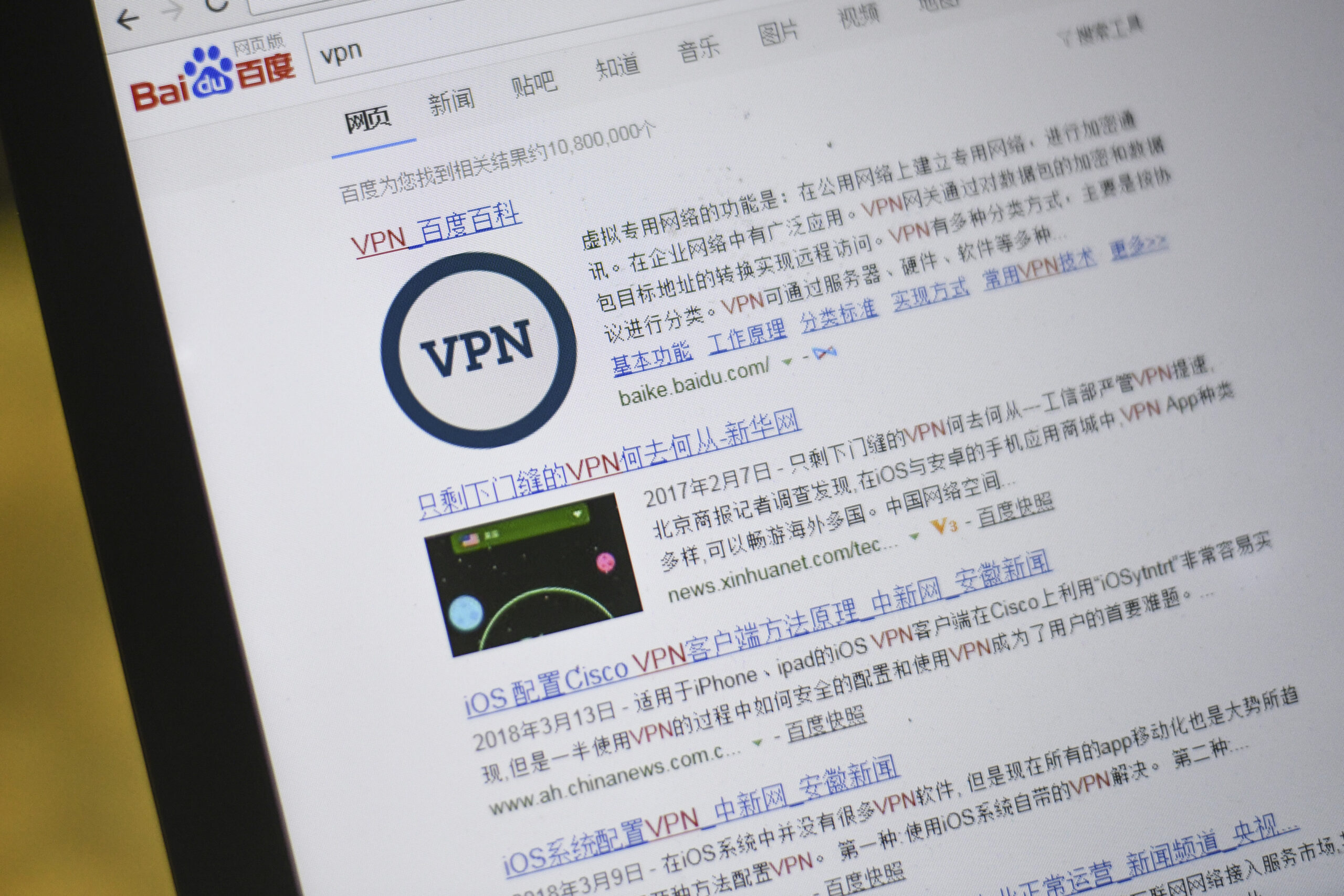
Recently, Harbin Engineering University, one of China’s “211 Project” universities and a member of the so-called “Defence Seven”, issued a notice through its School of Mathematical Sciences, warning and disciplining 20 undergraduate and graduate students who used VPN to connect to overseas networks. The incident sparked online discussions, with some netizens expressing concerns that disciplinary actions by the school may further affect students’ scholarships, recommendations, and other opportunities for further education.
According to a widely circulated notice from the School of Mathematical Sciences at Harbin Engineering University bearing the official unit stamp, the involved students include undergraduate students Zu Xhao, Wang Xyu, Li Xze, Li Xyang, Guan X, Guo Xyang, Liu Xhi; and graduate students Mao X, Li Xlong, Hu Xfei, An Xquan, Gong Xwei, Huang Xyu, Li Xcheng, Gao Xlong, Jiang X, Li Xmou, Zhang Xkang, Cai Xjie, Zhao Xting. These students were found to have used their personal campus network accounts on September 18th and 19th to access overseas websites via VPN, a practice commonly known as “bypassing the Great Firewall”. The related activities have been fully recorded and retained by the monitoring system.
The notice stated that the students violated the rules for the first time, and no “harmful information dissemination, illegal profit-making, or other serious consequences” were found. Therefore, the School decided to issue a warning; however, any similar behavior in the future will be “severely dealt with”.
Currently, the university has not publicly disclosed which specific websites or overseas content the 20 students accessed. Moreover, details regarding the identities, grades, and further actions concerning these students have not been revealed.
Harbin Engineering University is a university jointly established by the Ministry of Industry and Information Technology of the Communist Party of China, the Ministry of Education, Heilongjiang Province, and Harbin City. It is also one of the “Defence Seven”, an initial batch of “211 Project” universities, and a “Double First-Class” constructed university.
This incident has gained significant attention online, with mainland netizens pointing out that after being warned and disciplined by the university, these students may face consequences such as losing their scholarships for the year or the opportunity to be recommended for graduate school. Moreover, engaging in “bypassing the Great Firewall” activities might leave a mark on their personal files, potentially impacting their future prospects of working in government organizations.
A blogger known as “Shi Hai Liu Nian Hao” mentioned in an article that this case not only involves a substantial number of individuals but is also sensitive due to the university’s special military-industrial background, making internet bypassing activities particularly delicate. In such institutions, online behaviors have already surpassed the realm of personal freedom.
Since March this year, the public security bureaus of various provinces and cities in China have successively introduced crackdown measures on bypassing the Great Firewall. From mid-April onwards, the operations have been further escalated, with the coordination of the Communist Party of China’s Cyberspace Administration and the Ministry of Industry and Information Technology. They have collaborated with China Mobile, China Telecom, and China Unicom, the three major telecommunications operators, to directly monitor and penalize users of VPNs.
At that time, personnel from the Cyberspace Administration in the northwest region of China, under the alias He Xun, previously disclosed to Dajiyuan that an increasing number of netizens sharing screenshots and brief comments about overseas websites in chat groups caught the attention of high-level authorities. The Communist Party leadership views this as an attempt by foreign forces to subvert China (the Communist Party) and believes it is crucial for social stability.
In recent years, the Communist Party of China has continuously strengthened internet control measures, from keyword filtering to platform regulation and cross-border data restrictions, steadily tightening the cyberspace. VPN, as a significant means to circumvent censorship, has always been a primary target for suppression.