
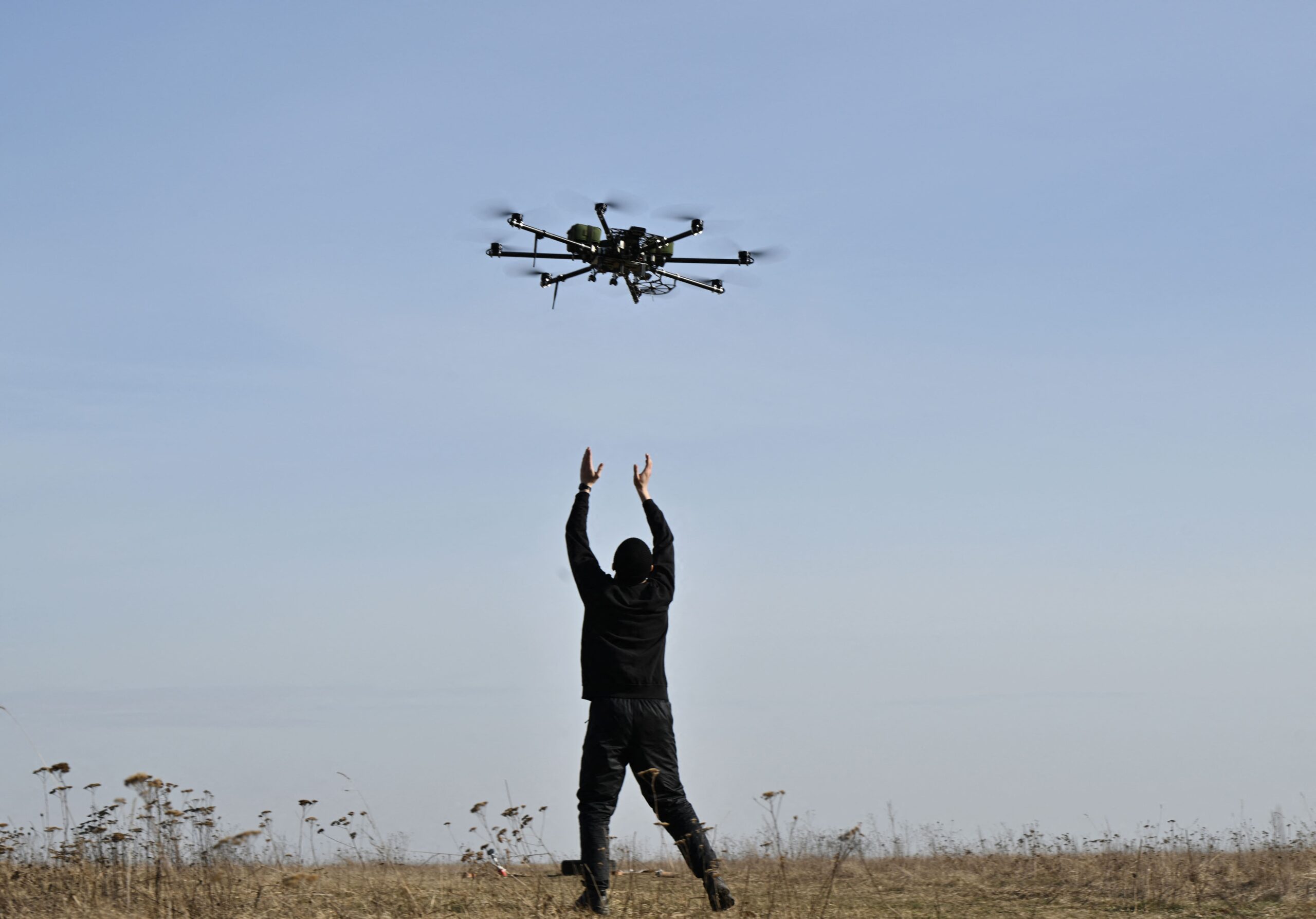
The Department of War of the United States, also known as the Department of Defense, has reported that between August 22 and September 24, a total of 378 unmanned drones belonging to drug trafficking groups were detected along the southern border. Out of these, 75 were forced to return, 15 were engaged in firefights, and 1 was captured.
The Department of Homeland Security (DHS) released a statement on their website declaring that “hostile surveillance against American personnel by drug trafficking groups has come to an end.”
The statement also warned the drug trafficking groups that their drones are becoming ineffective, their tactics are being exposed, and they have no advantage. The Customs and Border Protection Agency (CBP) along with the Department of War will continue to combat them.
Previously, Fox News reported that the Department of War’s Joint Task Force in the southern border region brought down approximately 100 suspected drug cartel drones in just the month of August.
According to current US data, the main uses of drug cartel drones include reconnaissance of American military, CBP, and other personnel’s locations, observing border patrol routes, aiding in human and drug smuggling, and some possibly carrying explosives.
The National Counterterrorism Center (NCTC) assessment in 2025 indicated that some Mexican drug trafficking groups can operate drones hundreds of times a day, with some venturing as far as 30 miles into US airspace. For drug cartels, the “cost-benefit ratio” of using commercial drones is very appealing.
Deputy Chief of the Border Patrol, Jeffrey Stalnaker, stated in an interview with Fox News that drug trafficking groups primarily use drones for reconnaissance in drug and human smuggling operations, not for transporting drugs. Previously, they would send people to monitor border patrol and other American personnel, but now they are using drones for aerial surveillance.
Stalnaker explained, “They monitor when our soldiers and agents enter the battlefield, where they work, and then through surveillance, they can plan how to transport individuals illegally from Mexico to northern US, bypassing us and entering US territory.”
So far, drug trafficking groups’ drones have not been used for lethal purposes, federal officials say, and there have been no reports of attack drones in the border region. Federal officials informed Fox News that the US anti-drone technology in the southern border has been successful.
However, drug trafficking groups’ drone tactics are rapidly evolving. By 2026, US intelligence officials have started to worry that drug cartels’ drone technology is advancing rapidly, including longer flight distances, larger payloads, changing radio frequencies to avoid interference, carrying explosives, and incorporating lessons learned from drone warfare in the Russo-Ukrainian War.
According to a report by The Washington Post on September 22, internal evaluations within the US government believe that this technological development will make combating drug trafficking groups more complex.
To counter the threat, the Department of War and DHS are actively expanding the use of drones for detection and interception along the southern border, working with private companies to develop new technologies to counter the increasing intrusion of drone by drug trafficking groups. Over the past 3 weeks, the military has been conducting exercises in the desert areas outside Yuma, Arizona, testing new anti-drone equipment including firearms, drones, and drone capture technology.
Brigadier General Jason Rueschhoff, the Operational Director of the US Northern Command, told Fox News, “We are developing capabilities at a pace faster than our adversaries, which is crucial, and that’s exactly what we are doing here.”
(Based on reporting by Fox News)