
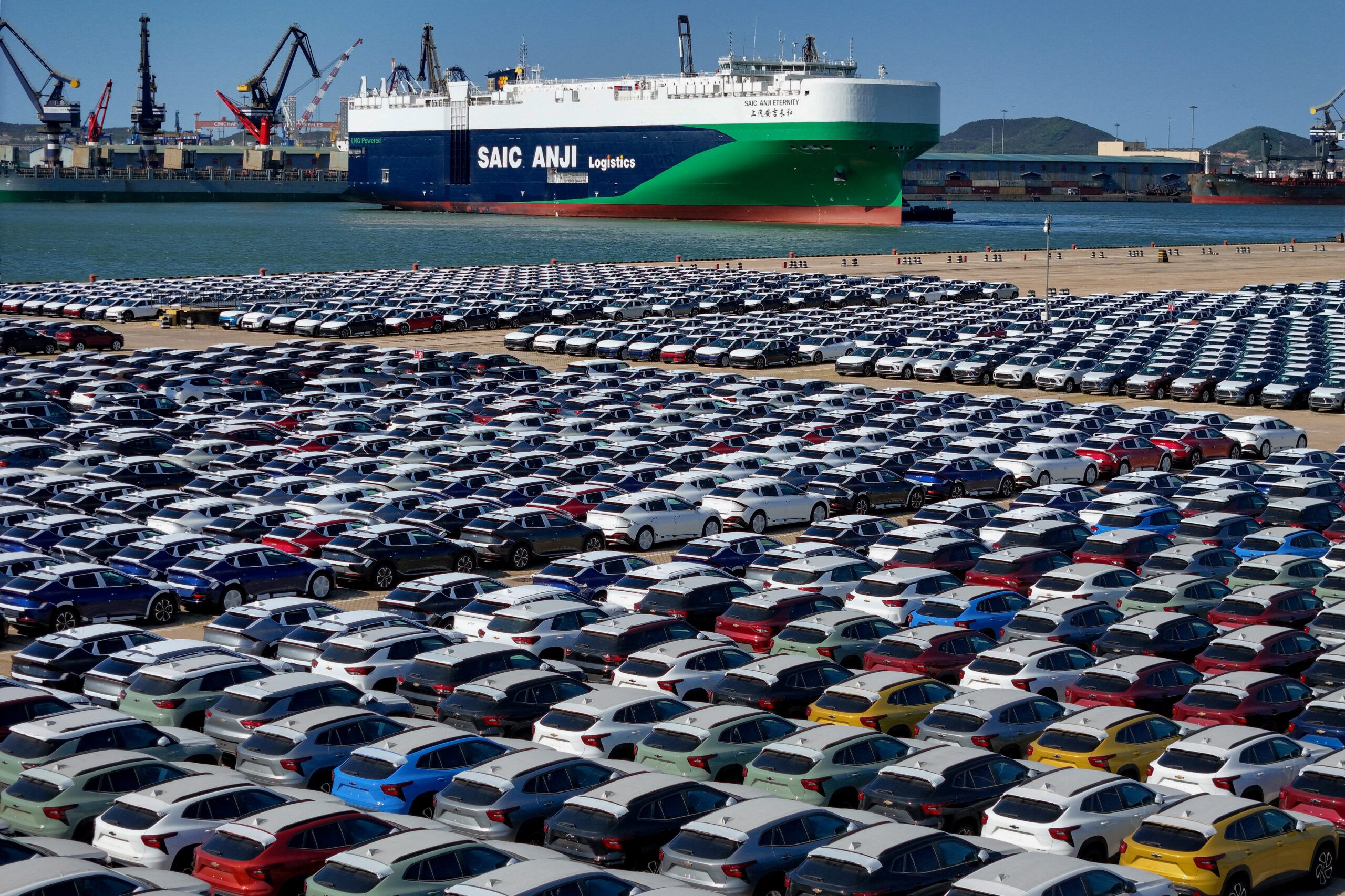
The European Union is reportedly urging the United Kingdom to increase tariffs on Chinese automobiles and align its trade policies closer to the EU’s standards. Failure to do so may result in British products struggling to bypass the new barriers created by the “Made in Europe” policy. Industries such as automotive, chemicals, and energy could all potentially be affected.
On Friday, September 25th, the Financial Times cited two sources stating that after weeks of intense lobbying, the UK hopes for its products to receive equal treatment under the “Made in Europe” policy as EU products. The EU side suggested to London that the best solution would be to join the EU Customs Union.
An EU official mentioned, “The Customs Union would address most of the issues related to ‘Made in Europe’ and also bridge the tariff gaps. These gaps raise concerns as China could potentially reroute goods through the UK to evade our tariffs.”
“It is no longer the highly competitive, globally-integrated UK at Europe’s doorstep that concerns us now, but rather the possibility of the UK becoming a backdoor for Chinese goods to enter the European market,” another official added.
Currently, the UK government rules out rejoining the EU Customs Union or single market. However, to have its domestic supply chains included in the EU’s new industrial support system, the UK must weigh its post-Brexit trade autonomy against seeking recognition under the “Made in Europe” regulations.
According to Reuters, the European Commission introduced the Industrial Accelerator Act in March of this year, aiming to boost local production within the EU through public procurement, subsidies, and auction systems. This will enhance the competitiveness of the EU manufacturing industry while reducing reliance on China.
Under the current draft, electric vehicles purchased through public procurement must be assembled within the EU; six months after the implementation of the Act, 70% of components aside from batteries must also be manufactured within the EU.
The proposal automatically includes the EU-27, as well as Iceland, Liechtenstein, and Norway; whether other non-EU countries can receive equivalent treatment will depend on whether they provide equal access to their public procurement or subsidy markets to the EU.
The Act is still in the legislative process, with the final text pending negotiations between EU member states and the European Parliament.
Concerns from the UK regarding these policies have been ongoing. The meeting minutes released by the UK Prime Minister’s office on September 3rd revealed that Prime Minister Burnham had already expressed to French President Macron the substantial challenges the “Made in Europe” agenda could pose to UK industries. They agreed to jointly seek solutions to protect mutual interests.
The latest analysis released this week by the Society of Motor Manufacturers and Traders (SMMT) shows that bilateral UK-EU automotive trade amounts to approximately €800 billion annually; the UK automotive sector currently supports €240 billion in economic activity and 250,000 jobs within the EU.
Mike Hawes, the CEO of SMMT, stated, “Excluding the UK from ‘Made in Europe’ would be a major own goal, weakening competitiveness, shrinking scale, and restricting consumer choice.”
While the EU strengthens its trade defenses, Chinese automobile sales in the European market have been rapidly increasing.
Citing data from the EU statistics agency, The Guardian reported that in 2022, only 659 Chinese-made full hybrids (HEV) were sold in the EU, which surged to 160,662 during the first seven months of this year. Similarly, Chinese-made plug-in hybrids (PHEV) increased from 56,706 in 2022 to 217,764 from January to July this year.
In 2024, the EU imposed additional anti-subsidy tariffs on Chinese all-electric cars, but hybrid vehicles were not subjected to the same measures.
The Guardian noted that Brussels has requested China to voluntarily decrease exports of hybrid cars to Europe, or they may face safeguard measures, potentially including quota restrictions.
Chinese car manufacturers continue to expand in the EU market. For instance, BYD saw a 163% year-on-year increase in sales in the first eight months of this year, reaching 177,000 vehicles.
Earlier this month, the President of the European Commission, Ursula von der Leyen, stated that the trade deficit between the EU and China had reached €1.18 billion per day. She described this deficit as reaching an unsustainable “tipping point.”
Currently, the UK aims to have its automotive and other industries included in the EU’s “Made in Europe” system while also seeking Chinese investments in the UK. Adjustments in London’s trade policies towards Chinese automobiles could potentially lead to new developments in the UK-China economic and trade relations.