
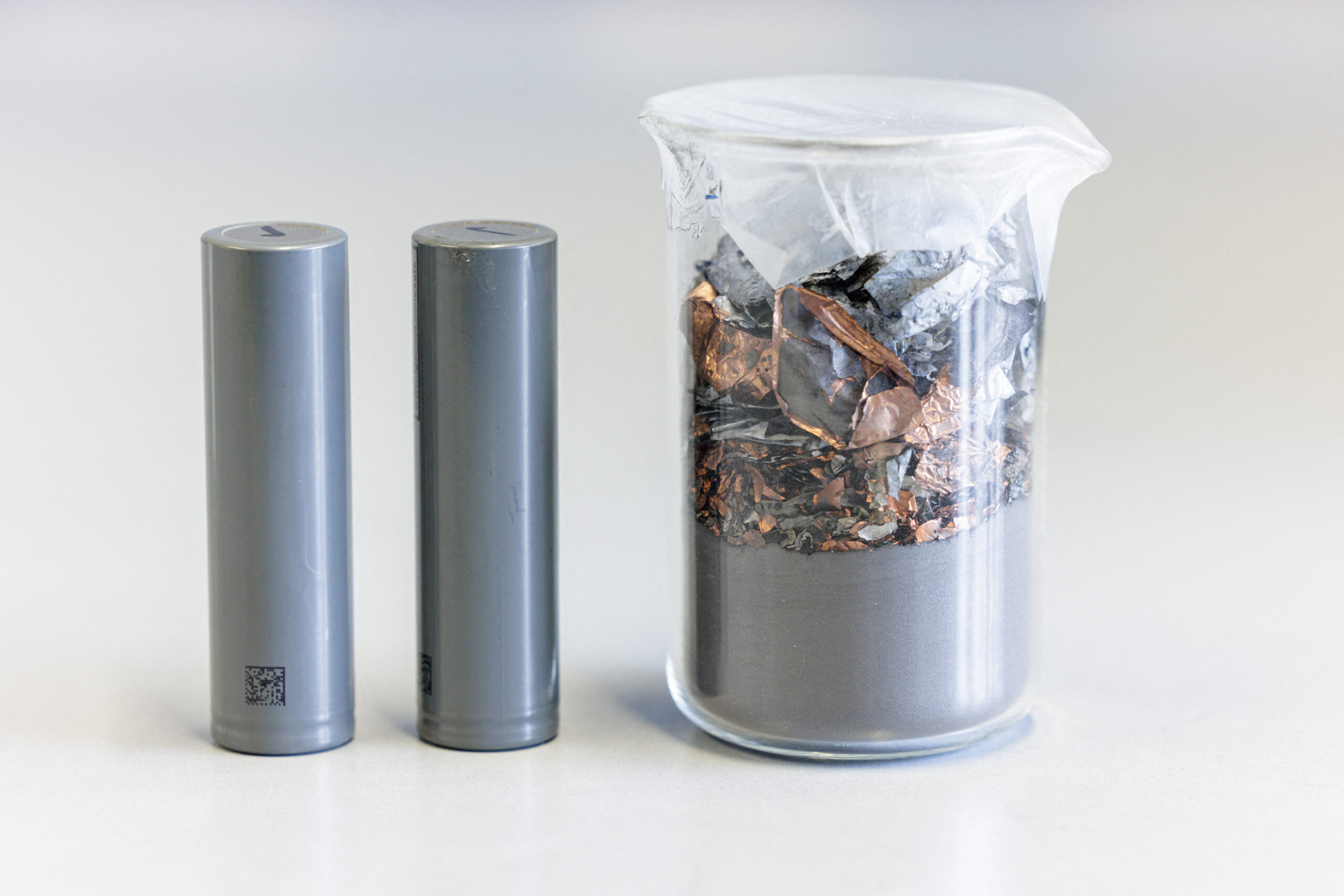
The United States Department of Commerce announced on Thursday, August 6th, that strict restrictions on the export of lithium battery waste and tungsten waste will be implemented starting from August 27, 2026. The aim of this measure is to reduce dependence on key minerals long controlled by the Chinese Communist Party and to support the recycling industry within the United States.
The focus of this regulation is specifically on two strategic materials:
Firstly, the waste generated from broken lithium batteries, commonly known as “black mass,” which contains materials such as lithium, cobalt, nickel, copper, iron – essential components for manufacturing electric vehicles and energy storage equipment.
Secondly, tungsten waste, widely utilized in defense fields such as ammunition manufacturing and hardening steel, which will now be fully controlled in terms of its metal waste export.
Unlike a typical export ban, as outlined by the new Interim Final Rule published by the Bureau of Industry and Security (BIS) under the Department of Commerce in the Federal Register, U.S. entities engaged in relevant activities will be required to “allocate 100% of the monthly sales of these key mineral wastes to domestic buyers in the United States.”
This export ban is set to last for one year, from August 27, 2026, to August 27, 2027. Unless granted an exemption by the Department of Commerce, the export of these strategic materials will be completely prohibited.
This action stems from the U.S. President’s recognition, at the end of July, under the amended Section 101 of the Defense Production Act of 1950, designating “Critical Minerals and Materials” (CMM) as indispensable scarce strategic resources for national defense.
To ensure enforcement of the order, the Department of Commerce will work in conjunction with agencies such as U.S. Customs and Border Protection (CBP) to carry out law enforcement. Starting from August 27, unauthorized exports will be detained and reviewed by the BIS. Violators of the regulations will face severe legal consequences and fines.
The Department of Commerce stated that businesses unable to comply with this regulation must inform the BIS in writing.
The BIS also issued a 60-day notice seeking comments on the related measures.
Despite the requirement for “100% domestic sales,” the Department of Commerce has provided flexibility to the industry, allowing companies to apply for exemptions under certain circumstances. The BIS aims to respond to applications within 14 days of receiving them, with five possible exemption conditions:
1. Compliance with the regulations causes unusual and excessive hardship.
2. Adhering to the rules would reduce domestic mineral supplies, contradicting the policy objective.
3. Exporting waste overseas for processing with the eventual return of the final product to the United States.
4. The ban will cause unreasonable harm to businesses.
5. Companies need additional time to adapt to the new regulations.
The United States highly relies on China for various critical materials, and in the past, China has often used restrictions on rare earth exports as a political leverage against other countries. Developing new mines and processing facilities typically takes several years. Moreover, federal regulations mandate that the U.S. defense industry must cease mineral purchases from China starting January 1, 2027.
The situation, especially concerning tungsten, is particularly grave. Since 2015, the U.S. has ceased commercial mining, leading to a heavy reliance on China for supply. The recycling of tungsten waste has become almost the sole source within the United States. Amermin, a private tungsten recycling company, has warned that allowing the export of tungsten waste would pose an “unacceptable risk” to U.S. industrial and military preparedness.
For a long time, the U.S. has exported around 33,000 tons of electronic waste monthly, with a significant portion containing recyclable lithium and other key minerals. U.S. recyclers have repeatedly raised concerns to the government that foreign buyers often purchase waste at prices higher than the market rate, making it challenging for domestic businesses to compete. Iconic companies like Li-Cycle and Ascend Elements have filed for bankruptcy in the past 18 months due to pricing and economic challenges.
A study released in July by Cirba Solutions, a recycling company in Ohio, showed that over 80% of Americans are willing to actively participate in electronic recycling to “reduce reliance on foreign minerals.” Ryan McAdams, the CEO of Amermin, stated, “Although this ban is just a temporary solution, it does buy us more time to start building infrastructure within the United States.”