
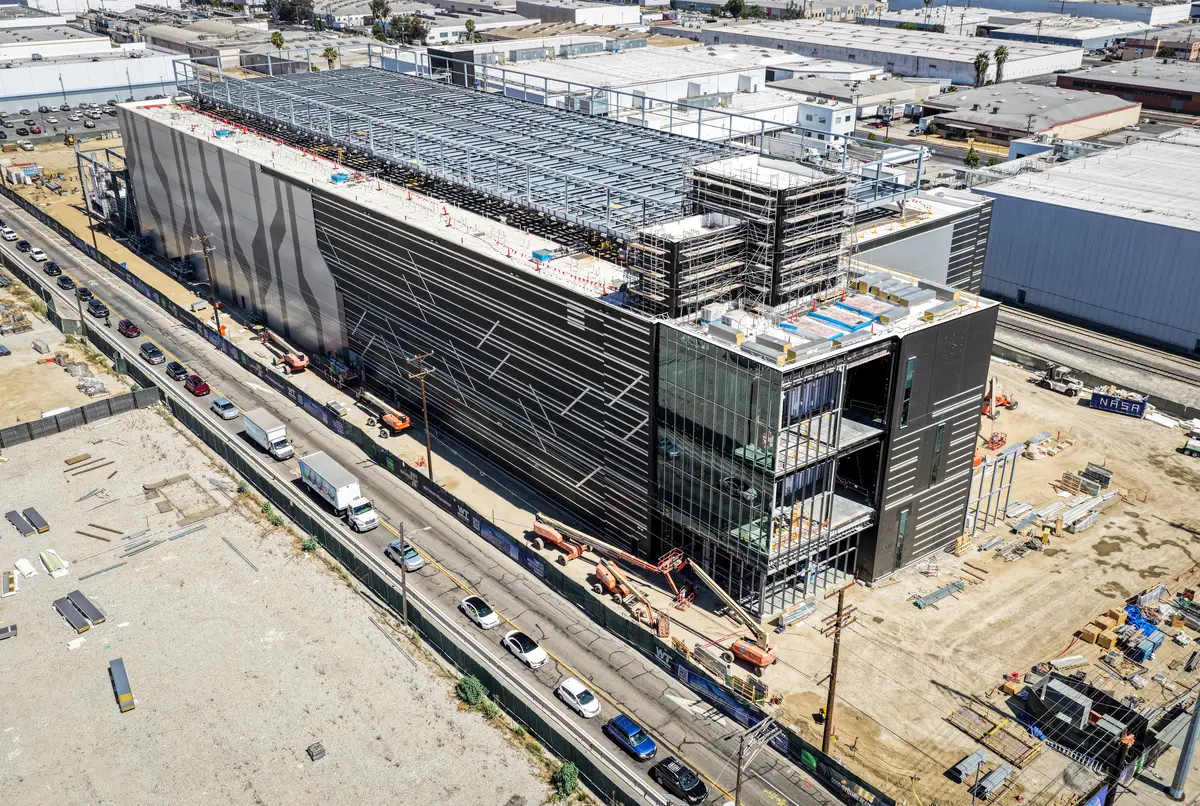
In recent years, major tech companies have been investing billions of dollars in building new data centers, power supplies, and computing resources. However, there is a debate within the industry about whether the investment in artificial intelligence (AI) is worth such enormous capital.
According to a report by “Futurum,” a news website based in Austin, Texas, five major cloud and AI infrastructure providers in the United States – Alphabet (headquartered in California), Amazon (headquartered in Seattle, Washington), Meta (headquartered in California), Microsoft (headquartered in Washington), and Oracle (headquartered in Austin, Texas) – have committed to investing nearly $700 billion in AI capital expenditures this year.
The computing resources, or “compute,” of artificial intelligence are a key driving factor in the growing demand for AI technology resources. These resources include memory, processing power, and dedicated hardware. Many AI models run on cloud computing platforms, which are mostly provided by the three major tech giants: Amazon Web Services (AWS), Microsoft Azure, and Google Cloud Platform (GCP).
According to Usage AI based in New York, just these three companies account for about 68% of global cloud computing expenditures, giving rise to the term “hyperscaler.”
Reported by iRecruit.co based in Denver, Colorado, the demand for resources in hyperscale facilities is expected to increase significantly, with projections of 670 such facilities being built by 2026.
An increasing number of Americans are using AI daily, with nearly half of them frequently utilizing some form of AI chatbot. A study by the Pew Research Center in Washington, D.C. revealed that approximately one-quarter of U.S. adults use these tools daily. The widespread application of this technology has prompted frontline industry professionals to pause and contemplate the true costs behind its rapid development.
Elvin Aghammadzada, an AI architect at NVIDIA in California, disclosed to “Epoch Times” that engineers and architects building these systems are raising challenging questions about whether the scale of computation, model redundancy, and infrastructure is proportionate to the delivered value.
A Consumer Reports study based in New York suggests that the U.S. currently has over 3,000 operational data centers, with approximately 1,500 more in the planning or construction stages.
As the scope of AI applications continues to expand, the demand for water and electricity is also accelerating. The U.S. Energy Information Administration found that due to the proliferation of data centers to support AI development from 2025 to 2026, electricity prices in multiple states have surged. Research by Grid Strategies in Washington, D.C. indicates that these facilities account for around 55% of the growth in U.S. electricity demand.
Industry experts are reluctant to admit that most market electrical grids and water infrastructure are not designed to cope with this development trend. Adjustments, such as utilizing existing hardware for internal document searches, compliance monitoring, or operational support, could potentially make AI more resource-efficient.
Michaela Brady, an international AI policy advisor at the Department for Science, Innovation, and Technology in the UK, emphasizes the importance of deploying AI only in areas where it is truly beneficial, such as healthcare, diagnostics, engineering, and manufacturing.
The debate over balancing concerns with the economic and social benefits brought by AI infrastructure is ongoing within the industry. A survey by RoAI Institute in March showed that nine out of ten executives globally believe that their company’s AI investments have brought significant to immense value. On the other hand, concerns about the environmental impact and resource consumption of AI technology are being raised by experts.
Efficiency improvements alone may not address the challenges of AI infrastructure. As AI becomes cheaper and easier to deploy, there is a tendency for demand to expand, leading to potential conflicts with resource sustainability.
Efforts are being made by tech giants to reduce energy and water consumption related to AI operations. Google, for example, aims to create the most energy-efficient computing infrastructure globally and equips each of its data centers with energy-saving servers. AWS plans to achieve a “water positive” status for its parks by 2030, which means returning more water to the community than it uses.
The Data Center Coalition in Virginia, an association advocating for the data center industry, highlights the critical role such facilities play in powering modern life, supporting essential functions like remote healthcare, digital classrooms, banking, aviation, financial transactions, and online shopping.
Ultimately, the challenge lies in finding a sustainable path forward for AI development that balances innovation and efficiency with environmental and social responsibility. The ongoing dialogue within the industry highlights the need for collaborative efforts to navigate the complexities of AI infrastructure’s rapid expansion.