
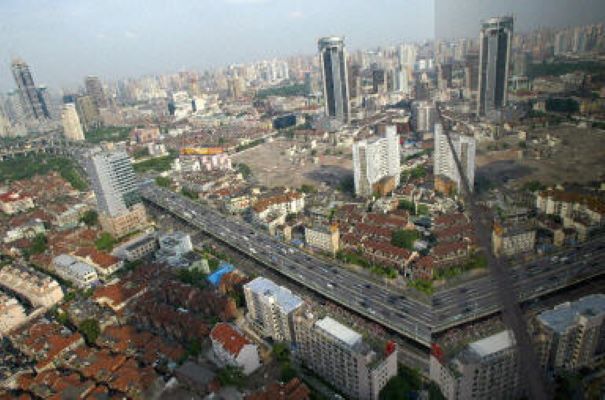
In the first eight months of 2026, China’s state-owned land transfer income amounted to 1.3753 trillion yuan, a 28.6% decrease compared to the same period last year. Analysts believe that with dwindling land sale revenues, the land finance sector may be nearing the completion of its historical mission.
According to the announcement of the Ministry of Finance of the Communist Party of China on September 18, the income from state-owned land transfer in the first eight months of this year showed a significant drop of 28.6%.
As reported by the Economic Observer on September 27, compared to the full-year data for 2025 released by the finance ministry in late January, which indicated a 14.7% decline in land transfer income, the decrease in 2026 seemed promising to narrow further, as forecasted by many market institutions. However, after eight months, the decline nearly doubled.
A financial department official from an eastern county in China informed the Economic Observer that the continuous decline in land transfer income this year is mainly attributable to two factors: increasing constraints and regulations on state-owned enterprises’ land auctions by relevant departments, and institutional changes introduced by the joint issuance of the “Notice on Further Ensuring the Protection of Natural Resource Elements” (Document No. 38) on March 5 by the Ministry of Natural Resources and the State Forestry and Grassland Administration, imposing new constraints and requirements on newly added construction land.
Several county-level financial department officials and experts had previously suggested that fundamental changes might be on the horizon for land finance. Wang Zhenyu, director of the Local Finance Research Institute at Liaoning University, noted that China has entered an era of existing housing stock. Similarly, land finance, as a product of the era of flow and increment, is inevitably facing challenges of diminishing marginal returns.
Land finance typically refers to the income from the transfer of state-owned land use rights. In China, land finance is almost the main source of local government budget revenue. The report indicated that in 2025, the income from the transfer of state-owned land use rights accounted for as much as 77.6% of local government budget revenue.
Simultaneously, the cooling of the land market has transmitted to the tax revenue side. From January to August this year, deed tax income dropped by 14.2% to 258.5 billion yuan, while land value-added tax declined by 13.6% to 256.2 billion yuan. This trend indicates a decrease in land acquisition by real estate developers upstream, coupled with a slowdown in new home sales and project settlements, which in turn leads to shrinking tax revenue from downstream deed tax and land value-added tax transactions, gradually contracting the realization chain from land to housing.
According to data released by the Ministry of Finance of the Communist Party of China, in 2020, the income from the transfer of state-owned land use rights in China reached a peak of 8.4 trillion yuan, followed by four consecutive years of negative growth. By 2025, this income had decreased by approximately 4.3 trillion yuan compared to the peak, a reduction of more than half. In 2026, the downward trend in land transfer income is expected to continue.
Wang Zhenyu believes that it is unlikely for the national revenue from local state-owned land to show signs of “recovery” in the short term, and the trend from January to August further confirms the assessment that land finance may be nearing the completion of its “historical mission.”
A significant impact of the dwindling land sale revenue is directly felt in the debt repayment capabilities of local authorities. The report mentions that local government debts are largely repaid using income from land transfer, so the decline in revenue directly adds to the pressure of debt repayment and interest payments. Of particular concern is the repayment capacity of special bond debts. In December 2019, Wang Kebing, then an inspector in the Budget Department of the Ministry of Finance, stated at a seminar on the construction and development of the local debt market that the repayment sources for special bonds are relatively limited, heavily dependent on income from land transfers.
The aforementioned county-level financial department official expressed great anxiety over this: with a significant decline in land transfer income this year, how can the local debt ratio be stabilized?