
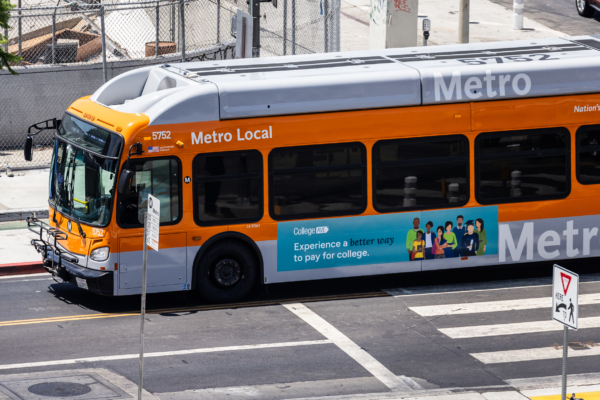
The Los Angeles Metropolitan Transportation Authority (Metro) board approved a grant of nearly $338 million on Thursday, September 24th, to be used for the manufacturing and delivery of 220 battery-powered electric buses, in a move to transition its fleet to zero-emission vehicles and prepare for the 2028 Olympics. This decision was made to increase the number of electric buses in Metro’s fleet by more than double, as reported by City News Bureau.
According to a statement from Sierra Club, one of the largest grassroots environmental organizations in the United States, they support Metro’s procurement of electric buses. The board’s vote, with a 10-1 outcome, authorized Metro staff to sign a contract with ElDorado National Inc. for the electric buses, totaling $337,698,728. The total value of the contract with the company will reach $382,355,185.
Additionally, an additional $52 million will be allocated for professional and technical support, internal manpower costs, and contingency funds. According to the organization’s expenditure plan, Metro anticipates a total expenditure of $434,355,185 throughout the duration of the project.
Matthew Dake, Deputy Director of Fleet Maintenance and Engineering at Metro, emphasized the need for new electric buses to support zero-emission goals and replace aging buses that have exceeded their useful lifespan. Dake noted that this procurement will be utilizing state government funding; failure to approve this expenditure could pose a risk of losing $168 million in state funds for the agency.
The board also approved an amendment proposed by Metro Board Chair and Mayor of Los Angeles, Karen Bass, allowing the future purchase of up to 1,600 electric buses in batches of no more than 300 at a time. The motion stipulates that the board is not obliged to make additional purchases in the future and can re-tender, without being obligated to procure directly from ElDorado.
Katy Yaroslavsky, Metro board member and Los Angeles City Councilwoman, stated that the resolution sends a significant signal to the North American market, bringing Metro closer to its Latin American counterparts. She mentioned that Latin American countries have already deployed over 10,000 zero-emission buses in operation and that other regions globally have even higher numbers. The International Council on Clean Transportation (ICCT) report showed that countries like Chile, Colombia, and Brazil purchased a total of 9,115 electric buses between 2017 and 2025, with 75% of them coming from Chinese companies like BYD (32%).
Janice Hahn, Metro board member and Los Angeles County Commissioner, opposed the contract due to ElDorado National being a non-union business and having only produced 16 electric buses to date. She expressed disappointment, stating, “If there is something distinctive about us in Los Angeles County, it is how strongly we support unions, and that is fundamental to our reputation.”
Competing bidders included New Flyer of America Inc. and RIDE Mobility LLC. Metro evaluated the three companies based on project management experience, past performance, pricing, technical compliance, supply framework, and U.S. employment plans, with ElDorado National in Riverside receiving the highest score. Officials noted that ElDorado has been in operation since 1975 and has produced over 10,000 buses.
Hahn advocated for the employment of local labor and highlighted that New Flyer of America has a factory in Torrance.
Robert Ankerman, a member and organizer of the United Auto Workers Region 6, voiced the union’s support for Metro’s shift towards zero-emission buses but emphasized the need for Metro to ensure high labor standards. He stressed that raising worker income is a necessary requirement to achieve decarbonization goals and insisted on the importance of fair labor practices. Ankerman supported awarding this initial contract to ElDorado to create more job opportunities in Southern California but expressed concerns about the working conditions in the factory.
John Lozano, President of the United Auto Workers Local 509 in Petrovera, encouraged Metro to approve the contract.