
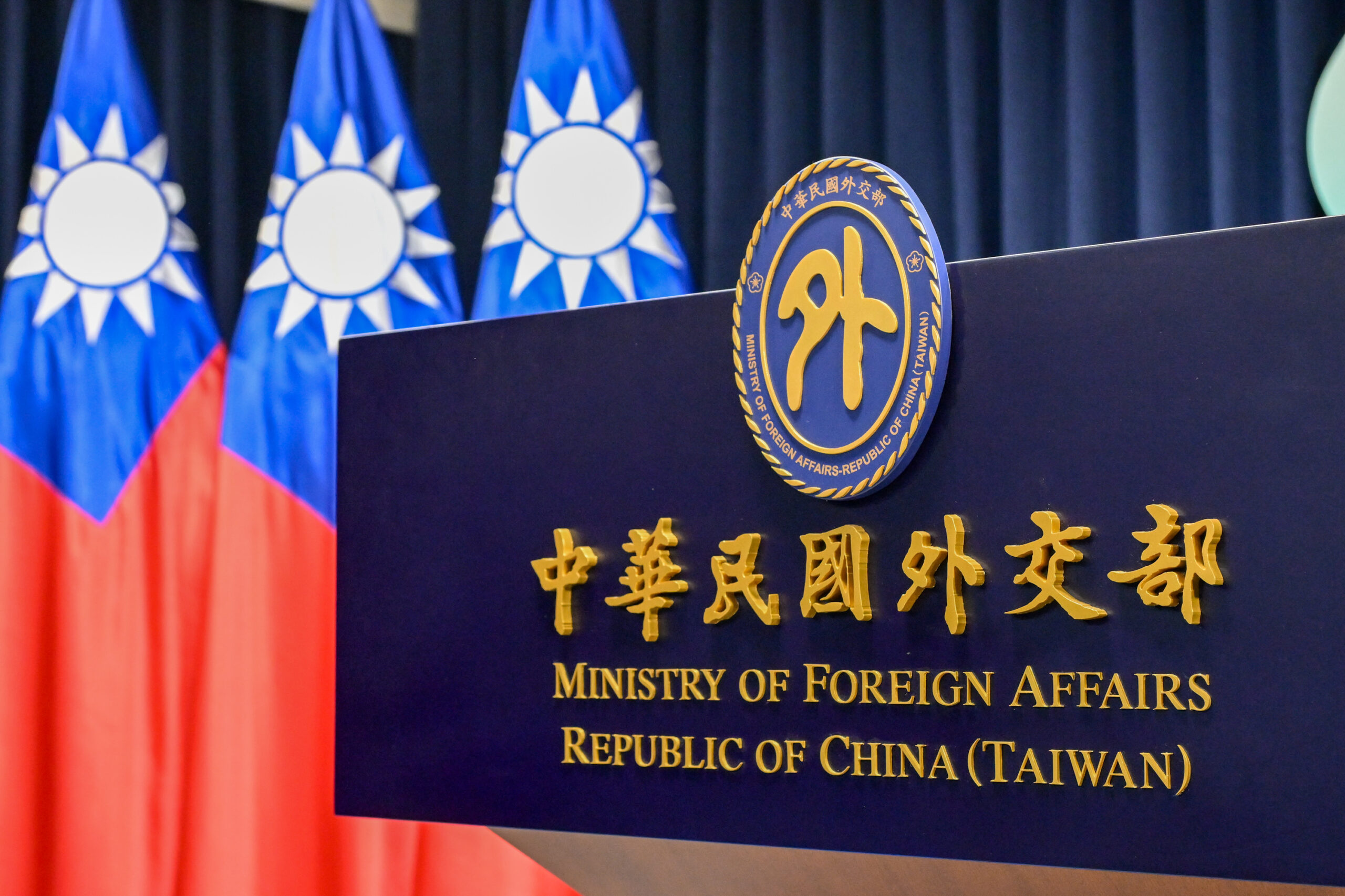
Following the meeting between Chinese leader Xi Jinping and American President Joe Biden, the Chinese Ministry of Foreign Affairs issued a statement urging the United States to “oppose ‘Taiwan independence’.” In response, the Ministry of Foreign Affairs of the Republic of China (Taiwan) reiterated its sovereignty position, emphasizing that Taiwan and the Chinese Communist Party (CCP) are not subordinate to each other and called on the international community to uphold peace in the Taiwan Strait.
The Ministry of Foreign Affairs of the Republic of China issued a statement today (25th), responding to the Chinese Ministry of Foreign Affairs’ post-meeting announcement, expressing that the statements calling for the U.S. to “oppose Taiwan independence” and “handle the Taiwan issue cautiously” were distortions of the facts and an unilateral presentation of China’s stance.
The Ministry of Foreign Affairs of the Republic of China pointed out that “our country’s position is clear and consistent: Taiwan, a sovereign nation, is not under the authority of the People’s Republic of China; Taiwan’s sovereignty belongs to the Taiwanese people, and the CCP regime has no right to represent the people of Taiwan. The future of Taiwan can only be decided democratically by the Taiwanese people.”
President Tsai Ing-wen has repeatedly emphasized that Taiwan is a responsible party for maintaining peace and stability in the Taiwan Strait and the region, reflecting the consistent and firm position of the Republic of China and the collective consensus of the 23 million people of Taiwan.
Furthermore, the Ministry of Foreign Affairs of the Republic of China stated that in reality, the continuing grey-zone provocations and military threats by the CCP in the East China Sea, South China Sea, Taiwan Strait, and surrounding Taiwan are the real destabilizing factors in the region, regarded as the biggest risk by relevant countries. China has been attempting to influence normal exchanges and cooperation between various countries and Taiwan and has been under close scrutiny and vigilance by all parties.
The Ministry of Foreign Affairs of the Republic of China highlighted that prior to the “Xi-Biden meeting,” multiple countries reiterated the importance of peace and stability in the Taiwan Strait during the United Nations General Assembly, including a joint statement by the foreign ministers of the United States, Japan, and South Korea, as well as a joint statement by the foreign ministers and senior representatives of Australia, France, Germany, Japan, New Zealand, Poland, South Korea, and the United Kingdom, emphasizing the consensus of the international community on the importance of peace and stability in the Taiwan Strait and opposing unilateral changes to the status quo.
Moreover, the Ministry of Foreign Affairs of the Republic of China stated that over 60 bipartisan members of the U.S. Congress have voiced their support for Taiwan, pledging to continue close cooperation with the United States and like-minded partners in maintaining peace and stability in the Taiwan Strait and promoting freedom, openness, and prosperity in the region.