
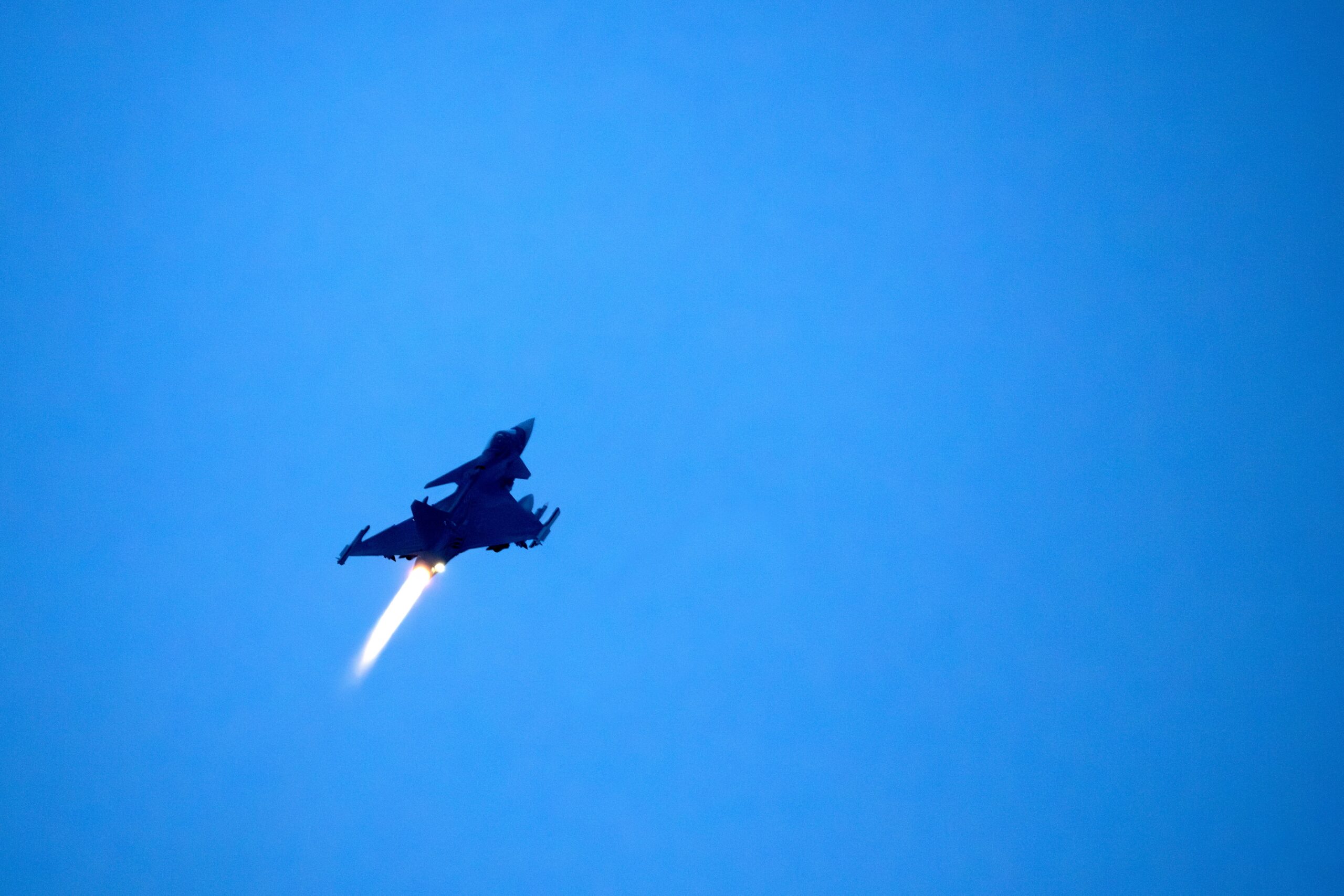
Finland and Sweden stated on Friday (September 25) that their fighter jets had jointly intercepted and identified Russian military aircraft in the international airspace of the Gulf of Finland. This marks the first time these two countries’ air forces have carried out such a joint operation, showcasing the deepening defense cooperation among Nordic countries after Finland and Sweden’s involvement in NATO.
Finland’s Air Force reported that Quick Reaction Alert (QRA) jets from both countries were scrambled on Thursday to track and identify a group of Russian military planes over the Gulf of Finland. This operation falls under the framework of the collaborative effort between Finland and Sweden to monitor and protect their respective airspaces.
According to EuroNews citing Finnish military sources, the Russian formation included a Tu-134 transport plane, as well as MiG-31 and Su-30 fighter jets.
The Finnish military stated that this was the first time their air forces had jointly carried out such a mission. The Russian embassies in Stockholm and Helsinki did not immediately respond to requests for comments from Reuters.
Swedish Prime Minister Ulf Kristersson stated that this operation demonstrates the cooperation of the two countries in quick reaction alert, enabling the monitoring and protection of each other’s airspaces.
He wrote on the social platform X: “This is a concrete manifestation of the readiness and mutual trust we have built together, showcasing the strength of our cooperation in the Nordic region, the Nordic-Baltic region, and the broader NATO partnership.”
Kristersson added, “The Baltic Sea has never been as fragile as it is now, but it has never been so well-protected either.”
Finland and Sweden have long pursued a policy of military non-alignment, but they joined NATO in the wake of the Russia-Ukraine conflict. Currently, Denmark, Finland, Iceland, Norway, and Sweden, the five Nordic countries, are all members of NATO, providing a more comprehensive joint framework for airspace surveillance, rapid response, and defense cooperation in the Nordic region.
In recent years, the Baltic Sea region has heightened vigilance due to a series of events such as interruptions in natural gas pipelines, airspace incidents, and drone activities.
The Danish Defence Intelligence Service (DDIS) released its latest assessment on Thursday, stating that while the risk of Russia launching limited military attacks against one or more of its neighboring NATO countries is low, it is increasing.
The Danish intelligence agency also anticipates that Russia may escalate hybrid actions against the West, including disrupting defense industries or railway transportation of military equipment, and potentially launching destructive cyber attacks to cripple critical societal functions.