
After 34 years of being listed on the stock market, China’s Konka Group has confirmed its delisting. Affected by weak consumer demand and other factors, Konka, once known as the “King of Color TVs,” has been experiencing losses for consecutive years. Public attention has shifted towards how China Resources Group, as the actual controlling entity, will lead this delisting, and what the future holds for Konka.
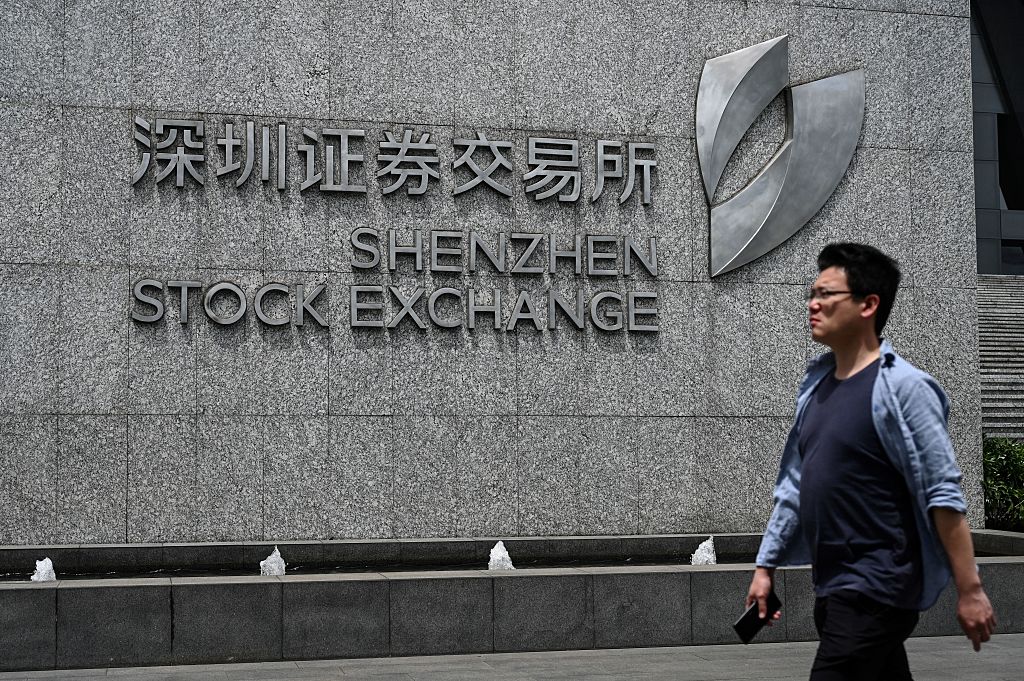
On the evening of September 23, Hong Kong time, *ST Konka A announced that it had submitted a voluntary delisting application to the Shenzhen Stock Exchange. At present, the company has officially entered the process of voluntary delisting and still needs to obtain a decision from the Shenzhen Stock Exchange. Konka’s stocks have been suspended since September 4, with *ST Konka A closing at 2.46 RMB per share on the last trading day, and *ST Konka B closing at 0.71 Hong Kong dollars per share.
Konka was once hailed as the “King of Color TVs” in China. In the 1990s, Konka dominated color TV sales nationwide. After delisting, Konka’s physical business operations will not cease, and segments like color TV can continue to operate.
Konka Group was one of China’s first companies to implement the shareholding reform and achieve dual-listing of A shares and B shares. Konka, originally established as the Shenzhen Overseas Chinese Electronic Industry Co., Ltd. in 1980, completed its shareholding reform in 1991 and officially listed on the Shenzhen Stock Exchange on March 27, 1992. To attract foreign investment and expand international financing channels, Konka issued and listed B shares (Special Renminbi shares settled in Hong Kong dollars) simultaneously with its A shares on the day of its A-share listing.
After the delisting of Konka’s A and B shares, they will be transferred to the delisting segment managed by the National Equities Exchange and Quotations system for small and medium-sized enterprises. As a critical part of the delisting plan, Konka has provided investors with the option of cash settlement, where eligible A and B share investors can receive a certain premium in cash.
According to the plan, the exercise price for the A-share cash option is 2.48 RMB per share, a premium of around 0.81% compared to the pre-suspension price. The exercise price for B shares is 0.73 Hong Kong dollars per share, also offering a minor premium. As a result, Konka’s stocks will proceed to the cash option distribution, exercise declaration, and clearing settlement phase and will no longer be traded. However, the plan has sparked controversy.
On September 24, media reports, including the “Time Weekly,” indicated that some investors have raised questions about the pricing of the cash settlement rights and the rights of debt holders and bondholders, with the company not providing a positive response. Some investors who bought Konka stocks at highs like 9 RMB express their disapproval of the delisting outcome, including those considering legal claims for compensation.
Market analysts believe that the reasons for Konka’s delisting are related to losses due to weak consumer demand and maneuvers by China Resources Group.
From 2022 to 2025, Konka’s net profits attributable to shareholders of listed companies were negative amounts, totaling over 20 billion RMB for the four years. Moreover, Konka’s net profits after deducting non-recurring items have been negative for 15 consecutive years.
The sluggish domestic demand and weak consumer spending in the home appliance sector have impacted the television industry. The younger generation’s shift in demand from traditional home appliances to mobile terminals like smartphones and tablets has further shrunk the market for large screen home appliances. Market data shows that China’s TV shipments have continuously declined since 2019, hitting a nearly 16-year market low for brand-new TV sets in 2025, prompting TV brands like TCL and Hisense to accelerate their expansion into overseas markets. In Konka’s 2025 annual financial report, the revenue from the consumer electronics industry, which accounts for over 90% of its income, plummeted by 12.02% YoY, squeezing the color TV’s gross profit margin to 0.39%.
Industry experts believe that the voluntary delisting of Konka under the leadership of China Resources Group, as the actual controlling entity, may be a more detailed calculation.
Dong Min, Secretary-General of the China Electronics Video Industry Association, believes that the promotion of this voluntary delisting by the major shareholder China Resources is more about optimizing the capital structure and revitalizing assets. After delisting, China Resources can support Konka with funding, resource collaboration, risk management, and industrial cooperation, and the future recovery will depend on the effectiveness of business reforms.
Following delisting, Konka will no longer face the quarterly disclosure of financial reports, annual maintenance criteria, or the pressure to explain operating fluctuations to the capital market each quarter. China Resources can now more flexibly execute actions such as asset divestment and shrinking non-core businesses.
Wang Ji Yue, a seasoned investment bank professional, stated that from China Resources’ perspective, there have always been expectations for restructuring Konka, but enforcement was challenging. The constraints include time sensitivity and higher regulatory requirements from listed companies regarding related party transactions and industry competition. “Reorganization plans with Konka retaining its listed company status would face various restrictions, whereas after delisting, the constraints would be significantly reduced.”