
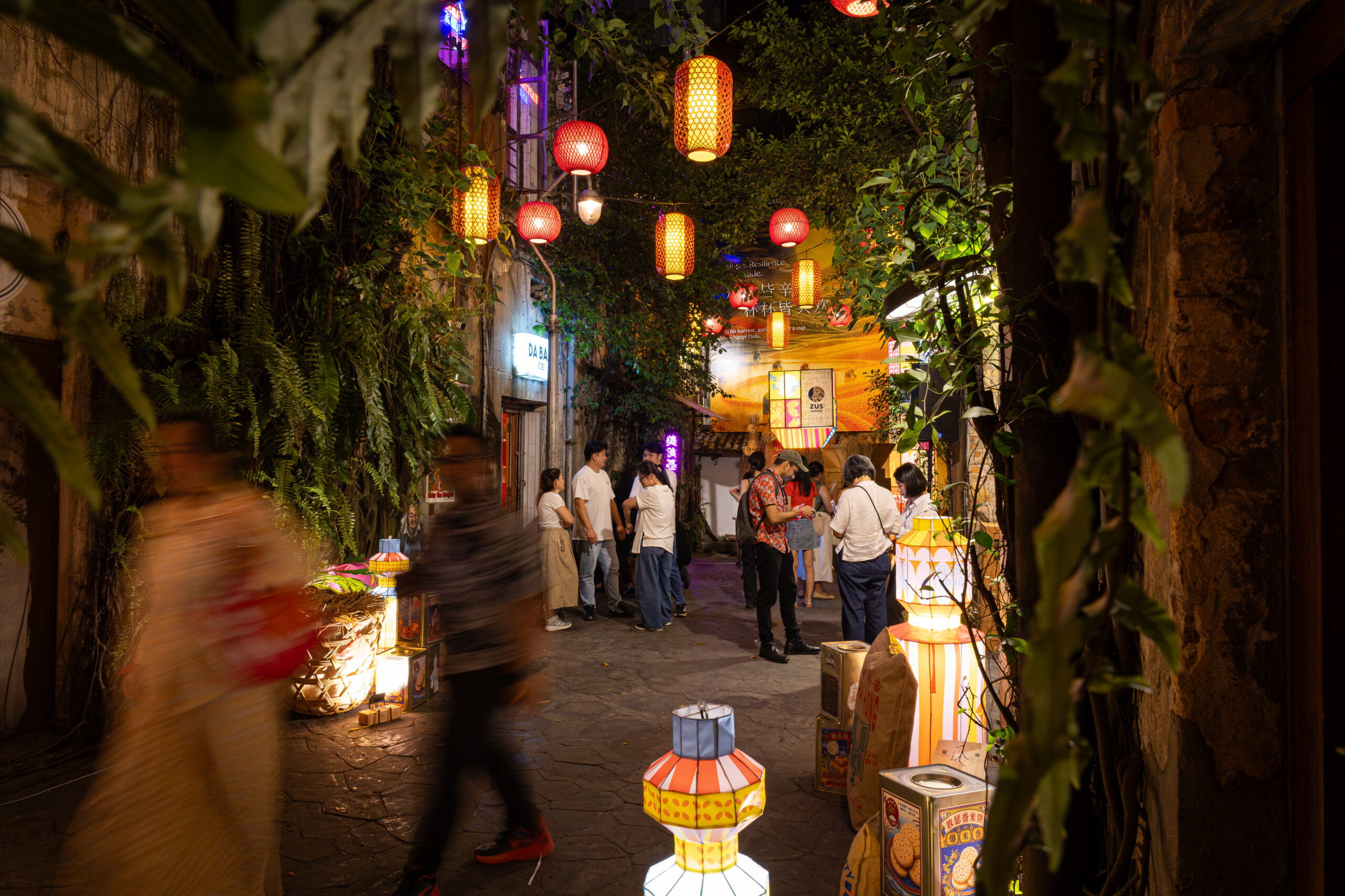
On the 15th day of the eighth month of the lunar calendar, which is known as the traditional Mid-Autumn Festival, people usually think of admiring the moon, eating mooncakes, and reuniting with family. However, the Mid-Autumn Festival is not only celebrated in China. In various countries and regions in Asia, there are traditional festivals related to the moon, harvest, reunion, or gratitude, each with its own unique characteristics.
The Mid-Autumn Festival originated in China and was officially established as a festival during the Song Dynasty (960-1279). However, it is believed to have originated from the moon-worship customs of the Zhou Dynasty over three thousand years ago.
Ancient Chinese emperors always prayed for a bountiful harvest, good weather, and national peace during the Mid-Autumn Festival. Since the harvest is closely related to the lunar phases, the Mid-Autumn Festival is usually celebrated when the moon is at its fullest.
Several other Asian countries also celebrate the Mid-Autumn Festival, including Japan, South Korea, Vietnam, Thailand, Singapore, Malaysia, and the Philippines. However, the celebration customs vary in each country.
In Taiwan, the representative elements of the Mid-Autumn Festival are abundant barbecue ingredients, pomelo hats, and glow sticks flickering in the night.
In Vietnam, although the Mid-Autumn Festival is not a legal holiday, it is still one of the most important annual festivals, known as “Tet Trung Thu” in Vietnamese, celebrated on the 15th day of the eighth lunar month. The festival is closely associated with children. They carry lanterns, watch lion dances, and engage in street celebrations, highlighting the society’s concern for future generations. It serves as a day of reunion, reminding people of their distant history and strengthening bonds.
Apart from the well-known stories of Hou Yi shooting the sun and Chang’e running to the moon, the Vietnamese also have another legend about the origin of the Mid-Autumn Festival: a man named Cuoi tightly grasping a magical banyan tree to float to the moon. If you gaze at the full moon carefully, you can see his relaxed reflection sitting under the banyan tree.
In South Korea, the Mid-Autumn Festival, also known as Chuseok, is a national holiday with a 3-day break. Chuseok, meaning “autumn eve,” is the second most important traditional festival on the Korean Peninsula after the Chinese New Year. It is a day to give thanks for the bountiful harvest and honor ancestors, where families gather to hold a tea ceremony.
Unlike eating mooncakes, every household in South Korea enjoys half-moon-shaped Songpyeon, symbolizing reunion and good luck, and various pancakes during the festival. People partake in traditional circle dances, wrestling, and mask dances.
In Japan, the Mid-Autumn Festival, known as Juugoya or “Otsukimi” (moon viewing), is not a national holiday. It is celebrated on the 15th day of the eighth month of the lunar calendar. This traditional festival originated in China during the Tang Dynasty and was introduced to Japan during the Heian period.
Japanese festivities during the Mid-Autumn Festival differ as they do not consume mooncakes or have barbecues. They eat rounded Tsukimi dango to symbolize the full moon, often stacking 15 dumplings to correspond to the 15th night.
According to the lifestyle website Hane Japan, the early Japanese culture included worshipping the moon to remember the deceased and hoping for a bountiful autumn harvest. When the Mid-Autumn Festival reached Japan, it started as a day of moon-viewing entertainment among the nobles during the Heian period. It was not until the Edo period that the custom of moon-viewing on the Mid-Autumn Festival spread to the common people and combined with the folk custom of moon worship, continuing to this day.
In Indonesia, the Mid-Autumn Festival is not a public holiday but is celebrated enthusiastically by the local Chinese community, often referred to as the “Mooncake Festival.” The Indonesian Chinese community calls mooncakes “Kue Bulan,” with cities holding lanterns, lion dances, and cultural activities.
Singaporean Chinese regard the Mid-Autumn Festival as an important cultural celebration, even though it is not a public holiday. The festival in Singapore is rich in Chinese cultural characteristics, with moon-viewing, mooncakes, and lanterns being essential customs.
In the past, on Mid-Autumn nights, Singaporean Chinese families traditionally worshipped the moonlight. Tables were adorned with mooncakes, taro, water chestnut, pomelo, hot tea, and children joyfully paraded with lanterns in the streets. The pomelo symbolizes reunion and carries auspicious meanings. With urban redevelopment and the transformation of rural areas into high-rise buildings, the traditional practice of moon worship has gradually faded, replaced by gatherings of family and friends.
The Mid-Autumn Festival in the Philippines is mainly celebrated by the local Chinese community and Taiwanese business groups, not as a national public holiday. The Chinese community in the Philippines observes Mid-Autumn Festival customs, including eating and gifting mooncakes while gathering with relatives and friends.
In regions with a concentrated Chinese population like Manila, Mid-Autumn Festival activities are integrated into community life, showcasing the fusion of Chinese traditions with Filipino culture.
For Malaysian Chinese, the Mid-Autumn Festival is a popular holiday although not a public holiday. Shopping malls are decorated during this festive period and sell special holiday foods, with widespread celebrations in Chinese communities involving lantern-carrying children, lion dances, and community lantern festivals.
Thailand has a substantial Chinese community, and the Mid-Autumn Festival is an important holiday for some Chinese families and communities. Activities such as eating mooncakes, moon viewing, moon worship, and gatherings with friends and family are common in the Thai Chinese community. Chinatowns like Bangkok’s will host Mid-Autumn festivities, blending Chinese traditions with Thai culture.
In Cambodia, the Chinese community also maintains numerous traditional festival customs, with the Mid-Autumn Festival being one of them. Some Chinese families prepare mooncakes, worship the moon, and celebrate the festival with their loved ones. For overseas Chinese communities, the Mid-Autumn Festival is not only a traditional holiday but also a significant moment for family bonding and cultural heritage preservation.