
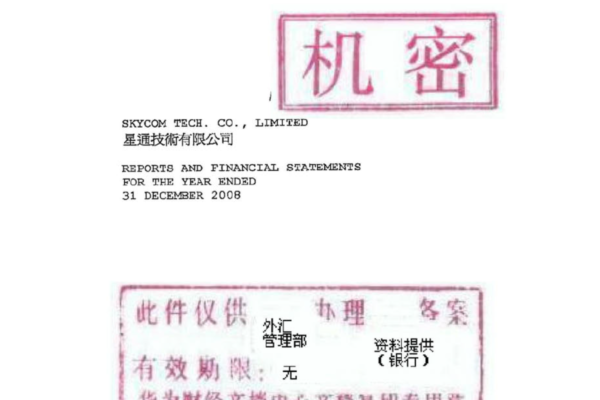
In the Huawei case being heard at the federal court in the Eastern District of New York, the question of whether Huawei used its Hong Kong affiliate Skycom to conduct business in Iran, evade U.S. sanctions on Iran, and mislead U.S. financial institutions is a crucial aspect of the prosecution’s allegations. Recently, the prosecution presented multiple company, bank, and equity documents, as well as testimony from former Skycom engineer Babak E. Vahdati, to illustrate the actual relationship between Skycom and Huawei.
Vahdati, who began working at Skycom in 2008, testified that while he and his colleagues were technically under contract with Skycom, internally they all saw themselves as working for Huawei. He described the relationship between the two companies as a “dual-layer structure”: with Skycom as the “outer layer” responsible for human resources, external communication, and contracts, and Huawei as the “inner layer” handling actual technology and business operations.
He mentioned using an email ending with @huawei.com, having direct connections to Huawei’s network in the office, reporting to supervisors and management who were Chinese Huawei personnel, and even being sent to Huawei’s training center in Shenzhen, China for technical training and certification. Emails from the court also showed him being referred to as a “Huawei supervisor” and authorized to access Iranian telecommunications infrastructure buildings to test Huawei equipment.
The prosecution alleges that Huawei used Skycom as an informal subsidiary in Iran to acquire U.S. goods and services while concealing the actual relationship between the two companies from banks.
According to company documents provided by the prosecution, Huawei’s subsidiary Huaying Management transferred its holdings in Skycom to a third party named Canicula at the end of 2007. The prosecution claims that Canicula was not truly independent from Huawei but controlled by the company.
After the equity transfer, Huawei reportedly began describing Skycom to banks and the public as a local “business partner” instead of Huawei’s subsidiary. A confidential court document from late 2008 also showed that Huawei’s Vice Chair and CFO Meng Wanzhou personally served as a director of Skycom from February 2008 to April 2009.
Vahdati recalled seeing Skycom branded equipment at the engineering site, not Huawei branded equipment, but also noted the presence of U.S. brand servers from companies such as IBM and HP.
This testimony corroborates past records of Skycom’s involvement with sensitive U.S. equipment. In a report by Reuters in 2012, Skycom reportedly sought to sell over $1 million worth of HP computer equipment to Iran. At that time, Huawei had issued a statement distancing itself from Skycom, claiming it was only a local “business partner” and denying any involvement in supplying U.S. equipment to Iran or aiding in sanctions evasion.
Vahdati mentioned that he was aware of U.S. sanctions against Iran during his time at Skycom and felt the impact of sanctions on the telecommunications industry when he joined Ericsson in 2009, as Ericsson couldn’t purchase American equipment in Iran. He highlighted that Ericsson and Nokia operated under their own names in Iran, while Huawei established Skycom as a separate entity, leading him to believe this setup was evidently related to the sanctions.
The prosecution emphasized the significance of the relationship between Skycom and Huawei, as banks’ recognition of the two companies as separate entities directly influenced whether they continued to provide financial services to Huawei.
The government accused Huawei of denying its control over Skycom to financial institutions, including HSBC, after reports on the matter surfaced, portraying Skycom as a local third-party business partner. This resulted in HSBC unknowingly clearing over $100 million in Skycom-related transactions through the U.S. financial system between 2010 and 2014.
The government pointed out that Meng Wanzhou, Huawei’s CFO and Vice Chair, reassured a senior HSBC executive responsible for Asia-Pacific operations in 2013 that Skycom was merely a local “business partner” of Huawei in Iran. Meng Wanzhou was initially arrested in Canada in connection with this case. She later reached a Deferred Prosecution Agreement (DPA) with U.S. prosecutors regarding her statements to HSBC about Huawei’s business in Iran, intending to use these contents as part of the evidence in the case.