
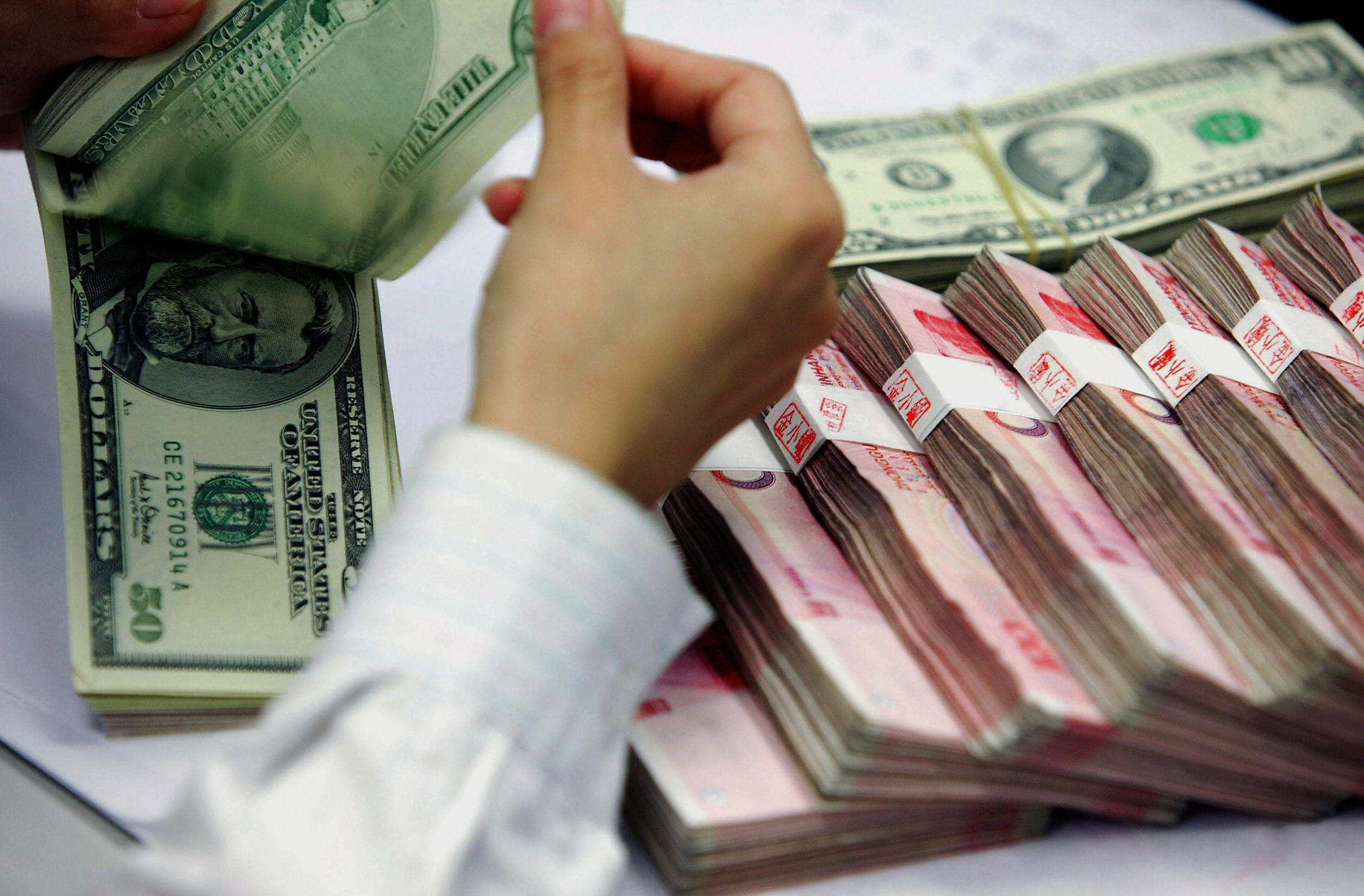
The Chinese yuan has recently been strengthening, with the onshore yuan against the US dollar rising to 6.6950 yuan at one point, reaching a level not seen in over three and a half years. The People’s Bank of China (PBOC) has recently expressed concerns about preventing the “herd effect” in the foreign exchange market. Analysts believe that with China’s exports remaining strong while domestic demand is still weak, the PBOC is worried that a rapid appreciation of the yuan could potentially squeeze the profit margins of some export enterprises.
The so-called “herd effect” refers to market participants buying into the yuan following expectations of continual appreciation, further fueling the expectation of appreciation and forming a mutually reinforcing one-way trend.
According to a report by Caixin, the “herd effect” first appeared in the quarterly meeting announcement of the PBOC’s Monetary Policy Committee, which also stated the need to “maintain the basic stability of the yuan exchange rate at a reasonable and balanced level.”
Bloomberg believes that the related statements may reflect policymakers’ desire to weaken market expectations of the yuan continuing to appreciate unilaterally.
According to a report by Reuters on the 21st, the yuan reached a level not seen in over three and a half years on that day; in the past year, the PBOC had previously slowed the pace of appreciation through adjustments to the yuan’s central parity rate and other methods.
A Reuters report at the end of August also indicated that the yuan had accumulated nearly a 9% appreciation over approximately 20 months, posing a balancing challenge for authorities between the strengthening yuan and supporting exports.
One of the key factors driving the appreciation of the yuan is the expansion of China’s exports and current account surplus. According to the Asia-Pacific Economic Outlook released by S&P Global on September 22nd, as of mid-September, the yuan had appreciated by about 4.2% against the US dollar, and China’s current account surplus had increased to around $200 billion per quarter (approximately 1.34 trillion yuan), equivalent to about 4% of GDP. S&P Global expects limited further room for yuan appreciation for the rest of the year.
However, S&P Global also pointed out that domestic demand in China remains weak. The institution estimated a 0.4% year-on-year decline in real retail sales in August, a 12.9% decrease in fixed asset investment, and continued declines in real estate sales and construction starts; in comparison, exports have continued to show strong growth.
The International Monetary Fund (IMF) also noted in February of this year that China’s economic growth is supported by exports, but private domestic demand remains weak; if the real estate market contracts further, it could exacerbate weaknesses in domestic demand and deflationary pressures, further relying on exports for economic support.
The appreciation of the yuan means that export enterprises will see a reduction in their foreign currency revenue when converted into yuan. For companies with lower profit margins that rely on price competition to win overseas orders, the appreciation could potentially squeeze their profit margins.
At a time when China’s exports and current account surplus are expanding while domestic demand remains weak, exports continue to be a crucial support for economic growth. Following the appreciation of the yuan, the amount of foreign currency revenue, such as dollars, received by export enterprises when converted into yuan will decrease, potentially affecting some enterprises reliant on price competition.