
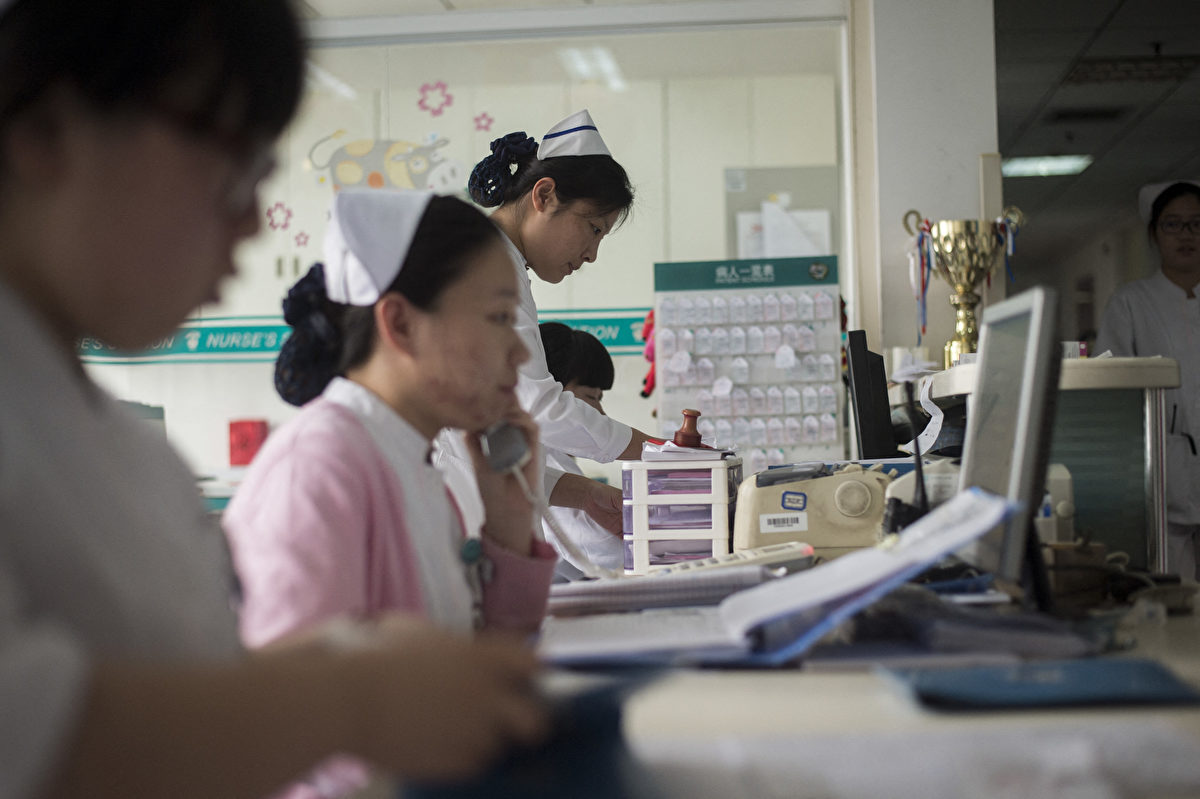
In recent months, hospitals in Zhejiang, Jiangsu, and other places have been lowering the salaries of their staff, and a primary school in Anhui has also seen teachers facing pay cuts. Some interviewees have indicated that the basic monthly salary for some medical staff is now less than 2,000 yuan. Prior to this, there have been incidents of hospitals withholding salaries and workers demanding overdue payments in various regions, with some public hospitals facing penalties for charging patients illegally.
Amid the ongoing economic pressures in China, the fluctuation in income of hospital and school staff has drawn attention. Interviewees have mentioned that with reductions in wages and bonuses, the daily life pressures have intensified. A woman named Qian, working in the medical administration department of a public hospital in Hangzhou, Zhejiang, shared with reporters that since August, the hospital has reduced the basic monthly salary of nurses from 2,750 yuan to 2,200 yuan, a decrease of 550 yuan representing a 20% cut.
Mr. Liu, a relative of a nurse in a public hospital in Suzhou, Jiangsu, mentioned that over the past six years – from before the pandemic until now – the basic salary of nurses at the hospital has gradually decreased from 3,700 yuan per month to the current 1,700 yuan, with bonuses no longer being provided.
He further noted the situation outside Suzhou, stating, “It’s not just in Suzhou, but also in Changzhou and Wuxi. There’s a 20% pay cut, with the basic monthly salary being around 2,000 yuan. Now many people are afraid to eat out, having breakfast at home; it’s like going back to the early days of the reform and opening up.”
A resident named Mrs. Liu from Dengfeng, Henan, mentioned that a friend working in a hospital only earns 1,850 yuan per month. She expressed the hardship faced due to hospitals delaying payments and some unable to even issue salaries, making life increasingly difficult for the common people while officials remain unaffected.
Mrs. Wu, a resident of Chuzhou, Anhui, informed reporters that at a local elementary school, the teachers’ monthly salaries have been reduced from 2,300 yuan to 1,800 yuan, and some from 2,800 yuan to 2,200 yuan. She highlighted the continuous decrease in salaries year after year along with the suspension of performance-based incentives.
Issues of salary delays at hospitals have previously sparked labor rights protests. In November 2025, a collective demand for overdue salaries erupted among medical staff at the People’s Hospital in Suihua City, Heilongjiang. At that time, Epoch Times reached out to the hospital’s emergency department, where a staff member revealed that salaries had not been paid for five to six months, yet the workers continued working and were persistently pursuing to receive their overdue pay and social security benefits.
Back in April, a video circulated online showing medical staff at Hedong Hospital in Linyi, Shandong, collectively demanding their salaries. The website “Yesterday,” which documents labor events, reported that the strike took place on April 8 and 9.
Previous reports from Epoch Times disclosed a public hospital in Beijing demanding employees to return annual performance bonuses already distributed; in certain regions, hospitals have been barely managing to pay basic wages due to delayed allocations from higher authorities. In Guangdong, a second-tier hospital had to cease operations entirely due to prolonged loan defaults and shortages of medical supplies, leaving staff unpaid for up to ten months.
Moreover, the Tianhu Hospital in Leping, Jiangxi, faced challenges in payroll due to adjustments in medical insurance policies and operational difficulties, which led to wage arrears and subsequently the dismissal of all employees. In 2024, the Lu Xinan Hospital in Shandong went into bankruptcy liquidation, having owed salaries for eight months to over 600 employees.
Sun, a division head working in the healthcare sector in Xuzhou, Jiangsu, believes that decreasing hospital revenues and insufficient fiscal allocations may impact both staff and patients: “Hospitals operate on differential allocations; if fiscal funding decreases, hospitals must find ways to increase revenue on their own, often by raising fees on patients. As a result, with fewer people seeking medical care due to cost concerns, hospitals face greater losses.”
Sun mentioned instances of hospitals in Jiangsu facing patient complaints over billing issues, leading to penalties from higher authorities. He observed that after some hospitals reverted to previous fee standards, their income decreased, widening the financial gap. He also mentioned instances of hospitals ceasing operations, such as the hospitals in Lianyungang, Meijia, and Suqian’s Sihong Elderly Disease Hospital, where consistent losses have raised concerns about potential closure.
Public records indicate that Lianyungang and Meijia hospitals had announced temporary closures starting from July 31, 2024, due to wage arrears and labor disputes. Regarding the Sihong Elderly Disease Hospital, a circulated notice in June 2025 indicated a total debt of 44 million yuan, leading to the decision to dismiss all employees; however, employees interviewed at that time maintained that the hospital was still operating. These public records shed light on the operational and labor conditions of the hospitals but do not confirm the exact relationship between their hardships and the penalties imposed related to charging practices.