
China’s economy is facing a deeper contradiction: while the manufacturing sector is producing more, companies are caught in intense price wars. At the same time, demand for services such as elderly care, healthcare, childcare, education, cultural entertainment, and sports is increasing among residents, but the supply is not keeping up.
Professor Lu Ming, a member of the National Committee of the Chinese People’s Political Consultative Conference and a professor at the Antai College of Economics and Management at Shanghai Jiao Tong University, pointed out in an interview with People’s Political Consultative Daily on September 21 that the current issues in the Chinese economy lie not only in the overall quantity but also in the structural aspects. He mentioned that the manufacturing sector is caught in intense competition, resulting in a “manufacturing shrink,” while the supply of services is lagging behind in terms of quantity, quality, diversity, and spatial distribution compared to the demand.
This structural contradiction of “manufacturing stagnation and service insufficiency” is becoming a key factor constraining consumption and dragging down economic growth. Lu Ming believes that the traditional path of growth through expanding capacity and lowering prices has reached a bottleneck.
In some domestic markets, the Chinese manufacturing industry is facing saturation, while in the international market, there is pressure for trade equilibrium. Lu Ming believes that under such circumstances, companies tend to engage in competitive pricing in limited market space, leading to a cycle of continuous price declines.
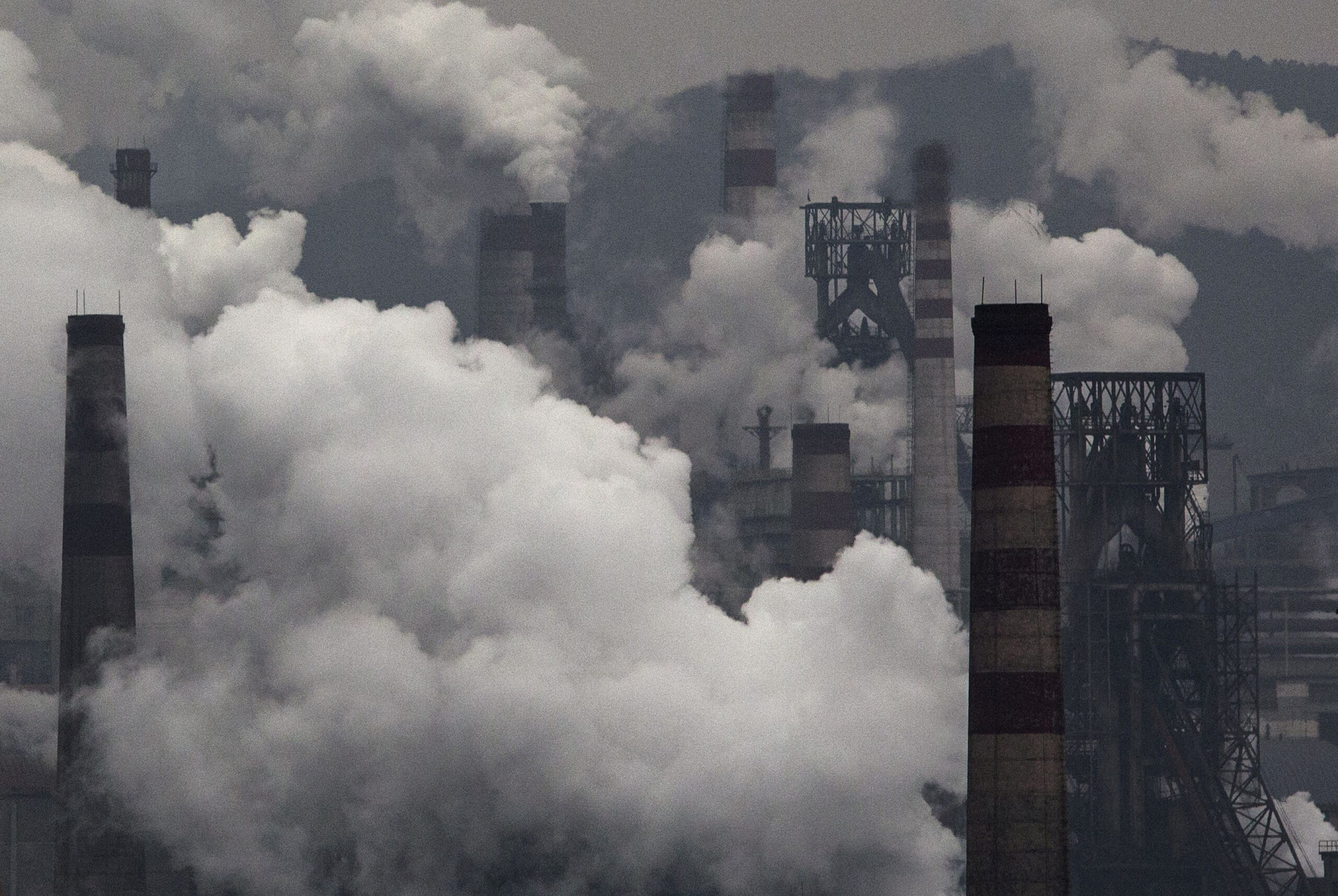
This competitive pricing in the manufacturing industry can be observed in recent changes in specific sectors such as steel, building materials, and solar energy. Recently, these industries have experienced weak demand and price pressures, leading to some capacity closures.
For instance, the steel industry proposed “controlling production and reducing inventory.” The China Iron and Steel Industry Association stated on September 15 that the steel industry has been characterized by “strong supply, weak demand, low prices, and weak profits” since 2026. Domestic steel demand continues to weaken, with high inventory levels and steel prices fluctuating downward, leading to a sharp decline in industry profitability. The proposal called for strictly implementing production control, reducing inventory, and resisting low-price competition below cost.
Similarly, in the building materials industry, there have been instances of capacity closures. The Jiangxi Provincial Department of Industry and Information Technology announced on September 2 that a cement clinker production line with a daily output of 2,500 tons at the Zhongcai Pengxiang Cement Co., Ltd. has been dismantled as it no longer meets production conditions. This capacity closure is related to capacity adjustments in the cement industry.
The solar energy sector is also witnessing intense price competition. On August 6, eight major polysilicon enterprises in China jointly signed the “anti-stagnation” initiative, committing to sell all photovoltaic products at prices not lower than the corresponding costs calculated based on relevant cost standards and to strictly implement energy consumption standards and actively eliminate high-energy-consuming outdated capacity.
The situations in these typical industries indicate not only a case of “insufficient production” but also show weak demand, intensified price competition, and some capacity closures. This trend is making it increasingly difficult for “expanding production” to be the solution to the problem.
From the perspective of total supply and demand, Huang Yiping, the director of the National Development Institute at Peking University, previously analyzed that China has been facing prolonged overcapacity due to macroeconomic imbalances, namely excessive investment and insufficient consumption. When the growth of capacity formed by investment exceeds consumer demand, problems like product digestion difficulties, price decreases, and compressed profits may occur.
The Institute of Macroeconomic Research under the National Development and Reform Commission of China published an article on July 30 describing the current supply-demand contradictions as “strong supply and weak demand,” highlighting insufficient domestic demand as a prominent issue affecting the national economic cycle.
In the first half of 2026, China’s GDP grew by 4.7% year-on-year, with growth of 4.3% in the second quarter; the value-added of large-scale manufacturing industries increased by 5.6%. Meanwhile, in the same period, total retail sales of consumer goods in the first half of the year grew by 1.3%, with commodity retail sales up by 1.1%.
This indicates that the manufacturing sector still maintains a certain growth trajectory, but the expansion speed of end-consumer goods consumption is relatively slow. On the other hand, service consumption is becoming an increasingly important part of the consumption structure.
According to data from the National Bureau of Statistics of China, from January to August, the total retail sales of consumer goods and services increased by 2.5% year-on-year, with a 4.9% growth in service retail sales and a 1.0% growth in commodity retail sales. The growth rate of service retail is significantly higher than that of commodity retail.
An article from Lu Ming’s column released by the China Development Research Institute at Shanghai Jiao Tong University in September revealed that by 2025, the per capita expenditure on service consumption by Chinese residents reached 13,602 yuan, accounting for 46.1% of total per capita expenditure; from 2020 to 2025, per capita service consumption expenditure has grown by an average of 8.5% annually.
This reflects a shift in the consumption structure of Chinese residents: apart from goods consumption, there is a continuous expansion in demand for services related to dining, travel, leisure, healthcare, elderly care, and household services.
However, there is an evident gap in service supply. Lu Ming pointed out that the service industry is still mismatched with residents’ needs in terms of quantity, quality, diversity, and spatial layout; there are instances in various sectors like elderly care, education, healthcare, childcare, culture, entertainment, and sports where some demands remain unmet.
Therefore, the Chinese economy is facing what seems to be a contradictory situation: while there is an increasing abundance in commodity supply leading to fierce price competition, parts of the services that residents truly need are still inadequate.
Lu Ming believes that the insufficiency in service supply is not merely a market demand issue but is related to institutional and developmental models.
Firstly, there is the motivation of local governments. Lu Ming indicated that there are differences in value-added tax regulations between the manufacturing and service industries; the manufacturing industry has a tax rate of 13%, while the service industry is taxed at 8%, potentially causing local governments to favor larger-scale manufacturing projects.
Secondly, the financial system plays a role. The indirect financing model centered on collateral tends to be more favorable towards manufacturing businesses with fixed assets like factories, equipment, and land. Many service enterprises, which are light-asset companies lacking tangible assets for collateral, struggle to obtain comparable financial support.
Thirdly, societal perceptions come into play. Some daily service industries are often seen as having “low technical content” or belonging to low-end sectors, resulting in insufficient resource allocation and talent support.
Moreover, urban planning and market access can also hinder the development of the service industry. Lu Ming highlighted that the long-existing urban model of “low density, wide roads” suppresses the formation of life service industries that require population density and convenient transportation. Restrictions on private sector entry and consumer scene openness can also constrain service supply.
In addition to the institutional and developmental model factors mentioned above, there is a clear misalignment in service supply. Population movements are reshaping the spatial distribution of service consumption demands. In major cities experiencing continuous population influx, service demands related to medical care, education, elderly care, childcare, etc., are becoming more concentrated. However, restrictions related to household registration and public service provisions may hinder the full realization of these demands. Conversely, the service demand structure is also evolving in areas experiencing population outflow.
This signifies that the service industry’s issue is not merely a case of “no demand,” but rather the demand does exist, yet the supply might not be able to provide the necessary services at suitable prices, quality, and locations.
From a demand perspective, Liu Shijin, the former deputy director of the Development Research Center of the State Council, stated in January of this year that the primary challenge facing China’s economic growth has shifted from supply constraints to demand constraints, primarily manifested as insufficient consumption. He believes that the slowdown and relative contraction in end-demand growth are the main factors leading to macroeconomic deceleration, exacerbated overcapacity, and nominal growth falling below actual growth.
Lu Ming’s analysis intersects with Liu Shijin’s perspective, but the emphasis of the two differs: Liu Shijin mainly emphasizes insufficient demand from a total perspective, while Lu Ming further points out the supply-demand mismatch between the manufacturing and service industries.
In summary, insufficient consumption demand may worsen overcapacity in the manufacturing industry, while inadequate service supply prevents the release of some existing consumption demands. These two issues interact, leading to the simultaneous coexistence of “overproduction” and “insufficient services.”
Previously, China could absorb some domestic overcapacity through exports. Huang Yiping previously suggested that during the over 40 years of China’s reform and opening-up, there has been almost continuous overcapacity, albeit discrepancies as some excess capacity could be absorbed by overseas markets through exports.
However, this approach is facing greater limitations now. Huang Yiping noted that changes in globalization policies, decreasing openness in global markets, and escalating geopolitical conflicts are altering the international market environment for China’s export products. Additionally, the substantial size of China’s economy means that a substantial increase in exports has a greater impact on the global supply-demand balance than before.
Therefore, when domestic consumption is insufficient, manufacturing capacity continues to expand, and the space for absorbing excess capacity through exports is restricted, simply expanding production becomes increasingly challenging to address the supply-demand imbalance.
This is the structural contradiction that Lu Ming highlighted: while there is an ample supply in the manufacturing sector leading to intensified price competition, there remains significant unmet demand for services such as elderly care, healthcare, education, childcare, cultural entertainment, and sports among residents.