
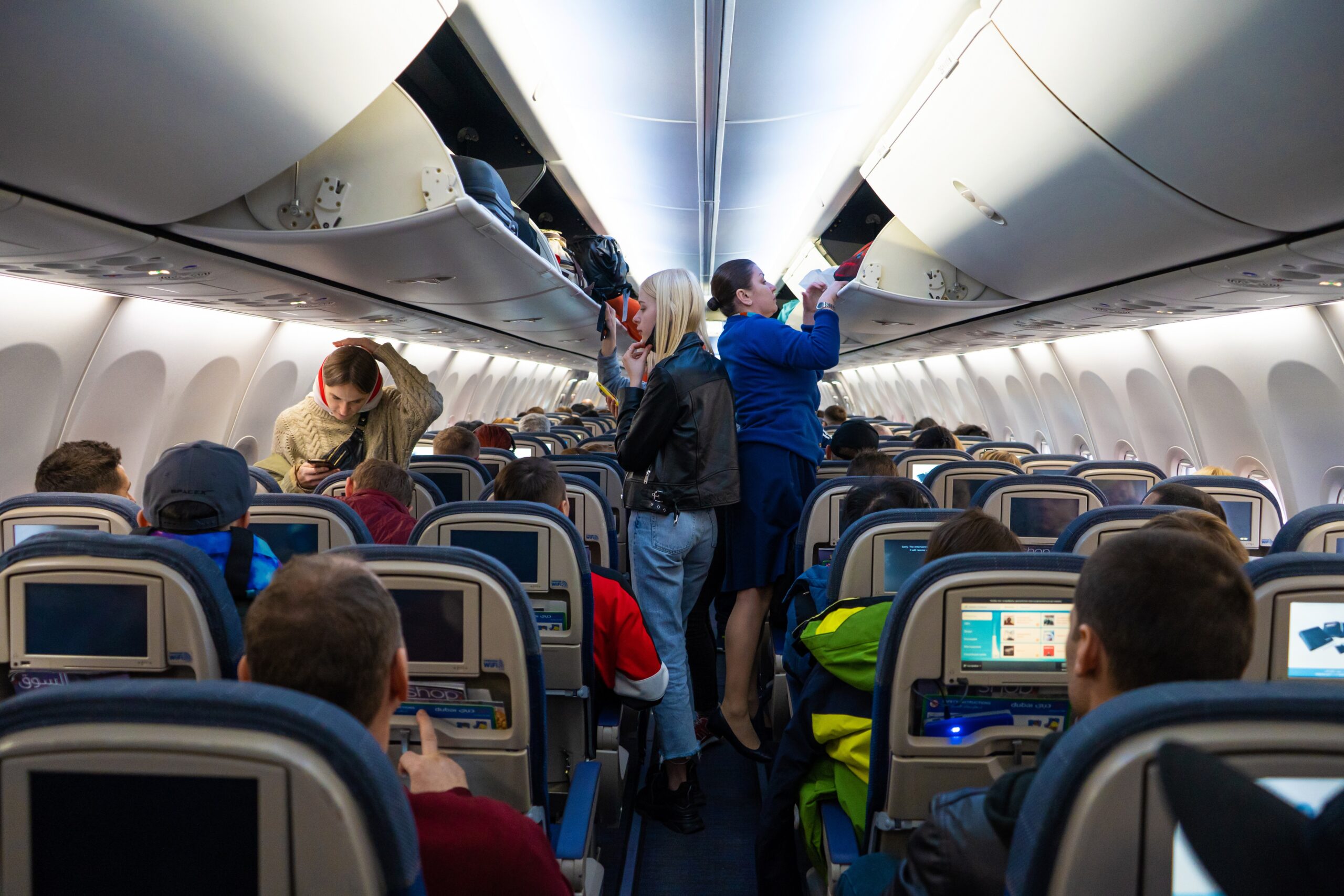
Airline flights are sometimes delayed due to mechanical issues, adverse weather conditions, or boarding delays, leaving passengers with no choice but to patiently wait. So, what do flight attendants do during these times of delay, and how does it affect their work?
According to aviation news website “Simple Flying,” there are various reasons for flight delays. Sometimes, delays can be somewhat predictable, especially when it comes to poor weather conditions and congested air traffic.
Before each flight, pilots review the route’s weather conditions and inform flight attendants during pre-flight briefings if turbulence or severe weather is anticipated. If bad weather is encountered during the flight, pilots may reroute or change the flight path accordingly.
Congestion is a common issue at major airports, and delays are often expected and factored into airline flight schedules. Even if a flight is delayed for takeoff, there may still be opportunities to make up time during the flight, ultimately arriving at the destination on schedule.
Unforeseeable factors causing delays include last-minute technical failures, passenger misconduct, or boarding delays. Refueling or de-icing operations may cause brief delays, but they are necessary procedures. Additionally, equipment malfunctions requiring replacement or a previous flight arriving late can also lead to delays.
Even in the event of a delay, ensuring everything is safe before being cleared for takeoff is a responsibility of the flight crew. They promptly address delay situations and develop corresponding plans based on available information.
During unexpected delays, maintaining good communication and teamwork among the cabin crew is essential. Pilots inform senior flight attendants, who relay delay information or announce it to all crew members through the onboard broadcasting system.
Subsequently, senior flight attendants or pilots announce the delay situation to passengers in the cabin. Additionally, pilots coordinate with the ground operations team and dispatchers or ground staff.
In case of a flight delay, flight attendants work diligently to calm passengers’ emotions onboard, even though it can be challenging as passengers often express dissatisfaction due to flight delays, sometimes venting their frustration on the crew.
Flight attendants may also arrange additional services on the ground, such as distributing drinking water and snacks, depending on the cause and duration of the delay. Moreover, flight attendants are responsible for answering passengers’ questions and assisting them with connecting flights.
Every delay involves various complex situations, not only within the aircraft or at the boarding gate but also in the coordination within the airline company. The crew must await further instructions from relevant departments and take action accordingly to flexibly address various unexpected circumstances.
In the case of an expected long delay, such as needing to dispatch engineers to handle technical issues and transport parts, passengers onboard may be arranged to return to the boarding gate. In this situation, flight attendants care for passengers in that area. Depending on the expected ground time, they may distribute blankets, pillows, meals, and drinking water to passengers. They continue to stay in that area and provide passengers with the latest updates.
Flight crew members have limitations on working hours, but with the unanimous agreement of all crew members and without compromising safety, the captain may extend working hours at their discretion. If the delay is prolonged, the entire crew may be replaced by standby personnel.
For flight crew members, flight delays can be quite challenging as they may disrupt established schedules and completely disturb their daily routine, which is often planned around flight missions.
For crew members who require commuting, such situations can severely disrupt their travel arrangements and reduce rest time. If the delay is excessively prolonged, crew members may be forced to cease duties due to exceeding working hour limits.
It is worth noting that most flight attendants do not receive additional compensation during flight delays, meaning there is no overtime pay. Their paid period starts when the aircraft doors close before takeoff and ends when the doors open upon landing.
Therefore, when flight delays occur, the situation for flight attendants is equally difficult as it is for passengers. Passengers should try to avoid getting angry with flight attendants, not intentionally make things difficult for them, or refuse to follow instructions. Delays are not the fault of flight attendants, and the inconvenience and troubles it brings them are no less than those experienced by passengers.