
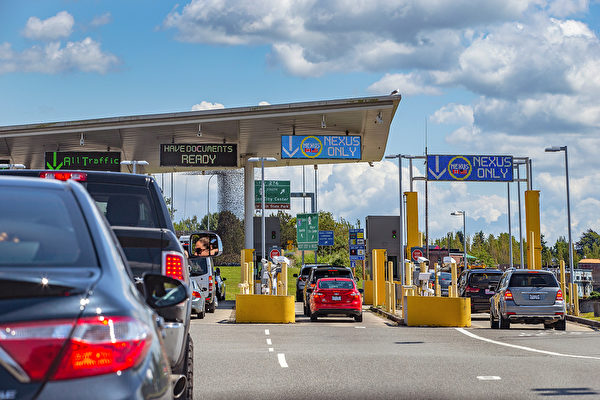
Your phone may store years of personal calls, photos, emails, and social media activity. Immigration lawyers say that Canadians should be prepared for border officials to inspect their phones when crossing into the United States.
According to CTV, a recent ruling by the U.S. Federal Second Circuit Court of Appeals further confirms that law enforcement officers do not need a search warrant or reasonable suspicion when searching travelers’ phones at the U.S. border.
Toronto lawyer Joel Sandaluk stated that U.S. border officials have long had broad powers to inspect electronic devices, and this practice is becoming more common.
“This is a policy change that U.S. border officials have implemented since January 2026. The new policy gives them greater authority to search electronic devices such as phones, laptops without the need for any reasonable suspicion,” he said in a video interview with CTVNews on September 24.
Sandaluk added that immigration lawyers now advise their clients to be aware that searches may occur at land borders or Canadian airports.
According to Sandaluk, phone searches may involve checking someone’s social media, texts, and emails. Officials may be looking for messages that raise suspicion to determine if a traveler’s purpose for coming to the U.S. aligns with what they claim.
“This includes searching social media for clues that may lead officials to conclude that this person is not a genuine visitor but actually intends to work or reside in the U.S. indefinitely.”
Sandaluk also stated that border officials can inspect any content on a traveler’s phone “They can look at every corner of the phone.”
Washington state immigration lawyer Leonard D.M. Saunders told CTVNews that travelers can refuse to provide their phone password, with officials deeming their device “unsearchable.”
“If you are determined to be unsearchable, you will not be allowed to enter the United States.” Sanders also noted that while cases of phones being confiscated are “rare,” they are not impossible.
Sanders suggested that for privacy-conscious Canadians, the simplest solution is to avoid carrying devices containing sensitive personal information.
“I always tell Canadians: if you are worried about anyone reading or seeing anything on your phone, then don’t bring it,” he said.
He acknowledged that this can be challenging as mobile phones are essential in various aspects of daily life.
Sanders’ advice is to be prepared for inspection when passing through and truthfully state the purpose of your travel. “As cliché as it sounds, honesty is the best policy, but it is indeed true,” he said. “Keep in mind, your phone, just like your suitcase, can be searched, so there shouldn’t be anything on your phone that you wouldn’t want security personnel to inspect.”