
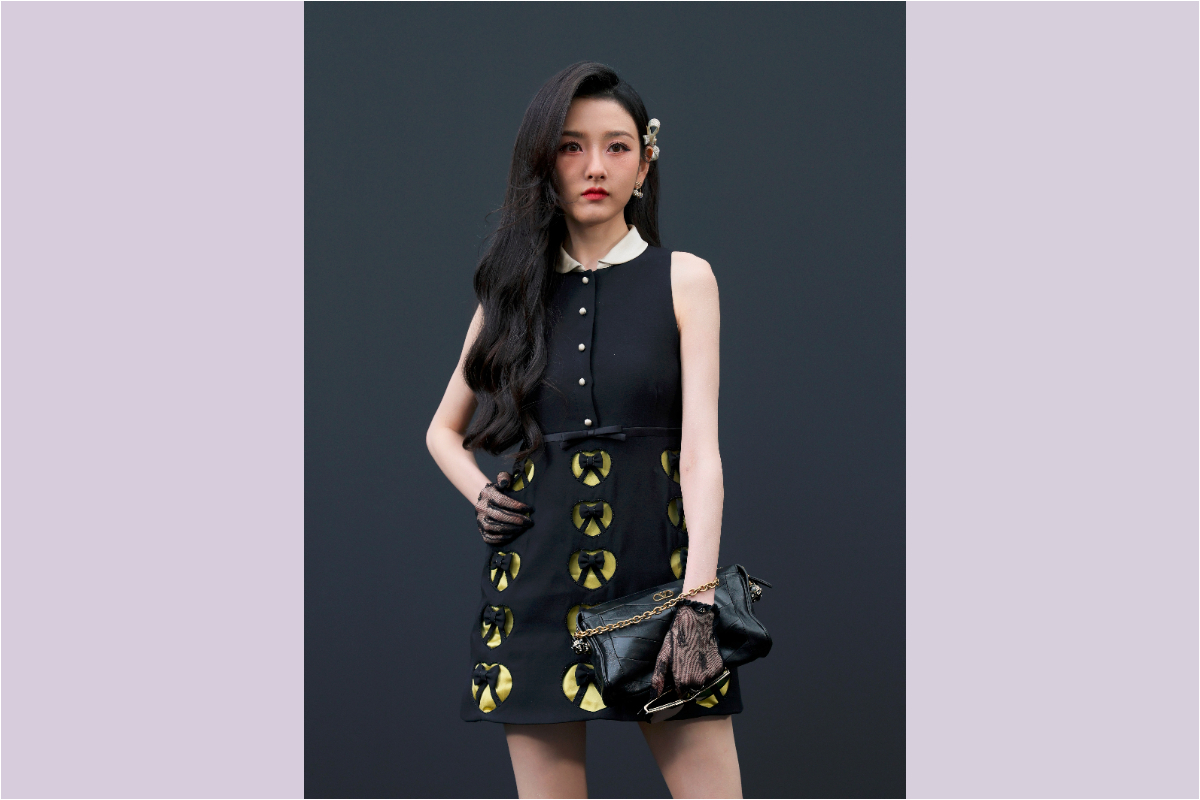
In recent years, mainland China’s popular actress Song Zuer, who was born as a child star, has been gaining increasing popularity with works like “Carefree Crossing” and “Bending.” However, there have been rumors circulating that she may officially bid farewell to the stage name she has been using for nearly 20 years and completely switch to using her legal name, “Sun Fanqing,” for future independent appearances.
On September 23, the official Weibo account of the mainland Chinese drama “In the Game” released a teaser with the leading actors listed as “Sun Fanqing, Guo Qilin (Guo Qilin),” with their names arranged in stroke order according to their surnames. Of particular interest was the absence of the stage name “Song Zuer” in parentheses behind Sun Fanqing, indicating a significant shift in her public persona. On the same day, Song Zuer’s latest brand endorsement materials also uniformly featured her legal name “Sun Fanqing.” This dramatic transition from using a stage name to embracing her real name in both the entertainment and business spheres has sparked the trending topic “#SongZuerNoLongerUsingStageName” on Weibo.
In June of this year, the China Television Drama Production Industry Association, along with two other industry associations, jointly issued new regulations for actor names, stipulating that entertainment materials should primarily use their legal names, with stage names only appearing in parentheses e.g., real name (stage name). After an initial adjustment period, Sun Fanqing has chosen to completely drop the suffix of her stage name, making her one of the most thorough adherents to the new regulations.
At 28 years old, Song Zuer debuted as a child star in 2005. In fact, the stage name “Song Zuer” was not a voluntary choice but rather a branding imposed on her when she signed with a talent agency at the age of 9. According to reports from “Sina Entertainment,” the agency even went as far as creating a fake academic record under the name “Song Zuer,” resulting in discrepancies in her personal information and causing her to be unable to take the national college entrance examination. At the age of 15, she had to interrupt her studies in China and self-fund her education in the United States. By legally terminating her contract as an adult and clearing up the related controversies, her decision to abandon the name “Song Zuer” has been widely interpreted as a complete departure from her passive and controlled child star era.
With the full implementation of the new regulations, several well-known celebrities have also started using their legal names in promotional materials, such as Ding Zhoujie (Ding Yuxi), Sun Li (Sun Li), Li Xue (Li Yitong), Fei Xia (Lin Yun), Ren Guochao (Ren Jialun), and Feng Wei (William Feng).
Many celebrities have chosen to label themselves in materials on various platforms as “real name (stage name),” aiming to minimize market confusion. Song Zuer’s direct replacement of her stage name with her legal name, Sun Fanqing, has been dubbed by netizens as a “retraining” within the entertainment industry.
The new regulations on actor names released by the Chinese authorities have imposed strict limits on titles, categorizing actors as “lead actor, special appearance, supporting cast,” and requiring their names to be arranged strictly by strokes of their legal surnames. The regulations also prohibit the individual use of stage names, English names, or nicknames, mandating the display of legal names, creating profound impacts and disruptions in the film and television industry.
Industry research shows that many professionals and entertainment bloggers believe the new regulations target the symptoms rather than the root causes of the “competition for positions” chaos. Due to the significant impact of the new regulations, some entities involved have resorted to peculiar practices: some production crews, in adhering too mechanically to stroke order arrangements, have resulted in the leading actor with the most screen time and importance being pushed to the back due to the complexity of strokes, leaving viewers unable to discern the true lead from the cast list. Moreover, to avoid controversies, some production teams have chosen not to release textual actor lists in their announcements, instead opting for posters or videos, covertly manipulating font sizes, screen time, and positioning in posters to obscure the hierarchy of roles and make the battle for position less transparent.