
Britain is gearing up to establish a national agency specifically dedicated to countering information attacks from foreign powers such as Russia, in the face of the rise of fake news, fake websites, robot accounts, and the new threats brought by artificial intelligence.
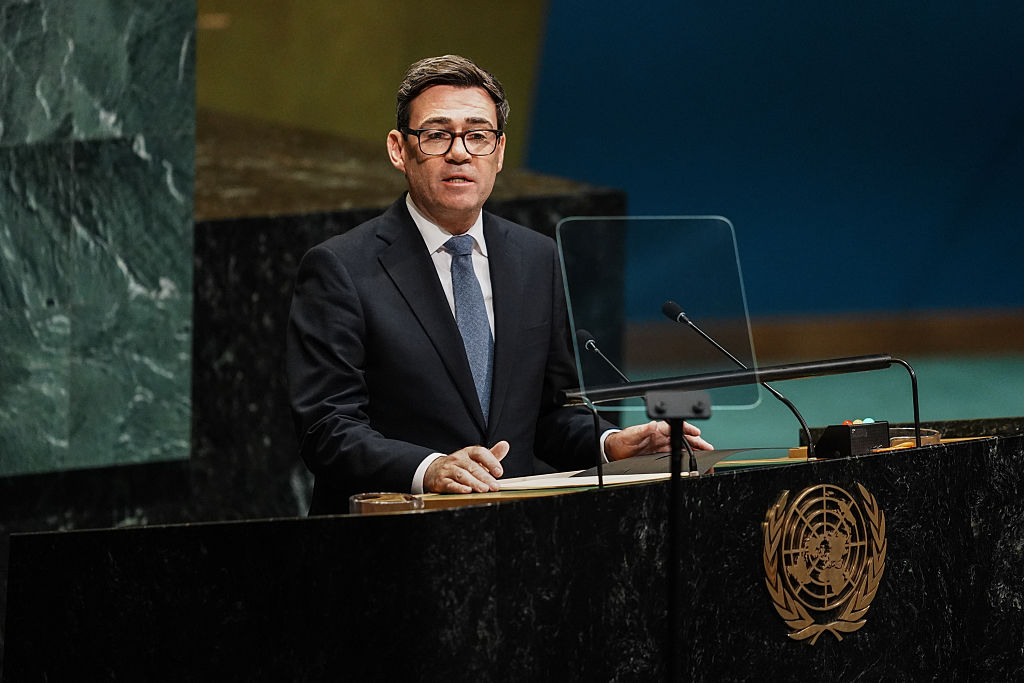
Prime Minister Andy Burnham announced on Tuesday (September 22) at the United Nations General Assembly in New York that he has instructed the security department to begin the establishment of the “National Centre for Information Defence”, tasked with detecting, tracing sources, and blocking information attacks launched by hostile nations.
In his speech, Burnham primarily pointed fingers at Russia. He stated that in recent years, the information environment of Britain and its allies has been subjected to “industrial-scale” attacks by hostile forces, with Russian agencies using robot accounts, fake websites, and fabricated news articles to spread false information. They have even impersonated 28 British institutions, including universities and the British Broadcasting Corporation (BBC).
He also mentioned that evidence in possession of the British government indicates that Russia attempted to intervene in the 2019 UK general election and exacerbated divisions online using significant events.
According to Burnham, the Kremlin spends about £1.3 billion per year manipulating information. He pointed out that these kinds of information attacks have now reached ordinary people’s households, attempting to influence how individuals view their own country and community.
The threat landscape has also become more complex due to artificial intelligence. Burnham emphasized that British businesses and institutions are facing network attacks simultaneously, and AI will further escalate these threats.
Reported by The Guardian, the new center will collaborate with intelligence agencies, law enforcement departments, and social media companies to tackle information attacks, including online false information and deepfake AI, and assist communities in identifying and combating false information.
Burnham also noted that people facing greater cost of living pressures, no improvement in living conditions, and unemployed or young individuals lacking education or training are more susceptible to the influence of online misinformation. He believed that widening social inequalities would also heighten the risks society faces in dealing with such attacks.
Britain is also planning to share its relevant experiences with other countries. Burnham mentioned that the UK had previously assisted Moldova in safeguarding elections against Russian interference. With more European countries gearing up for elections, the UK is prepared to share its experiences with other nations.
Russia responded on Wednesday (September 23). Kremlin spokesman Dmitry Peskov accused the UK of fueling “anti-Russian sentiment,” with Germany, France, and other European countries taking similar measures. He deemed this as a “completely shortsighted policy” that does not contribute to reducing tensions in Europe.